

Why Gold-Plated Jewelry Is Budget Friendly
Table of Contents
- What Makes Gold-Plated Jewelry So Affordable
- The Manufacturing Process Behind the Lower Price
- Gold-Plated vs. Gold-Filled Jewelry: Understanding the Difference
- How Long Does Gold-Plated Jewelry Last
- How to Prevent Gold-Plated Jewelry From Turning Skin Green
- Pros and Cons of Choosing Gold-Plated Over Solid Gold
- Is Gold-Plated Jewelry Worth the Investment
- Conclusion
- Frequently Asked Questions
Last Updated: September 1, 2026
What Makes Gold-Plated Jewelry So Affordable
Gold-plated jewelry is budget friendly because it uses a thin layer of real gold bonded to a base metal instead of solid gold throughout. The base metal, typically brass, copper, or sterling silver, costs a fraction of what solid gold would, and the electroplating process adds just enough gold to deliver authentic aesthetic without the premium price tag.
At Carlotta, we understand why budget-conscious shoppers gravitate toward gold-plated pieces. You get the visual elegance of gold jewelry without the financial commitment. A solid gold chain might cost hundreds of dollars, while a gold-plated alternative with nearly identical appearance might cost a fraction of that.
Manufacturers apply only a thin coating of gold, measured in microns, rather than using solid gold. This means less precious metal is needed per piece, which translates directly to lower production costs. What most shoppers don't realize is that this thin layer can still deliver years of wear if you understand how to care for it properly.
The Manufacturing Process Behind the Lower Price
The electroplating process makes gold-plated jewelry budget friendly. A base metal item is placed in a chemical solution containing dissolved gold ions. An electrical current is applied, causing the gold to bond to the surface of the base metal, creating a permanent, durable coating that looks and feels like solid gold.
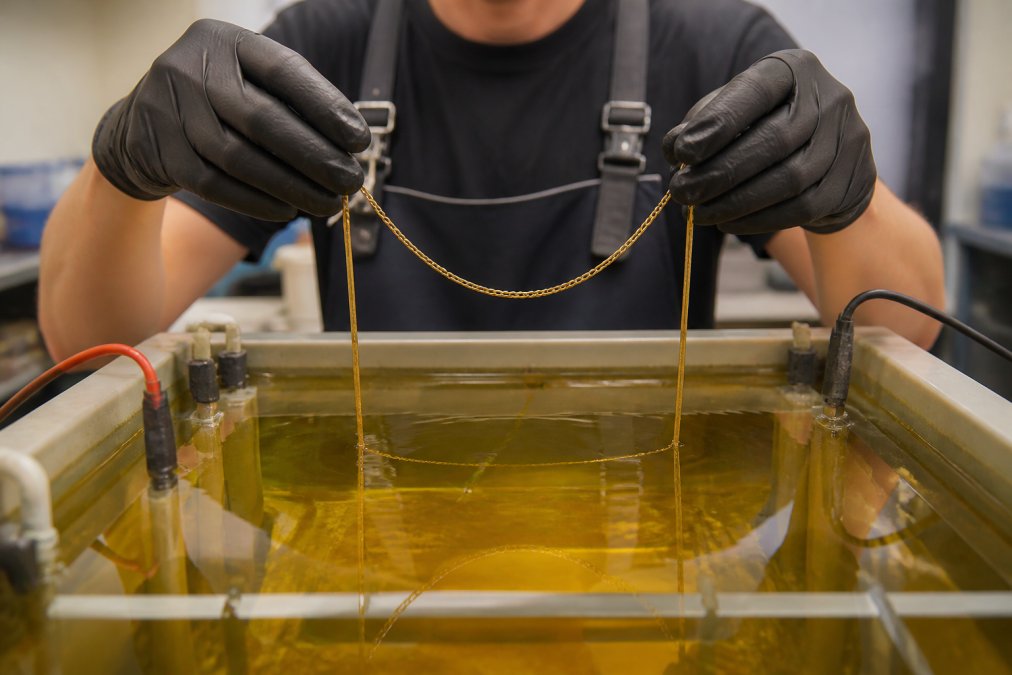
The thickness of the gold layer, measured in microns, determines both durability and cost. Most gold-plated jewelry uses a layer between 0.5 and 2.5 microns thick. Thicker plating lasts longer but costs more to produce. Carlotta uses multi-layer plating on our cross necklaces and chains to ensure longevity without excessive cost.

Base metal selection matters significantly. Brass and copper are common because they're affordable and take plating well. Sterling silver is a premium base metal that costs more but provides superior durability and won't tarnish underneath the gold layer. The electroplating equipment itself is a significant investment, but once installed, the per-unit cost becomes minimal. Manufacturers can plate thousands of pieces efficiently, spreading equipment costs across many items, an advantage passed to customers.
Gold-Plated vs. Gold-Filled Jewelry: Understanding the Difference
Gold-filled jewelry sits between gold-plated and solid gold. Instead of a thin electroplated coating, gold-filled pieces have a thicker layer of gold mechanically bonded to the base metal, typically 5-10 times thicker than plated pieces. This means it lasts significantly longer, often 10-30 years with normal wear.
The trade-off is price. Gold-filled costs more than gold-plated but less than solid gold. If you wear jewelry daily and want something lasting decades, gold-filled might be worth the investment. If you enjoy rotating through multiple pieces seasonally, gold-plated offers better value.
Gold-plated works beautifully for occasional wear or fashion pieces you'll wear for a season or two. Gold-filled is better for everyday staples, your go-to necklace or bracelet worn almost daily. Solid gold is the permanent investment piece you'll own for life.
Carlotta's cross necklaces use real gold plating on S925 sterling silver bases, giving you authentic gold appearance with sterling silver's durability underneath. This combination resists tarnishing and maintains shine far longer than cheaper alternatives.
How Long Does Gold-Plated Jewelry Last
Gold-plated jewelry typically lasts between 1-3 years with regular wear, though this varies based on plating thickness, base metal quality, your skin chemistry, and frequency of use (peer-reviewed research). Some people get 5+ years; others see wear-through within months.
Thicker plating lasts longer. A piece plated at 2.5 microns outlasts one at 0.5 microns. Pieces worn occasionally last much longer than everyday items. Your skin's natural acidity also plays a role, some people's skin chemistry is harder on plating than others. Daily swimming, showering, or exposure to sweat accelerates wear.
Sterling silver bases resist corrosion better than brass or copper. When the base metal tarnishes, it can cause the gold layer to separate prematurely. Most manufacturers, including Carlotta, recommend removing gold-plated jewelry before swimming, showering, or exercising. These activities expose jewelry to moisture, chlorine, and sweat, all accelerating plating wear. Simple habits like this can double or triple your jewelry's lifespan. Storing jewelry in a dry place and avoiding harsh chemicals also preserves the plating.
How to Prevent Gold-Plated Jewelry From Turning Skin Green
The green discoloration that appears on your skin when wearing certain jewelry is typically caused by copper oxidation, not the gold plating itself (peer-reviewed research). When copper oxidizes, it creates a compound that transfers to your skin. This is purely cosmetic and not harmful, though annoying.
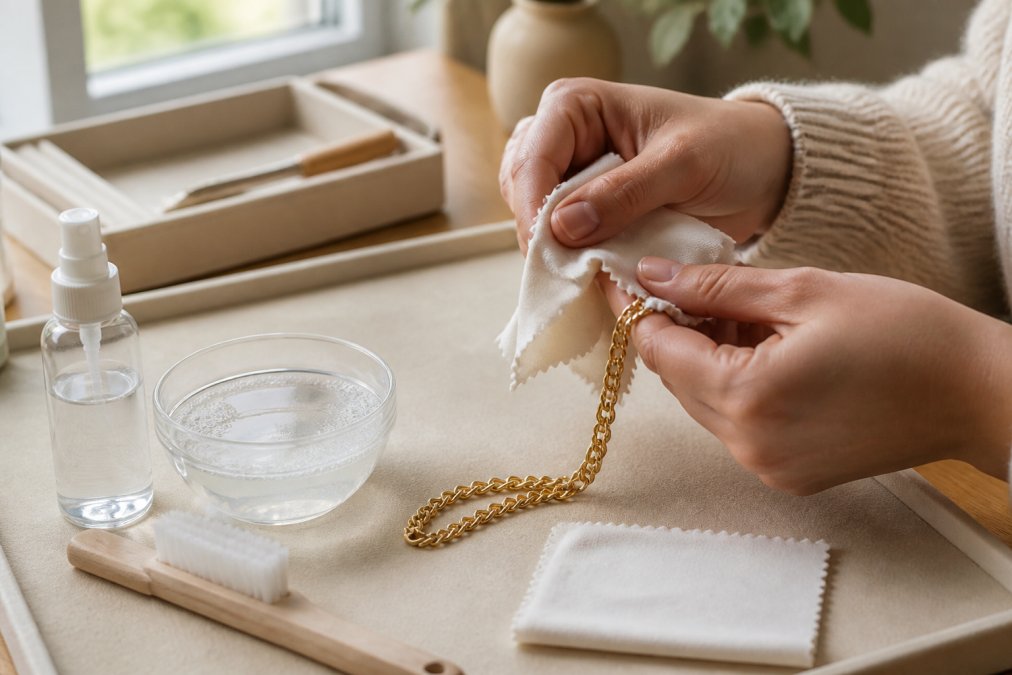
The best prevention is choosing jewelry with quality base metal. Sterling silver doesn't cause green skin because it doesn't oxidize like copper does. Brass and copper bases are cheaper but more likely to cause discoloration. Carlotta uses S925 sterling silver bases on our gold-plated pieces specifically to avoid this problem.
If you already have gold-plated jewelry causing green skin, apply a clear nail polish or clear coat to the inside of rings or bracelets where they contact your skin. This creates a barrier between the base metal and your skin. Replace the coating every few weeks as it wears off. Keep your jewelry clean and dry, moisture accelerates oxidation. Store pieces in airtight containers or ziplock bags to minimize air exposure.
If you have sensitive skin or known nickel allergies, be cautious with cheap plated jewelry. Nickel is sometimes used in base metal alloys, and if plating wears through, nickel exposure can cause allergic reactions. Sterling silver bases are naturally hypoallergenic, making them ideal for anyone with metal sensitivities.
Pros and Cons of Choosing Gold-Plated Over Solid Gold
Pros of Gold-Plated Jewelry:
Gold-plated jewelry offers immediate affordability. You can build a diverse collection without the financial barrier of solid gold. You can experiment with different styles without significant risk. To the naked eye, gold-plated jewelry looks identical to solid gold. You get the luxury appearance without the luxury price. Gold-plated jewelry is lighter than solid gold, which some prefer for comfort during extended wear.
Cons of Gold-Plated Jewelry:
Durability is the primary drawback. Gold-plated jewelry won't last as long as solid gold or gold-filled alternatives. If you're looking for an heirloom piece or something worn daily for decades, plated jewelry will eventually show wear.
Replating is possible but adds cost. Once your gold-plated jewelry wears through, you can have it replated for typically $20-50 per item (bbb.org). Over time, repeated replating can become expensive.
The resale value of gold-plated jewelry is minimal. Solid gold retains value based on gold content. Plated jewelry has almost no resale market because the gold layer is too thin to recover economically.
Skin sensitivity is a real concern for some people. While sterling silver bases are hypoallergenic, cheaper base metals can cause reactions if plating wears through.
Is Gold-Plated Jewelry Worth the Investment
Gold-plated jewelry is worth the investment if you understand what you're buying and match it to your actual needs. For fashion pieces worn seasonally or for special occasions, gold-plated is excellent value. For everyday staples worn constantly, solid gold or gold-filled makes more financial sense long-term.
Consider your cost-per-wear. If you purchase a gold-plated piece for $60 and wear it 100 times before replating, your cost per wear is 60 cents. Compare that to a solid gold equivalent costing $600, even if it lasts 20 times longer, the initial cost per wear is still higher. Gold-plated makes sense for building volume and variety.
The quality of base metal and plating thickness matters significantly. A well-made gold-plated piece on a sterling silver base with adequate plating thickness lasts years. A cheap piece with thin plating on a copper base might look dull within months. Carlotta's cross necklaces and chains use quality materials and multi-layer plating to extend lifespan and value.
Think about your lifestyle. If you swim regularly, shower with jewelry on, or work in environments with chemicals or sweat, gold-plated might not be practical. If you're careful with your jewelry, removing it before water exposure and storing it properly, plated pieces can serve you well for years.
For gift-giving, gold-plated jewelry offers exceptional value. A meaningful cross necklace or quality chain from Carlotta looks expensive and feels luxurious without requiring a large budget.
Conclusion
Gold-plated jewelry remains budget friendly because it combines authentic gold appearance with a fraction of the material cost. The electroplating process, quality base metals, and efficient manufacturing make it possible to own jewelry that looks and feels luxurious without the solid gold price tag. Understanding the difference between gold-plated, gold-filled, and solid gold helps you make informed decisions that match your lifestyle and budget.
The key to maximizing value is proper care. Remove jewelry before water exposure, store it in dry conditions, and handle it gently. Choose pieces with quality base metals, sterling silver is worth the modest premium because it resists tarnishing and won't cause skin sensitivity issues.
Carlotta's collection of gold-plated chains and cross necklaces combines quality materials with thoughtful design. Our pieces use S925 sterling silver bases coated with real 14k gold plating, delivering durability and authentic appearance without the solid gold investment. With up to 30% off on seasonal offers, you can build a versatile collection that works for your budget and style. Shop All and discover jewelry that elevates your everyday look.
Frequently Asked Questions
Q: Why is gold-plated jewelry significantly cheaper than solid gold?
A: Gold-plated jewelry uses a thin layer of gold bonded over a base metal like brass or copper through electroplating, requiring far less actual gold. A solid gold piece contains gold throughout, making it exponentially more expensive. The electroplating process is efficient and cost-effective, allowing manufacturers to create jewelry with the luxury aesthetic of gold at a fraction of the price. This makes gold-plated pieces an affordable luxury option for budget-conscious shoppers seeking elegant, everyday-wear jewelry.
Q: How can I prevent gold-plated jewelry from turning my skin green?
A: Green skin typically results from oxidation of the base metal beneath the plating, usually nickel or copper. To prevent this, choose nickel-free gold-plated jewelry when possible, rotate your pieces to allow the base metal to breathe, and remove jewelry before swimming or showering. Keep your pieces dry and store them in a cool place. Regular cleaning with a soft cloth removes moisture and buildup. Carlotta's gold-plated pieces are made with S925 sterling silver bases and real 14k gold plating, which helps prevent oxidation and skin sensitivity issues.
Q: How long does gold-plated jewelry last with regular wear?
A: Gold-plated jewelry typically lasts 1-3 years with proper care and regular wear, though some pieces can last longer depending on plating thickness and base metal quality. Micron thickness matters: thicker plating (measured in microns) resists wear better. Daily wear without proper care shortens lifespan, while jewelry rotated and stored carefully lasts longer. Factors like sweat, moisture, and friction accelerate plating wear. Carlotta's pieces use 3x gold coating on sterling silver, providing enhanced durability for pieces you wear regularly without worrying about quick deterioration.
Q: Is gold-plated jewelry worth buying instead of solid gold?
A: Gold-plated jewelry is worth the investment if you want the luxury aesthetic at a budget-friendly price, enjoy rotating multiple styles, or prefer lower financial risk when experimenting with new designs. It's ideal for daily wear, fashion-forward pieces, and gift-giving. However, solid gold is better if you want an investment piece that appreciates over time or need something to last decades. Gold-plated excels for cost per wear, you can own multiple elegant pieces for the price of one solid gold item, making it practical for fashion-conscious shoppers on tight budgets.
This article was written using GrandRanker