

Does Gold Plating Fade With Sweat? A Complete Guide
Table of Contents
- Does Gold Plating Fade With Sweat?
- Why Sweat Damages Gold Plating
- Why Does Cheap Jewelry Turn Skin Green?
- When to Remove Jewelry Before Physical Activity
- How to Clean Gold Plated Jewelry
- How to Prevent Jewelry Tarnish in Summer
- Solid Gold vs. Gold Plating: What Actually Lasts
- Conclusion
Last Updated: August 28, 2026
Does Gold Plating Fade With Sweat?
Yes, gold plating fades with sweat. When you wear gold-plated jewelry during exercise or in humid conditions, sweat creates an acidic environment that accelerates corrosion of the plating and base metal underneath. The combination of moisture, salt, and skin acidity breaks down the protective gold layer, causing discoloration, dulling, and eventual wear.
The good news: this isn't inevitable. Understanding why it happens and how to prevent it means you can wear your favorite pieces confidently, even during workouts or summer heat.
This guide covers the science behind sweat-induced tarnish, practical prevention strategies, and restoration techniques that actually work. Whether you're investing in affordable gold-plated chains or meaningful cross-themed pieces, knowing how to protect them ensures they stay beautiful for years.
Why Sweat Damages Gold Plating
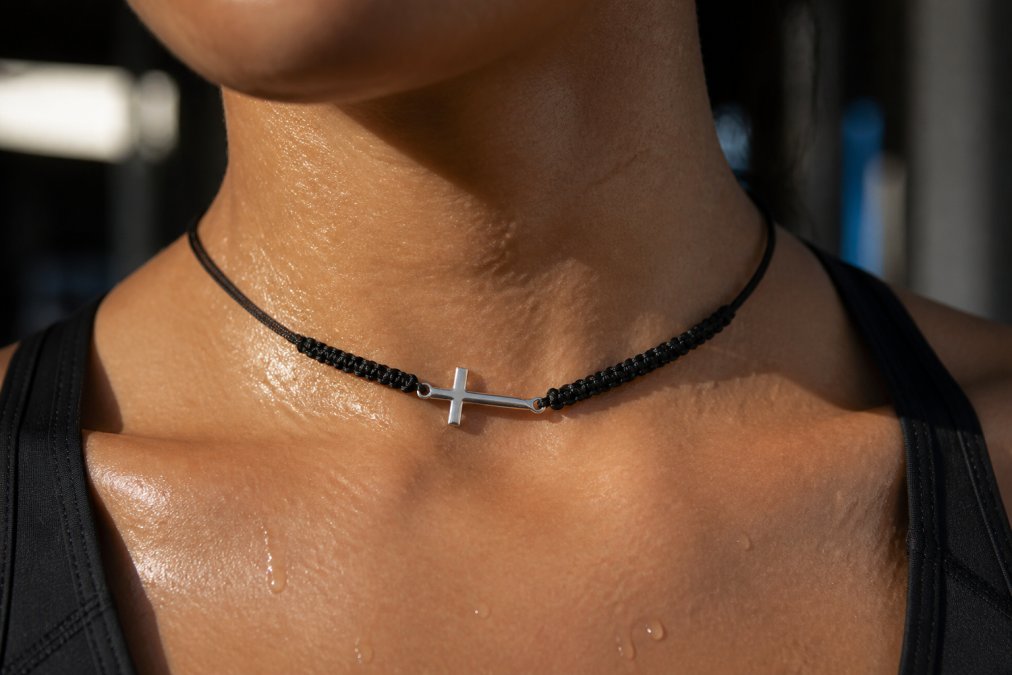
Sweat is corrosive to gold plating because it contains salt, lactic acid, and urea. When these substances sit on gold plating, they initiate a chemical reaction that weakens the protective coating.
The Chemical Reaction Between Sweat and Metal
Gold plating consists of a thin layer of gold bonded to a base metal, typically brass, nickel, or copper. When sweat contacts this surface, acids and salts penetrate microscopic imperfections in the plating. Once they reach the base metal, oxidation begins immediately. The base metal oxidizes faster than solid gold would, and that oxidation spreads backward toward the surface, lifting and separating the gold layer.
This is why cheap jewelry turns green or black quickly. The base metal underneath reacts with sweat, and those oxidation products (primarily copper oxide or nickel compounds) are visible through the thinning plating. The thickness of the plating, measured in microns, matters enormously. Thin plating fails in weeks; quality plating can last months or years.
How pH Levels and Salts Accelerate Corrosion
Human sweat has a pH between 4.5 and 5.5, making it acidic (peer-reviewed research). This acidity dissolves the protective oxide layer on metals, leaving them vulnerable to further corrosion. The salt content in sweat, typically 0.5 to 1 gram per liter, acts as an electrolyte, creating a tiny electrochemical cell on your skin (the NIH).
When two different metals (like gold and copper) are in contact with an electrolyte, electrons flow from one to the other, corroding the less noble metal first. In gold-plated jewelry, the base metal corrodes while the gold plating gradually separates and flakes away. Humid climates and intense exercise amplify this effect. More sweat means more salt and more time for the chemical reaction to progress. Summer heat accelerates the process because warm conditions speed up chemical reactions.
Why Does Cheap Jewelry Turn Skin Green?
When your skin turns green after wearing jewelry, it's not the gold that's the problem, it's the base metal. This green discoloration is copper oxide, a natural byproduct of copper corrosion. Cheap gold-plated jewelry often uses brass (a copper-zinc alloy) or pure copper as the base metal because it's inexpensive.
Base Metal Sensitivity and Plating Thickness
The base metal beneath the plating determines both how quickly it corrodes and what color the corrosion produces. Copper oxidizes to green; nickel oxidizes to black or gray. Brass, which contains copper, produces that distinctive green staining on skin.
Plating thickness, measured in microns, determines how long the base metal stays hidden. Quality gold-plated jewelry typically has 2.5 to 5 microns of gold. Cheap jewelry might have 0.5 microns or less. At 0.5 microns, the plating fails almost immediately under sweat exposure. At 2.5 microns, you might get several months of wear. At 5 microns or more, you're looking at years of durability.
The term "gold-plated" doesn't specify thickness, so a piece could last weeks or years depending on base metal quality and plating thickness. When shopping for jewelry that will handle daily wear, ask about plating thickness. Reputable sellers will provide this information.
Nickel sensitivity adds another layer of complexity. Some people develop contact dermatitis from nickel, which causes itching, redness, and rashes. If a gold-plated piece uses nickel as the base metal, sweat that penetrates the plating exposes your skin to nickel directly. Nickel-free alternatives are worth the investment if you have sensitive skin.
When to Remove Jewelry Before Physical Activity
The simplest way to prevent sweat damage is to remove your jewelry before exercise, swimming, or heavy sweating.
Remove gold-plated jewelry:
- Before workouts, running, or any activity that produces significant sweat
- Before swimming, showering, or bathing (chlorine and fresh water also accelerate corrosion)
- Before sauna or steam room sessions
- Before activities in high-humidity environments
- Before sleeping if you sweat heavily at night
The longer gold plating stays dry, the longer it lasts. One sweaty hour won't ruin quality plating; it's the cumulative effect of dozens of sweaty hours that causes visible tarnishing.
For pieces you want to wear constantly, solid gold or gold-filled jewelry are better choices than gold-plated. Solid gold doesn't corrode. Gold-filled jewelry has a thicker layer of gold bonded to the base metal, making it far more durable than plating (the FTC). The trade-off is cost.
How to Clean Gold Plated Jewelry
When tarnishing appears, proper cleaning can restore appearance without damaging the plating further. The key is using gentle methods that remove oxidation without abrading the gold layer.
Safe Cleaning Methods and Tools
For light tarnishing or daily maintenance:
-
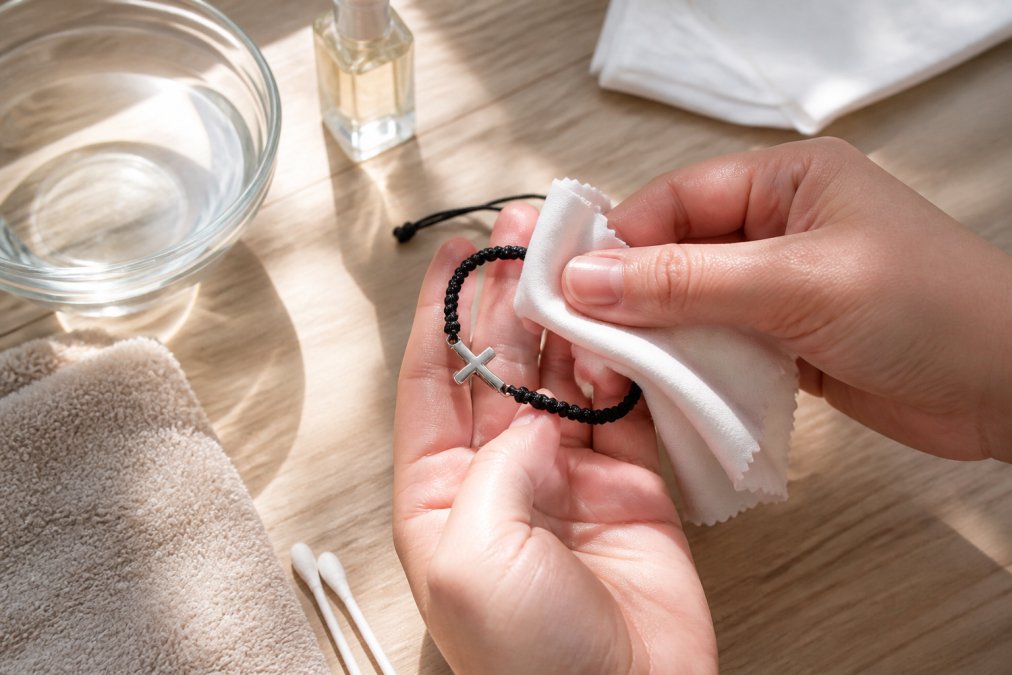
Use a soft polishing cloth designed for jewelry. Microfiber cloths work well and are inexpensive. Gently rub the tarnished areas with light pressure.
-
For heavier tarnishing, create a mild cleaning solution: mix lukewarm water with a tiny drop of dish soap. Submerge the jewelry for 2-3 minutes, then gently rub with a soft cloth or soft-bristled toothbrush. Rinse thoroughly with clean water and dry immediately with a lint-free cloth.
-
Avoid ultrasonic cleaners for gold-plated jewelry. The vibrations can loosen the plating bond.
-
Never use abrasive materials like steel wool, harsh chemicals, or aggressive scrubbing. These remove the gold layer along with the tarnish.
-
For stubborn tarnish, a paste made from baking soda and water can work. Mix baking soda with just enough water to form a paste, apply gently with a soft cloth, and rinse thoroughly. Test this on an inconspicuous area first.
After cleaning, always dry jewelry immediately. Store it in a dry location.
Restoration vs. Replacement
At a certain point, worn plating can't be fully restored through cleaning alone. If the plating has worn through to the base metal in multiple spots, you have two options: professional re-plating or replacement.
Professional re-plating involves stripping the old plating and applying a fresh layer. Expect to pay $25 to $75 per item depending on size and complexity. For inexpensive pieces, re-plating costs more than buying new jewelry. For meaningful pieces with sentimental value, re-plating is worth considering.
If you do choose to re-plate, find a jeweler who specializes in gold plating and request thicker plating than the original, 3 to 5 microns minimum, to extend the time before re-plating becomes necessary again.
How to Prevent Jewelry Tarnish in Summer
Summer heat and humidity are particularly harsh on gold plating. The combination of sweat, sunscreen, salt water, and chlorine creates a perfect storm for corrosion.
Best Practices for Storage and Daily Wear
Prevention starts with smart storage. Keep gold-plated jewelry in a cool, dry place. A jewelry box with compartments works well. Avoid storing pieces in humid bathrooms or damp basements. If you live in a humid climate, consider storing jewelry in a sealed container with silica gel packets to absorb moisture.
Store pieces separately so they don't rub against each other. Wrapping each piece in soft cloth or tissue paper prevents friction.
For daily wear, establish a simple routine:
- Remove jewelry before sweating (workouts, outdoor activities in heat)
- Remove jewelry before water exposure (showering, swimming, washing hands repeatedly)
- Wipe jewelry with a dry cloth before storing it
- Inspect pieces weekly for early signs of tarnishing
If you notice tarnishing starting, clean the piece immediately using gentle methods. Catching tarnish early prevents it from spreading deeper into the plating.
Consider rotating your jewelry collection. Wearing different items on different days reduces cumulative sweat exposure on any single piece, potentially doubling or tripling its lifespan.
Sunscreen and insect repellent also damage gold plating. Apply these products before putting on jewelry, or apply them to areas that won't contact the jewelry.
For summer activities, leave gold-plated jewelry at home. Swap it for solid gold pieces, gold-filled alternatives, or stainless steel jewelry that handles heat and humidity better.
Solid Gold vs. Gold Plating: What Actually Lasts
The durability difference between solid gold and gold plating is dramatic.
Solid gold doesn't corrode. Pure gold (24k) is chemically inert and will never tarnish or turn your skin green. The trade-off is cost and softness. 14k gold (58% gold, 42% other metals) and 18k gold (75% gold, 25% other metals) offer a balance of durability and purity.
Gold-filled jewelry is a middle ground. It consists of a layer of gold bonded to a base metal core, much thicker than plating, typically 5% of the total weight is gold. Gold-filled pieces last 10-30 years with normal wear, compared to months or a few years for gold-plated jewelry. Gold-filled costs more than plated but significantly less than solid gold.
Gold plating lasts anywhere from weeks to a few years depending on plating thickness, base metal quality, and wear patterns. It's the most affordable option but requires careful maintenance and regular replacement.
For pieces you wear constantly and want to last indefinitely, solid gold is the best choice. For meaningful pieces you wear regularly but not daily, gold-filled is a smart investment. For trendy pieces or affordable daily-wear accessories, gold-plated jewelry makes sense financially, just understand that maintenance and eventual replacement are part of the equation.
At Carlotta, we offer gold-plated cross bracelets and chains designed for accessible pricing without sacrificing quality. Our S925 CROSS BRACELET and CROSS BRACELET (S925) are crafted with attention to plating thickness and base metal selection, meaning they outlast typical cheap gold-plated jewelry. For customers seeking meaningful, faith-based jewelry, our GOD FIRST BRACELETS are also a great choice. We focus on providing quality and style.


The key is matching the jewelry quality to how you'll actually use it. A piece you wear to special occasions can be thinner-plated and more delicate. A piece you wear to the gym needs thicker plating and a quality base metal.
Gold plating will fade with sweat exposure, that's chemistry, not a flaw in your jewelry. But understanding why it happens and how to prevent it means you can wear your favorite pieces confidently. Remove jewelry before sweating, store it properly, clean it gently, and rotate your collection to spread wear across multiple pieces. For daily-wear jewelry that handles sweat and humidity, invest in thicker plating or higher-quality materials. At Carlotta, our cross-themed bracelets and chains are designed with this durability in mind, offering the quality and style you need without breaking your budget. Shop our collection and enjoy up to 30% off your favorite pieces.
Frequently Asked Questions
Q: How long does it take for gold plating to fade with sweat?
A: Gold plating typically shows visible wear within 6-18 months of regular exposure to sweat, depending on plating thickness, base metal quality, and how often you wear the piece. Thicker plating (2-3 microns) lasts longer than thin plating (0.5-1 micron). Heavy sweaters or those who exercise frequently will notice fading faster. High-quality pieces with protective coatings and nickel-free bases resist tarnish better than cheap jewelry, which can show green discoloration within weeks.
Q: Can I shower or exercise with gold plated jewelry on?
A: You should remove gold plated jewelry before showering or exercising. Warm water, soap, and especially sweat create an acidic environment that accelerates corrosion of the protective coating. If you must wear it during light activity, rinse it immediately with cool distilled water and dry it completely with a soft cloth. Never wear gold plated pieces during intense workouts, swimming, or prolonged sweating. Solid gold or high-quality stainless steel alternatives are better choices for active wear.
Q: Why does cheap jewelry turn my skin green?
A: Cheap jewelry turns skin green because the base metal (often brass or low-grade alloys containing copper) oxidizes and reacts with your skin's natural acids and moisture. Thin or poor-quality gold plating wears away quickly, exposing the base metal underneath. The green discoloration is copper oxide. Quality matters: pieces with thicker plating, nickel-free bases, and sterling silver or stainless steel foundations resist this reaction much longer. Carlotta's gold-plated bracelets use higher-quality base metals and protective coatings to minimize this issue.
Q: What's the best way to clean and store gold plated jewelry?
A: Clean gold plated jewelry gently with a soft polishing cloth and mild soap solution, avoiding abrasive scrubbing that causes micro-abrasion and strips the plating faster. Store pieces in a cool, dry place away from moisture and direct sunlight, a jewelry box with individual compartments or small pouches works well. Keep them away from humidity, perfume, and lotions, which accelerate oxidation. Never use ultrasonic cleaners or harsh chemicals on plated pieces. Proper storage extends longevity significantly and prevents tarnish buildup.
This article was written using GrandRanker