

Is Gold Plated Jewelry Worth the Price?
Table of Contents
- What Is Gold Plated Jewelry?
- Gold Plated vs. Gold Filled vs. Solid Gold
- How Long Does Gold Plating Last?
- Why Does Cheap Jewelry Turn Skin Green?
- Pros and Cons of Gold Plated Jewelry
- How to Clean Gold Plated Jewelry
- Is Gold Plated Jewelry Worth the Investment?
- Conclusion
Last Updated: August 20, 2026
What Is Gold Plated Jewelry?
Gold plated jewelry is a base metal, typically brass, copper, or stainless steel, covered with a thin layer of gold applied through electroplating. The gold coating gives the piece the appearance of solid gold at a fraction of the cost.
The Federal Trade Commission (FTC) requires that gold plating be at least 10 karat gold with a minimum thickness of 2.5 microns to be labeled "gold plated." Most quality gold plated jewelry falls between 2.5 and 10 microns thick. The electroplating process bonds gold atoms to the base metal surface, creating a durable, lustrous finish that looks virtually identical to solid gold when properly maintained. However, since the plating is only a surface layer, lifespan and care become critical factors in determining value.
Carlotta's curated collection includes gold plated chains, bracelets, and cross-themed accessories designed for everyday wear, balancing aesthetic appeal with practical durability.
Gold Plated vs. Gold Filled vs. Solid Gold
Understanding the differences between these three types of gold jewelry is essential when evaluating value.
Gold plated consists of a thin electroplated layer of gold (2.5-10 microns) over base metal. It's the most affordable but least durable option, as the plating wears away with time and friction.
Gold filled (rolled gold) features a much thicker gold layer, at least 5% of total weight by law, mechanically bonded to a base metal core. The gold layer is roughly 100 times thicker than in gold plated pieces, lasting 10-30 years with proper care.
Solid gold is genuine gold throughout (typically 10K, 14K, or 18K karat). The entire piece is made of gold alloy, making it the most durable and expensive option. It won't tarnish or cause skin reactions in most wearers and retains resale value far better.
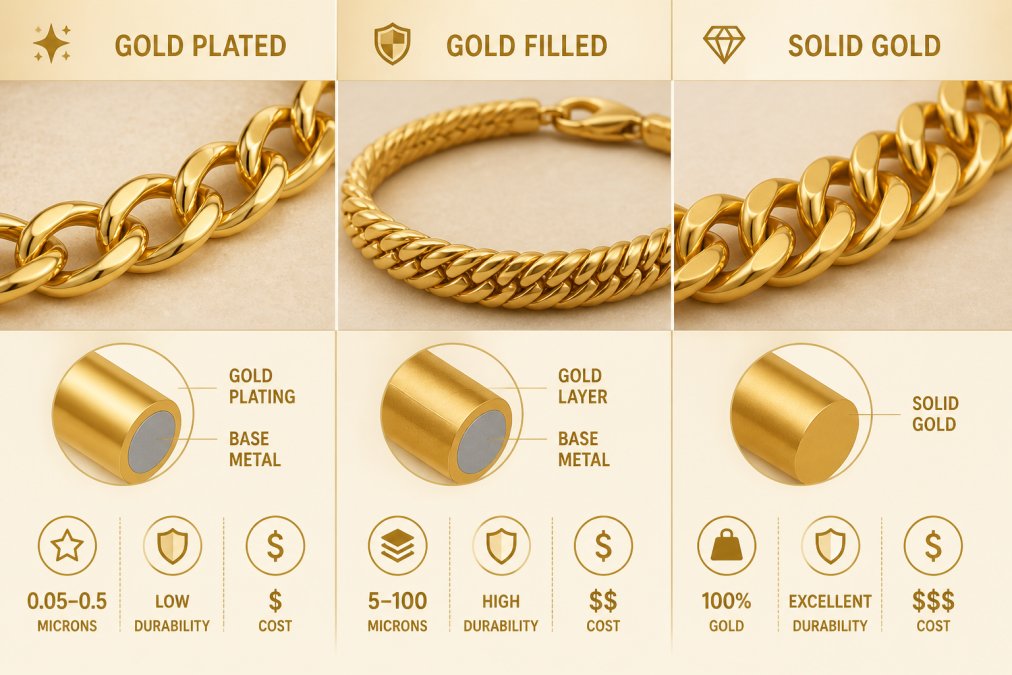
| Type | Gold Thickness | Durability | Price Range | Lifespan | Resale Value |
|---|---|---|---|---|---|
| Gold Plated | 2.5-10 microns | 1-3 years | Most affordable | Short | Minimal |
| Gold Filled | ~100+ microns | 10-30 years | Moderate | Long | Modest |
| Solid Gold | 100% throughout | Indefinite | Most expensive | Lifetime | High |
For everyday fashion pieces worn seasonally, gold plated jewelry offers good value. For heirloom pieces or items worn for decades, gold filled or solid gold make more financial sense.
How Long Does Gold Plating Last?
Most gold plated jewelry lasts one to three years with regular wear, assuming moderate daily use several times per week. Constant wear accelerates plating degradation due to friction with skin and clothing, while occasional wear extends lifespan significantly.
Higher-quality base metals like stainless steel hold plating better than cheaper alloys. Nickel-containing base metals corrode faster once plating wears through.
Environmental factors accelerate wear: sweat, saltwater, chlorine, perfumes, and harsh soaps all degrade plating. Storage in dry environments extends lifespan compared to humid bathrooms or saltwater exposure.
Re-plating is possible but costly, professional services may approach or exceed the original purchase price. This is important when evaluating whether gold plated jewelry justifies the initial investment if you want pieces to last longer than the initial plating.
Why Does Cheap Jewelry Turn Skin Green?
The green discoloration that appears on skin after wearing cheap jewelry stems from the base metal underneath the plating, not the gold itself. When plating wears away, copper and brass, the most common base metals in inexpensive jewelry, oxidize when exposed to moisture, sweat, and skin pH, creating a greenish compound that transfers to skin.
The reaction isn't dangerous but indicates poor-quality construction. Higher-quality gold plated pieces use base metals that resist oxidation better or apply thicker plating that lasts longer. Stainless steel bases corrode far more slowly than raw copper or low-grade brass.
Nickel-containing base metals pose a separate concern: many people develop contact dermatitis or allergic reactions to nickel. If you have sensitive skin or known metal allergies, nickel-free gold plated jewelry is worth selecting. Carlotta's collection includes nickel-free options specifically designed for wearers with sensitive skin.
Green discoloration also depends on individual skin chemistry. People with higher natural acidity or who perspire heavily may see the reaction occur faster than others.
Pros and Cons of Gold Plated Jewelry
Pros:
Affordability. Gold plated pieces typically cost 90% less than comparable solid gold jewelry while delivering nearly identical visual appeal.
Aesthetic appeal. Gold plated jewelry looks genuinely beautiful with a lustrous finish and rich color that's nearly indistinguishable from solid gold.
Variety and design. Because gold plating is affordable, manufacturers offer more diverse designs and trends than solid gold typically allows.
Hypoallergenic options available. When manufactured with nickel-free base metals, gold plated jewelry can be worn safely by people with metal sensitivities.
Cons:
Short lifespan. Gold plated jewelry typically lasts one to three years with regular wear, making it impractical for long-term ownership.
Plating wear and degradation. As plating wears away, the base metal underneath becomes visible, creating an uneven, patchy appearance.
No resale value. Once plating wears away, the jewelry is essentially worthless. This makes gold plated jewelry a pure consumption purchase.
Risk of skin reactions. Lower-quality pieces with nickel-containing base metals can cause green discoloration or allergic reactions once plating deteriorates.
Irreparability. Re-plating costs often approach or exceed the original purchase price, making it financially impractical for affordable jewelry.
For everyday fashion pieces worn for a season or two, these cons are manageable. For jewelry you want to keep long-term, they become significant drawbacks.
How to Clean Gold Plated Jewelry
Proper maintenance extends the lifespan of gold plated jewelry and keeps it looking lustrous.
Basic cleaning steps:
-
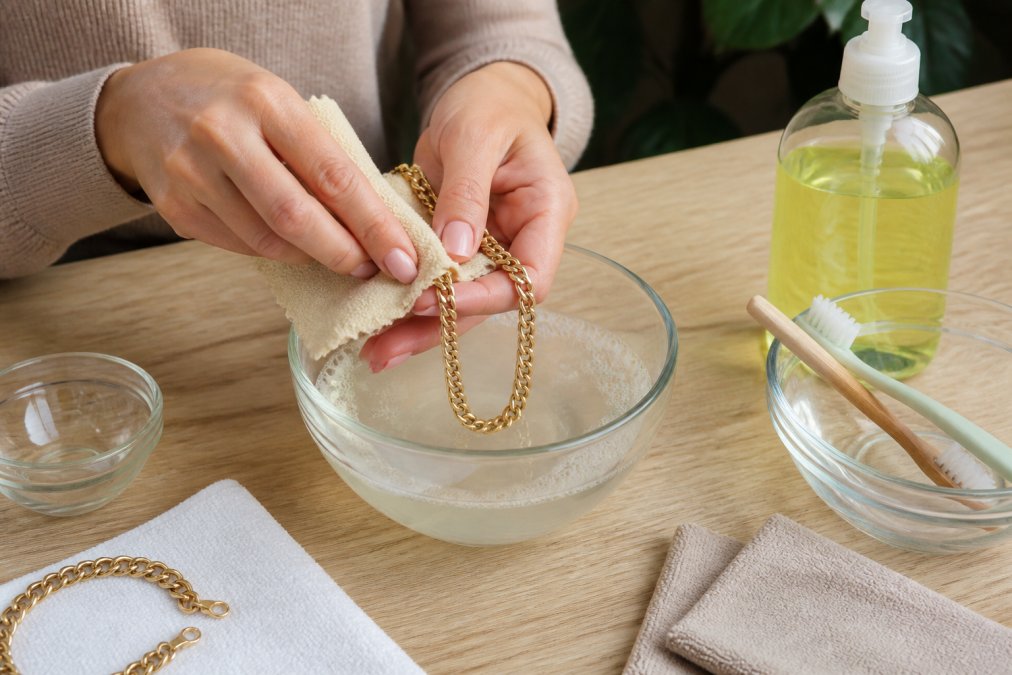
Use mild soap and lukewarm water. Mix a few drops of gentle dish soap with lukewarm water. Avoid hot water, which weakens the bond between gold layer and base metal.
-
Soak the piece briefly. Let the jewelry sit in soapy water for 5-10 minutes to loosen dirt and oils.
-
Gently scrub with a soft cloth. Use a soft microfiber cloth or soft-bristled brush. Avoid abrasive materials that can scratch and wear away plating.
-
Rinse thoroughly with clean water. Rinse away all soap residue with lukewarm water.
-
Dry immediately. Pat the jewelry dry with a clean, soft cloth. Don't air dry, as water spots can form and moisture accelerates oxidation.
What to avoid:
Never use commercial jewelry cleaners, ultrasonic cleaners, or steam cleaners on gold plated jewelry. Don't wear gold plated jewelry while swimming, showering, or exercising. Store it in a dry place, ideally in a soft pouch or jewelry box, avoiding humid environments.
Regular, gentle cleaning keeps gold plated jewelry looking fresh and extends its wearable lifespan with minimal effort.
Is Gold Plated Jewelry Worth the Investment?
Whether gold plated jewelry is worth the price depends on your expectations, budget, and intended use.
Gold plated jewelry is worth the investment if:
You want affordable, beautiful pieces for seasonal or trend-driven fashion. The short lifespan doesn't matter if you replace pieces regularly anyway.
You're on a tight budget and need quality-looking jewelry for daily wear. The visual appeal is genuine, even if longevity isn't.
You have sensitive skin and can find nickel-free gold plated options. Accessibility to hypoallergenic jewelry without solid gold pricing makes it worthwhile.
You want to test a style before committing to solid gold. An affordable gold plated piece lets you see if you'll actually like wearing a particular design long-term.
Gold plated jewelry is NOT worth the investment if:
You want pieces lasting years or decades. The one- to three-year lifespan means constant replacement, ultimately costing more than gold filled or solid gold alternatives.
You're looking for resale value or investment potential. Gold plated jewelry has zero resale value once plating wears away.
You wear jewelry constantly and want it to withstand heavy daily use. Gold filled or solid gold is far more practical.
You prefer minimalism and want fewer, higher-quality pieces. If you'd rather own five pieces worn for years rather than twenty pieces replaced annually, gold plated isn't the best fit.
Gold plated jewelry is worth the price as a fashion accessory for short-term wear, but it's not an investment in the traditional sense. You're paying for temporary beauty and affordability, not durability or value retention.
Carlotta's gold plated collection emphasizes aesthetic appeal and accessibility, with options like cross-themed jewelry and chains for everyday styling. Seasonal promotions offering up to 30% off on select pieces make the already affordable prices even more attractive for buyers building a rotating wardrobe of fashion jewelry.
Frequently Asked Questions
How long does gold plated jewelry typically last?
Gold plated jewelry typically lasts 1-3 years with regular wear, though this depends heavily on how often you wear it and how well you care for it. The plating thickness, measured in microns, directly affects durability. Thicker plating lasts longer. Daily wear accelerates wear on the gold layer, while pieces worn occasionally can maintain their appearance for several years. Proper storage, regular cleaning, and avoiding exposure to water, sweat, and harsh chemicals can significantly extend the life of your gold plated pieces.
Why does cheap jewelry turn skin green?
Cheap jewelry often turns skin green because the base metal underneath the plating contains copper or other alloys that oxidize when exposed to moisture, sweat, and skin oils. When the gold plating is thin or wears away, these base metals react with your skin's chemistry, creating a greenish discoloration. This is purely a chemical reaction and not harmful, though it can be annoying. Higher-quality gold plated jewelry with thicker plating and better base metals resists this discoloration longer. Nickel-free options are especially important if you have sensitive skin or metal allergies.
Does gold plated jewelry have any resale value?
Gold plated jewelry has minimal resale value. Most buyers and resellers focus on the base metal and solid gold content, not the thin gold layer on top. While solid gold pieces retain significant melt value, gold plated pieces are typically worth only a fraction of their original purchase price, if anything. If you're buying gold plated jewelry as an investment or expecting to recoup your money later, it's best to view it as a fashion accessory rather than a financial asset. The value lies in wearing and enjoying the piece during its lifespan.
What's the difference between gold plated and gold filled jewelry?
Gold plated jewelry has a thin layer of gold (usually less than 2.5 microns) bonded to a base metal through electroplating. Gold filled jewelry has a much thicker layer of gold (at least 5% of the total weight) mechanically bonded to a base metal. This means gold filled pieces last significantly longer, typically 10-30 years, compared to 1-3 years for gold plated. Gold filled is more durable and retains its appearance longer, making it a better investment for pieces you plan to wear frequently. However, gold filled is more expensive than gold plated, so the choice depends on your budget and how often you'll wear the piece.
Is gold plated jewelry worth buying if I have sensitive skin?
Gold plated jewelry can work for sensitive skin if you choose carefully. Look for pieces with nickel-free or hypoallergenic base metals, as nickel is a common allergen. The thicker the gold plating, the longer it will protect your skin from contact with base metals. If you have a history of reactions to cheap jewelry, consider gold filled or solid gold alternatives, or ensure your gold plated pieces have high-quality construction. Always check product descriptions for material composition, and if possible, test the piece for a short period first to confirm it doesn't irritate your skin.
Gold plated jewelry serves a specific purpose in most wardrobes: affordable, beautiful pieces for regular rotation rather than long-term investment. If you understand the limitations and choose pieces accordingly, gold plated jewelry worth the price. For those seeking durability without the solid gold expense, explore Carlotta's collection of nickel-free, ethically sourced gold plated chains and bracelets. Shop All and discover pieces that balance style, affordability, and quality craftsmanship.
This article was written using GrandRanker