

The Practical Guide to Buying Ethical Sustainable Jewelry
Last Updated: November 16, 2026
Quick Summary
This guide to buying ethical sustainable jewelry separates two promises: the people side (fair labor, safe conditions, fair pay) and the planet side (recycled metals, lab-grown stones, lower waste). Verify every claim by naming the exact standard, finding a searchable certificate number, and confirming the certified material is in your specific piece.
- Recycled gold and silver avoid new mining but say nothing about refiner working conditions.
- Fairmined and Fairtrade gold pay small-scale miners a guaranteed minimum price plus a premium.
- A certification you cannot look up is marketing, not verification.
- Thicker plating and a secure clasp outlast thin coatings and decorative findings.
- A brand can certify one product line and sell uncertified pieces in another.
Table of Contents
- What Ethical and Sustainable Jewelry Actually Means
- Eco-Friendly Jewelry Materials: What to Look For
- Ethical Gold Jewelry: Fairmined, Fairtrade, and Traceability
- How to Verify Sourcing and Certification Claims
- Comparing Ethical Jewelry Standards at a Glance
- Affordable Sustainable Jewelry Brands: What Budget Buyers Should Know
- How to Choose Sustainable Jewelry Brands You Can Trust
- Shop Carlotta's Collection With Confidence
- Frequently Asked Questions
What Ethical and Sustainable Jewelry Actually Means
Ethical and sustainable jewelry is jewelry made with materials that are sourced, processed, and finished in ways that limit harm to people and the environment, and that can be worn for years rather than a season.
A ring can be carbon-light and still be made in a workshop with unsafe conditions. A necklace can be Fairmined gold and still sit in a drawer after six months.
The Two Sides: People and Planet
The people side covers fair labor, safe working conditions, fair pay, and artisan welfare from mine to bench. The planet side covers mining practices, recycled metals, reduced waste, eco-friendly production, and the carbon footprint of shipping a finished piece.
Most buyers fixate on the planet side because it is easier to label. The people side is harder to verify, which is exactly why it deserves the scrutiny we give it below.
Eco-Friendly Jewelry Materials: What to Look For
The most eco-friendly jewelry materials are recycled metals and lab-grown stones, because both avoid new mining. Material choice is the single biggest lever a buyer controls, and it is also the easiest claim for a seller to make loosely.
Recycled Gold and Recycled Silver
Recycled gold and recycled silver are refined from existing scrap, industrial waste, and old jewelry rather than freshly mined ore.
What most guides miss is that "recycled" describes the feedstock, not the working conditions of whoever refined it. Ask a seller whether their recycled metals come from a refiner that holds third-party certification, not just whether the word appears on the label.
Lab-Grown Diamonds and Gemstones
Lab-grown diamonds and lab-grown gemstones are created in a lab rather than extracted from the ground (the FTC). They carry the same physical and optical properties as mined stones, and they sidestep the conflict-diamond question entirely.
The trade-off is energy. A lab-grown stone is only as clean as the grid powering the reactor, so treat "lab-grown" as a starting question, not a final answer.
Ethical Gold Jewelry: Fairmined, Fairtrade, and Traceability
Fairmined and Fairtrade gold are certification programs that pay small-scale miners a guaranteed minimum price plus a premium, and require verified working conditions.
For a deeper walkthrough of buying traceable stones and metals, see our guide on how to buy ethically sourced anniversary diamonds online. The short version: certification without traceability is a logo, and traceability without certification is a story.
How to Verify Sourcing and Certification Claims
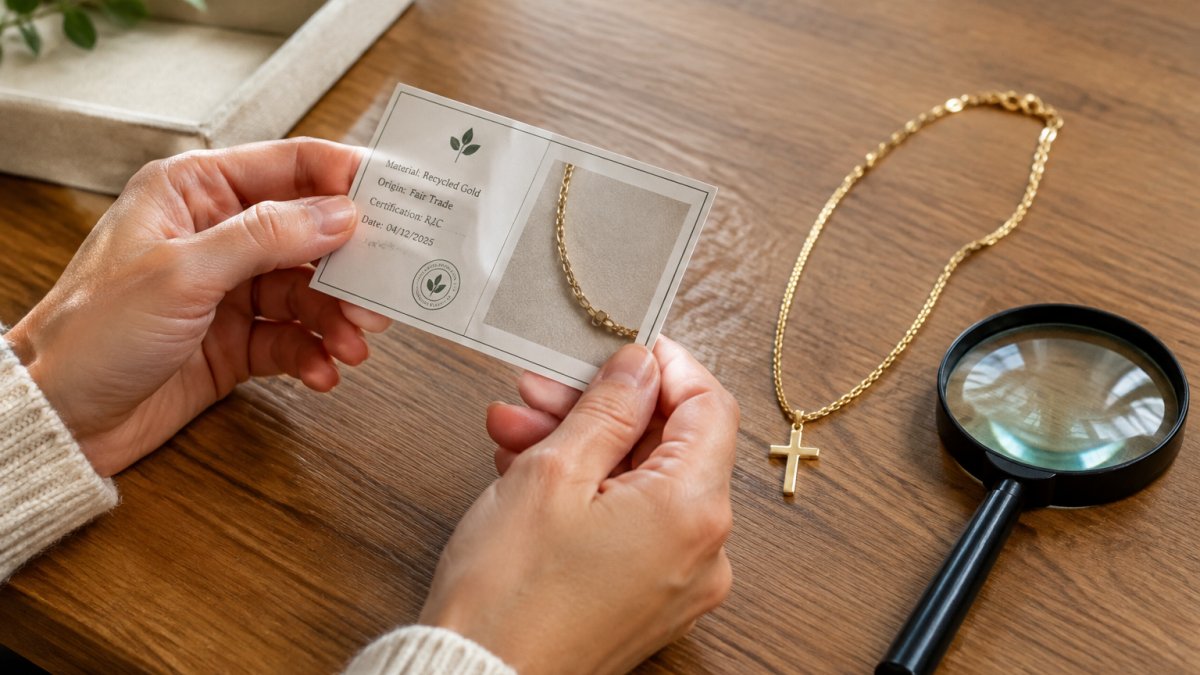
Verification means checking a claim against an independent record rather than trusting the product page. A certification you cannot look up is not a certification; it is marketing.
A Step-by-Step Framework for Evaluating Certifications
Use this checklist before you pay:
- Name the standard. Confirm the exact program (Fairmined, Fairtrade, Responsible Jewelry Council membership) rather than a vague "ethically made" badge.
- Find the certificate number. Look for a license or certificate ID you can search on the certifying body's own site.
- Check the scope. A certification may cover a refiner, a mine, or a brand's membership, not the specific piece you are buying.
For a broader set of buyer safeguards, from spotting fake storefronts to reading return terms, our guide on tips for buying jewelry online safely covers the practical checks.
Comparing Ethical Jewelry Standards at a Glance
The table below compares the main standards and material claims you will meet while shopping. Use it to match a claim to what it actually guarantees.
| Standard or Claim | What It Covers | What It Does Not Guarantee | Best For |
|---|---|---|---|
| Fairmined gold | Small-scale miners, fair price, working conditions | Recycled content or stone sourcing | Buyers prioritizing miner welfare |
| Fairtrade gold | Minimum price plus premium, labor standards | Gemstone traceability | Buyers wanting audited miner pay |
| Recycled gold or silver | Feedstock avoids new mining | Refiner labor conditions | Lower-impact metal choice |
| Lab-grown diamonds | Avoids mined-stone conflict risk | Low energy use in production | Budget-conscious stone buyers |
| Responsible Jewelry Council | Supply-chain due diligence membership | A guarantee for one specific piece | Screening a brand's overall practice |
| "Ethically made" (unbacked) | Nothing verifiable | Everything | Nobody; ask for specifics |
Affordable Sustainable Jewelry Brands: What Budget Buyers Should Know
Affordable sustainable jewelry is not a contradiction, but it requires choosing which trade-offs you accept. At lower price points, the realistic wins are recycled or plated metals, lab-grown stones, and pieces built to last rather than pieces built to impress for one event. The useful skill is understanding what actually drives the price, so you can tell where a lower number reflects a smarter material choice and where it reflects a hidden durability cost.
What Drives the Price of an Ethical Piece
Four cost buckets explain most of the sticker price, and each one behaves differently at the budget end:
- Metal weight and purity. A solid 14k gold chain costs more than a gold-plated brass chain because the raw metal is a larger share of the price. Plated pieces can look identical on day one and diverge sharply after months of wear.
- Stone type and size. Lab-grown stones typically cost less than comparable mined stones, and smaller stones cost less than larger ones at the same quality. A budget piece often saves here without sacrificing appearance.
- Labor and certification. Fairmined and Fairtrade premiums, audited working conditions, and third-party certification add real cost. A brand that carries them is not automatically overpriced; it is paying for verification you can check.
A common pattern is that a lower price comes from thinner plating or a lighter clasp rather than from a cheaper stone. Neither is automatically wrong, but you should know which trade-off you are accepting.
How to Assess Durability and Craftsmanship Before You Buy
Durability is the budget buyer's best sustainability lever, because a piece you replace twice a year has a worse footprint than one you wear for five. Ask or look for:
- Plating thickness. Thicker plating (often described in microns) lasts longer than a thin flash coating. If a seller will not state it, treat that as a signal.
- Clasp and findings. A secure clasp and solid findings outlast decorative ones and are the first parts to fail on cheap pieces.
- Setting security. Prongs and bezels should hold stones firmly; loose settings lose stones.
Watch out: a high price is not proof of ethical sourcing or better craftsmanship, price and practice are separate claims, and each needs its own verification.
A Budget Buyer's Decision Path
Match your budget to the trade-off you can live with:
- Under a tight budget: choose recycled or plated metals and lab-grown stones, and prioritize construction (clasp, plating thickness) over stone size.
- Mid budget: look for solid recycled gold or silver where possible, and ask for the refiner's certification.
- Stretch budget: prioritize certified Fairmined or Fairtrade metal and traceable stones, where the premium buys verifiable labor and sourcing standards.
For a longer strategy on assembling a collection without overspending, read how to build a luxury jewelry collection on a budget.
How to Choose Sustainable Jewelry Brands You Can Trust
Choosing a sustainable jewelry brand comes down to four checks: material origin, certification, durability, and after-sales support. A brand that answers all four in plain language is usually the real thing. But trust is not only about materials, it is also about the people in the supply chain, and that is where most brand pages go quiet.
- Material origin: Can they name the refiner or the mill?
- Certification: Is there a searchable certificate, not just a badge?
- Durability: Do they describe plating thickness, clasp type, and care?
A common mistake is treating a brand's sustainability page as evidence. Treat it as a claim, then verify it with the checklist above. What most shoppers never ask is the durability question, and it matters more than any badge: a piece you replace twice a year has a worse footprint than one you wear for five.
Worker Rights and Supply-Chain Accountability
Labor standards are the hardest part of sustainability to verify, because the mine and the refinery sit several steps away from the product page. A brand that takes accountability seriously can usually speak to four things:
- Wages and working conditions. Fairmined and Fairtrade programs set a guaranteed minimum price plus a premium and require verified working conditions for small-scale miners. Ask whether the certified material is actually in your piece.
- Artisanal and small-scale mining. A large share of gold comes from small-scale operations where formal labor protections are thin. Certification programs exist specifically to improve those conditions, which is why the premium matters.
- Grievance mechanisms. A credible brand can explain how a worker or supplier raises a complaint and what happens next. If no such process exists, accountability is aspirational.
A useful test is to ask one direct labor question, for example, "Which refiner supplied this gold, and is it certified?" A clear answer is a good sign; a deflection is your answer.
Screening a Brand in Ten Minutes
- Find the exact standard named on the product page, not just a badge.
- Search the certificate or license number on the certifying body's own site.
- Check the scope: does it cover the mine, the refiner, or only the brand's membership?
- Confirm the certified material matches the metal in your piece.
- Read the return policy and ask one direct sourcing question.
Watch out: a brand can hold a certification for one product line and sell uncertified pieces in another, always match the claim to the specific item.
Repair, Resale, and End-of-Life
The most sustainable piece is the one you keep wearing. Repair a broken clasp before replacing a chain, and resell or gift pieces you have outgrown rather than discarding them. If you are evaluating a pre-owned piece, our checklist for what to look for when buying vintage jewelry covers authenticity, condition, and value.
Shop Carlotta's Collection With Confidence
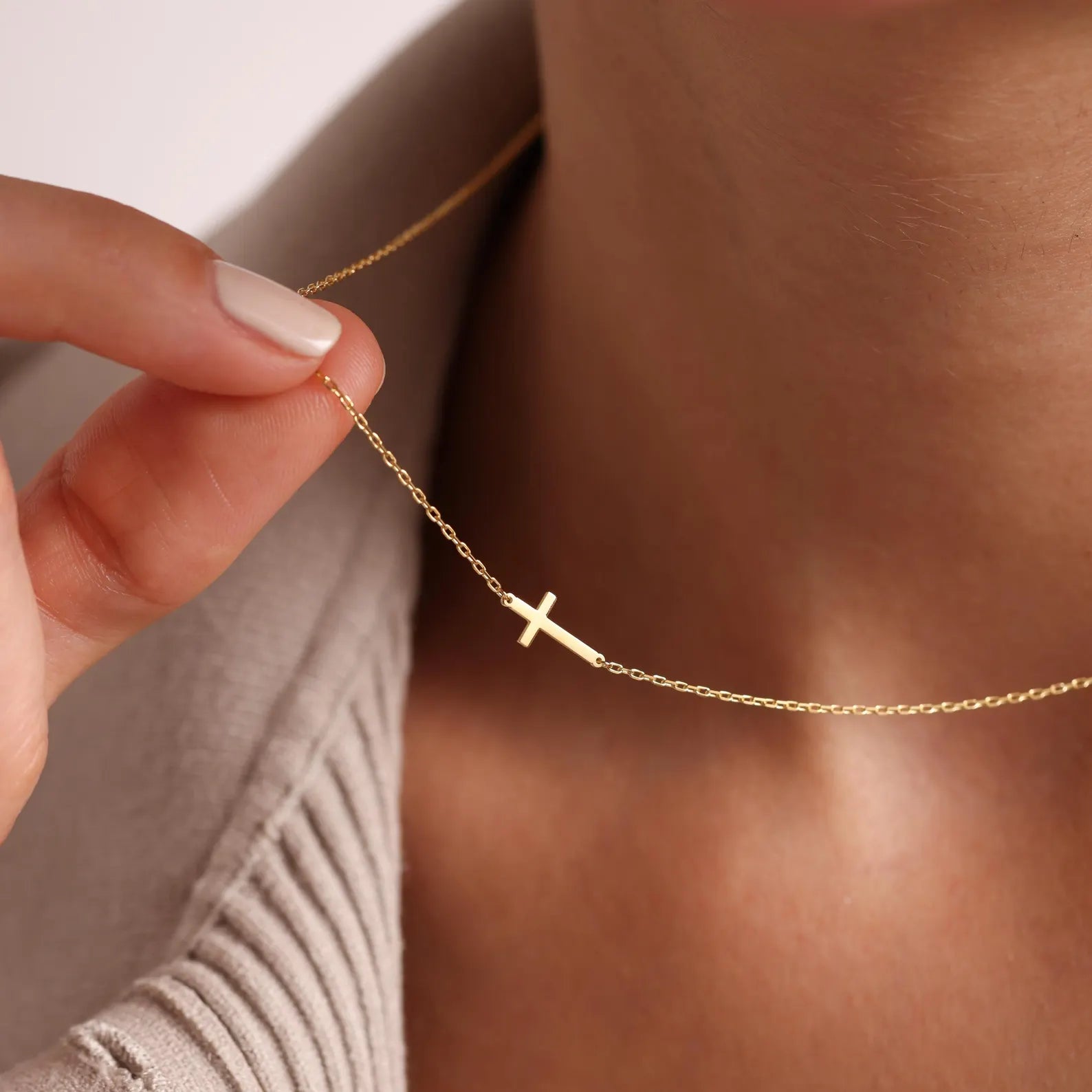
We built Carlotta around the part of sustainability that buyers can actually feel: pieces designed for daily wear, in chains, bracelets, and cross-themed accessories that finish an outfit instead of competing with it.
If you are ready to choose a piece you will wear constantly, start with our CROSSLET CROSS and see how it fits your everyday look.
The hard part of ethical jewelry is not finding claims; it is verifying them without a gemologist on call.
Frequently Asked Questions
What makes jewelry ethical and sustainable?
Ethical jewelry addresses both people and planet. On the human side, it means fair labor, safe working conditions, and artisan welfare throughout the supply chain. On the environmental side, it means responsible mining, recycled metals, reduced waste, and a smaller carbon footprint. A piece is only truly ethical when the brand can trace its material origin and back up claims with recognized certifications like the Responsible Jewelry Council or Fairmined. Ask for documentation before you buy.
How can I tell if a jewelry brand is ethical?
Start with brand research. Check whether the brand publishes a sourcing policy, names its suppliers, and holds third-party certifications. Look for the Responsible Jewelry Council code of practices, Fairmined or Fairtrade gold labels, and clear statements on recycled metals. Vague phrases like eco-friendly without specifics are a warning sign. A trustworthy brand answers direct questions about gemstone provenance and working conditions, and it does not dodge when you ask to verify sourcing claims.
Is recycled gold more sustainable than newly mined gold?
Recycled gold avoids new mining, which is the most environmentally damaging stage of the supply chain. It reduces land disruption, water use, and the carbon footprint tied to extraction, and it keeps existing metal in circulation instead of in landfills. The gold is chemically identical, so durability and quality do not suffer. For buyers focused on environmental impact, recycled gold is usually the stronger choice, though fair trade mining standards still matter for the people who depend on mining livelihoods.
Are affordable sustainable jewelry brands available?
Yes. Affordable sustainable jewelry brands exist, and the key is understanding where the money goes. Gold-plated pieces, recycled silver, and lab-grown gemstones bring costs down without sacrificing ethics. Watch for seasonal promotions that make ethical pieces more accessible, and check that lower prices do not come from cutting corners on labor or materials. Ask how the brand verifies its supply chain, and favor pieces built to last so you buy less over time.
What certifications should I look for when buying ethical jewelry?
The most recognized include the Responsible Jewelry Council certification for supply-chain accountability, Fairmined and Fairtrade gold for responsible mining and fair labor, and independent lab reports for lab-grown diamonds and gemstones. Look for third-party audits rather than self-declared claims. A brand that holds these certifications will usually list them on product pages and can provide certificate numbers you can check directly with the issuing body.
How can I make jewelry last longer?
Store pieces separately in a dry pouch, remove them before swimming or showering, and keep perfume and lotions off plated surfaces. Wipe gold-plated chains with a soft cloth after wearing, and avoid abrasive cleaners. Check clasps and settings regularly so small repairs do not become replacements. Choosing durable, well-made pieces and caring for them properly is one of the simplest ways to reduce waste and get more value from every purchase, which is central to conscious luxury.
