

Gold Plated Jewelry for Sensitive Skin: 7 Safe Options
Table of Contents
- What Makes Gold Plated Jewelry Safe for Sensitive Skin
- Gold Vermeil vs. Gold Plated for Sensitive Skin
- Best Base Metals for Sensitive Skin Jewelry
-
7 Reliable Gold Plated Jewelry Options for Sensitive Skin
- 1. S925 Cross Bracelet: Stainless Steel Foundation
- 2. Cross Necklace with 14K Gold Coating: Triple-Plated Protection
- 3. CZ Stone Cross: 316L Stainless Steel with Anti-Tarnish Finish
- 4. Zirconia Cross Necklace: Durable and Affordable
- 5. Crosslet Cross: Side-Pendant Design
- 6. Zirconia Cross: Premium Cubic Zirconia Accent
- 7. Crown Cross: Budget-Friendly Statement Piece
- How to Tell if Gold Plated Jewelry Is High Quality
- How to Clean Gold Plated Jewelry Without Damaging It
- Recognizing and Preventing Allergic Reactions
- Conclusion
Last Updated: August 19, 2026
What Makes Gold Plated Jewelry Safe for Sensitive Skin
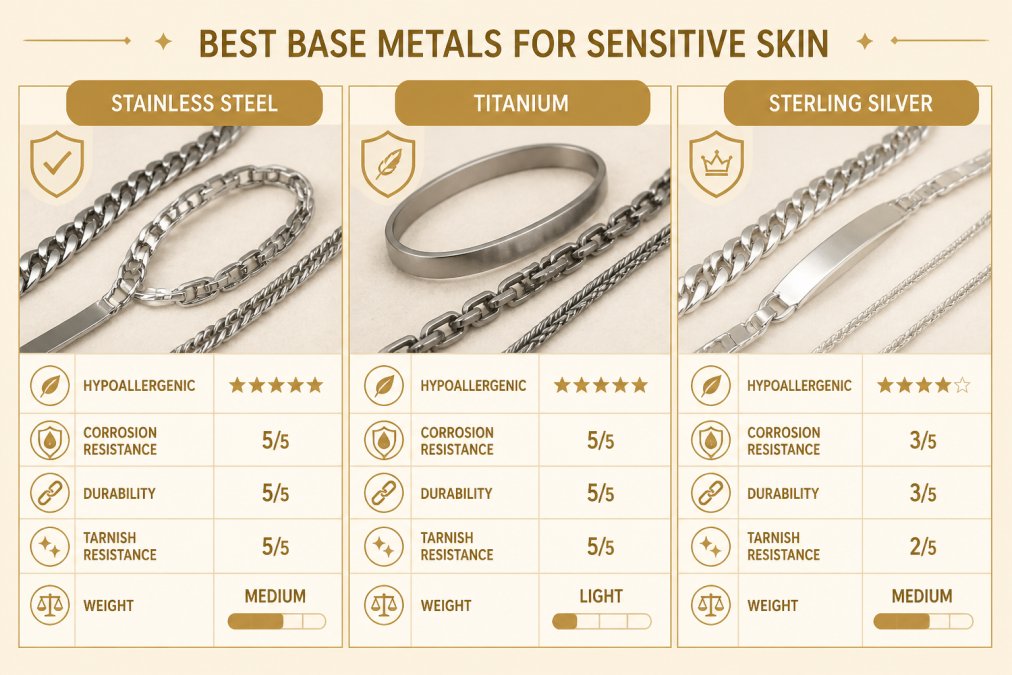
Finding jewelry that won't trigger irritation requires understanding the base metal underneath the gold coating. Cheap metals like nickel oxidize quickly, releasing metal ions that trigger contact dermatitis, the inflammatory response causing green staining and rashes. Gold plated jewelry for sensitive skin works when the base metal resists oxidation and the plating quality is sufficient to maintain a protective barrier.
Understanding nickel-free and hypoallergenic construction
Nickel-free construction means the base metal contains zero nickel, the most common trigger for metal allergies. True hypoallergenic jewelry uses base metals that resist oxidation naturally and don't leach ions into your skin. Plating thickness, measured in microns (one-millionth of a meter), directly determines how long the gold barrier lasts before the base metal shows through.
When you see "hypoallergenic" on packaging, verify what it means. Real hypoallergenic jewelry has documented base metal composition and measurable plating thickness. Look for pieces specifying their base metal (316L stainless steel, surgical titanium, or sterling silver) rather than vague descriptions like "alloy."
The role of base metals in preventing contact dermatitis
Contact dermatitis occurs when metal ions migrate from the base metal into your skin, faster when sweat, moisture, or acidic conditions are present. Cheap base metals corrode in the presence of moisture and salt from sweat, releasing particles that trigger immune responses. The gold plating acts as a barrier, but only while intact. Once it wears through, your skin contacts the problematic metal directly.
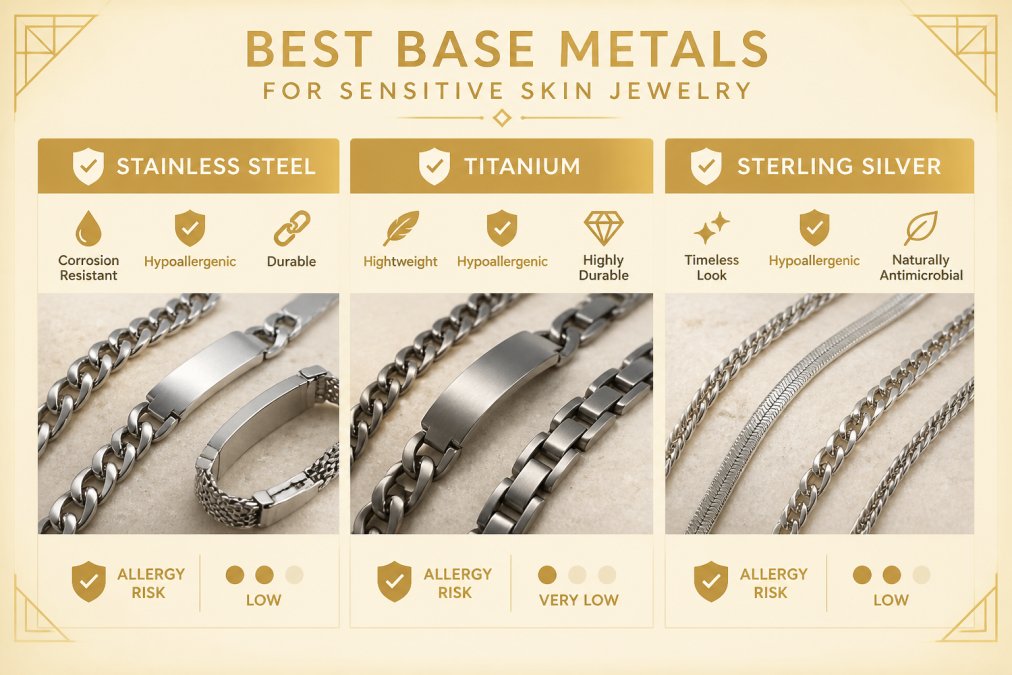
The best base metals resist corrosion naturally: surgical stainless steel, titanium, and sterling silver are the gold standard for sensitive skin jewelry.
Gold Vermeil vs. Gold Plated for Sensitive Skin
Gold vermeil uses sterling silver as the base metal with a minimum of 2.5 microns of gold plating. Sterling silver (92.5% pure) is naturally hypoallergenic and corrosion-resistant. This combination makes vermeil excellent for sensitive skin, the thicker plating lasts longer, and the sterling silver base won't trigger reactions even if plating wears through.
Gold plated jewelry can use any base metal, though quality pieces use stainless steel or titanium. Standard gold plating requires only 0.5 microns of gold, roughly 50 times thinner than vermeil. This thin plating wears quickly with daily wear.
For sensitive skin, vermeil is the safer choice if budget allows. However, high-quality gold plated jewelry using 316L stainless steel or titanium performs nearly as well at lower cost. Carlotta's cross necklaces use 14K gold plating over premium bases, with options in both sterling silver and stainless steel construction.
Best Base Metals for Sensitive Skin Jewelry
The base metal is where sensitive skin jewelry decisions are made. Gold plating is cosmetic; the base metal determines whether you'll have a reaction.
Surgical stainless steel and 316L stainless steel
Surgical stainless steel is the industry standard for sensitive skin jewelry. It contains chromium, which forms a passive oxide layer preventing the underlying metal from interacting with your skin.
316L stainless steel is the premium version. The "L" stands for "low carbon," increasing corrosion resistance further. 316L is used in marine and medical settings because of its superior resistance to oxidation and salt water. For jewelry, 316L is the better choice if available, it resists tarnishing longer and maintains base integrity even if gold plating wears.
Titanium and sterling silver alternatives
Titanium is hypoallergenic by nature. It doesn't oxidize in normal conditions and doesn't release ions triggering skin reactions. Titanium is stronger than stainless steel, allowing thinner pieces without sacrificing durability. The drawback is cost, titanium-based gold plated jewelry typically costs more.
Sterling silver (92.5% silver, 7.5% other metals) is naturally hypoallergenic. Gold vermeil uses sterling silver as its base, making it the safest option for sensitive skin. Even if gold plating wears completely, the sterling silver underneath remains safe.
7 Reliable Gold Plated Jewelry Options for Sensitive Skin
These seven pieces represent different price points and styles, all selected for suitability on sensitive skin. Each uses stainless steel, sterling silver, or titanium as the base metal.
1. S925 Cross Bracelet: Stainless Steel Foundation
The S925 Cross Bracelet from Carlotta starts at $37.00 and uses stainless steel construction. Designed for daily wear, it provides a clean, minimalist aesthetic. Stainless steel resists oxidation better than brass or copper-based alternatives. For someone testing whether they can tolerate gold plated jewelry, this is a logical starting point.
2. Cross Necklace with 14K Gold Coating: Triple-Plated Protection
This cross necklace at $64.00 uses S925 sterling silver coated with 14K gold. The sterling silver base ensures that even if gold eventually wears, the underlying metal is hypoallergenic. The necklace includes a 45cm rope chain and 8mm x 16mm pendant.
3. CZ Stone Cross: 316L Stainless Steel with Anti-Tarnish Finish
At $64.00, the CZ Stone Cross uses premium 316L stainless steel coated in solid 14K gold with an anti-tarnish finish. The anti-tarnish coating extends the life of the plating by preventing oxidation at the base metal level. Cubic zirconia stones add visual interest without the cost of diamonds.
4. Zirconia Cross Necklace: Durable and Affordable
The Zirconia Cross Necklace at $64.00 provides another stone-accented option using premium base metal with gold plating and stone detailing. Choose based on which design you'll actually wear regularly.
5. Crosslet Cross: Side-Pendant Design
The Crosslet Cross at $64.00 uses a side-pendant design, where the cross hangs off to the side of the chain rather than centered. This creates a subtle, asymmetrical aesthetic popular with people who want cross symbolism without an obvious statement piece. The necklace includes a 45cm rope chain.
6. Zirconia Cross: Premium Cubic Zirconia Accent
At $73.00, this premium Zirconia Cross represents the higher end of Carlotta's collection. Premium cubic zirconia is more transparent and brilliant, catching light more effectively and maintaining clarity longer.
7. Crown Cross: Budget-Friendly Statement Piece
At $55.00, the Crown Cross is Carlotta's most affordable cross necklace. The lower price doesn't indicate lower quality regarding sensitive skin safety, the base metal and plating construction meet the same standards as higher-priced pieces.
How to Tell if Gold Plated Jewelry Is High Quality
Not all gold plated jewelry is created equal. Learning to identify quality construction protects you from pieces that will irritate your skin or fall apart quickly.
Checking micron thickness and plating integrity
Micron thickness is the most objective measure of gold plating quality. Quality gold plated jewelry typically has 1-3 microns of gold plating. Cheap pieces often have 0.5 microns or less. A piece with 2 microns will last roughly four times longer than one with 0.5 microns. For daily wear on sensitive skin, you want at least 1-2 microns.
Manufacturers who don't disclose micron thickness are a red flag. Quality pieces specify plating specifications because thicker plating is a genuine selling point.
Identifying lead-free and cadmium-free construction
Lead-free and cadmium-free construction is non-negotiable for jewelry, especially for sensitive skin. Lead and cadmium are toxic metals that should never be present in jewelry. Reputable manufacturers explicitly state that their pieces are lead-free and cadmium-free. Carlotta's pieces meet these standards.
How to Clean Gold Plated Jewelry Without Damaging It
Proper cleaning extends the life of gold plated jewelry significantly. Mix a few drops of mild dish soap into warm water, soak the piece for a few minutes, then gently wipe it with a soft cloth. For pieces with stones or intricate designs, use a soft-bristled brush to clean crevices. Rinse thoroughly under clean running water and dry immediately with a soft cloth.
Preventing oxidation and maintaining shine
Oxidation occurs when the base metal reacts with oxygen, moisture, or sulfur compounds. Prevent oxidation by keeping pieces dry, remove jewelry before showering, swimming, or exercising. Sweat contains salt and acids that accelerate oxidation.
Store pieces in a dry environment. A jewelry box or cloth pouch works well. To maintain shine, polish pieces occasionally with a soft cloth. Avoid commercial jewelry polishes on gold plated pieces, chemicals can damage the plating.
Storage and daily care tips
Store gold plated jewelry separately from other pieces to prevent scratching. Remove pieces before bed to reduce overnight moisture exposure. Avoid exposing pieces to perfume, lotion, or makeup. Check clasps and settings regularly for looseness.
Recognizing and Preventing Allergic Reactions
Even with proper material selection, some people experience reactions to certain metals. Contact dermatitis appears as redness, itching, or a rash where jewelry contacts your skin. Remove the piece immediately and wash the area with soap and water. The reaction usually subsides within hours to a day.
Prevent reactions by choosing pieces with documented hypoallergenic construction. Carlotta's pieces use stainless steel, sterling silver, or other proven safe bases. Keep pieces clean and dry to minimize oxidation risk, which accelerates reactions.
Conclusion
Finding reliable gold plated jewelry for sensitive skin comes down to understanding what's underneath the gold coating. The base metal determines whether you'll have a reaction. The plating thickness determines how long the piece lasts before the base metal shows through.
Carlotta's collection addresses these concerns directly. Pieces like the S925 Cross Bracelet at $37.00 and the CZ Stone Cross at $64.00 use premium base metals with proper gold plating, designed for daily wear on sensitive skin. Quality gold plated jewelry for sensitive skin doesn't require a premium budget, it requires understanding what makes the difference.

Shop Carlotta's collection and take advantage of seasonal savings up to 30% off your favorite pieces. Start with the style that appeals to you, any of these pieces will be safe for sensitive skin when constructed with the care that defines Carlotta's approach to jewelry.
Key Takeaways:
- Gold plated jewelry safety depends on the base metal, not the gold coating
- 316L stainless steel, sterling silver, and titanium are the best base metals for sensitive skin
- Micron thickness (1-2 microns minimum) determines how long plating lasts
- Proper cleaning and storage extend piece lifespan and prevent oxidation
- Quality pieces from reputable sellers specify their construction details
| Material | Hypoallergenic | Durability | Best For | Cost |
|---|---|---|---|---|
| 316L Stainless Steel | Yes | Excellent | Daily wear | Budget-friendly |
| Sterling Silver | Yes | Good | Sensitive skin | Moderate |
| Titanium | Yes | Excellent | Extreme sensitivity | Premium |
| Surgical Steel | Yes | Good | General wear | Budget-friendly |
| Brass/Copper Base | No | Poor | Avoid | Low |
Frequently Asked Questions
Is gold-plated jewelry safe for sensitive skin?
Gold-plated jewelry can be safe for sensitive skin when built on nickel-free base metals like surgical stainless steel, titanium, or sterling silver. The key is the base metal underneath the gold coating. Quality gold plating with adequate micron thickness (at least 2.5 microns) and proper electroplating prevents the base metal from contacting your skin, reducing contact dermatitis risk. Avoid gold plating over brass or copper-based alloys, which oxidize quickly and expose reactive metals.
What's the difference between gold vermeil and gold plated for sensitive skin?
Gold vermeil uses sterling silver as the base metal, while gold plated can use various base metals. For sensitive skin, gold vermeil is often safer because sterling silver is hypoallergenic and less likely to cause reactions. However, gold plated jewelry built on surgical stainless steel or titanium can be equally safe. Vermeil requires thicker gold coating (at least 2.5 microns) by law, offering better durability and protection. Choose based on your specific metal sensitivities.
How can I tell if gold plated jewelry is high quality?
Check for micron thickness (quality pieces have 2.5+ microns of gold), a lead-free and cadmium-free base metal, and plating integrity that doesn't flake. Look for products describing their base metal specifically, 316L stainless steel and titanium are excellent choices. Quality gold plating should feel smooth with no rough edges. Reputable sellers provide detailed specifications about their electroplating process and base metal composition. Avoid vague descriptions like 'gold-coated' without material details.
What metals should I avoid if I have sensitive skin?
Avoid nickel, brass, copper, and low-grade alloys that oxidize easily. Nickel is a common allergen causing contact dermatitis in sensitive individuals. Brass and copper-based metals tarnish and corrode, exposing reactive elements to your skin. Flash plating (extremely thin gold coating) over these metals provides minimal protection. Instead, choose surgical stainless steel, titanium, sterling silver, or gold-filled pieces. Always check product descriptions for specific base metal information before purchasing.
This article was written using GrandRanker