

How Long Does Tarnish-Free Jewelry Last
Table of Contents
- What 'Tarnish-Free' Actually Means
- How Long Does Gold Plating Last
- How Long Does Gold-Filled Jewelry Last
- What Jewelry Does Not Tarnish
- Factors That Affect How Long Tarnish-Free Jewelry Lasts
- How to Care for Gold-Plated Jewelry
- When to Replate, Repair, or Replace
- Frequently Asked Questions
Last Updated: October 4, 2026
What 'Tarnish-Free' Actually Means
Tarnish-free jewelry resists the dark discoloration from metal oxidation, a chemical reaction when metals contact air, moisture, or skin chemistry.
True tarnish-free materials include solid gold, stainless steel, and platinum. Gold-plated and gold-filled pieces have a protective layer over base metal that can wear away.
Understanding what "tarnish-free" really means helps you pick the right piece for your lifestyle, and knowing how long tarnish-free jewelry last ensures you choose accordingly.
A tarnish-free finish prevents discoloration but not all wear. Scratches, fading, and surface marks still occur with daily use, accelerated by water, sweat, and chemicals.
How Long Does Gold Plating Last
Gold-plated jewelry typically lasts between 6 months to 2 years with regular daily wear. The lifespan depends heavily on plating thickness and how often you wear the piece.
Plating thickness matters significantly. Thicker plating lasts longer because constant friction from clothing and skin contact gradually wears the thin gold layer away.
Here's what affects durability:
- Plating thickness: Thicker layers last 2-3 times longer than thin ones
- Wear frequency: Daily wear shortens lifespan significantly compared to occasional use
- Base metal quality: Better base metals resist corrosion underneath
- Care routine: Regular cleaning and proper storage extend life considerably
- Skin chemistry: Some people's sweat is more acidic and causes faster wear
Occasional wear extends lifespan to several years; daily wear shows visible wear in 6-12 months. Gold plating is a temporary protective layer, not permanent.
How Long Does Gold-Filled Jewelry Last
Gold-filled jewelry lasts significantly longer than gold-plated pieces. You can expect 10-30 years of regular wear, sometimes longer.
Gold-filled has a thick gold layer mechanically bonded to a base metal core, much thicker than plating. Federal regulations require at least 5% gold by weight.
This thickness allows gold-filled to resist daily wear, water, and sweat much longer than plating, often lasting decades without visible degradation.
Gold-filled isn't solid gold, but the gold layer typically takes years to wear through, not months, and stays beautiful for a lifetime with normal wear.
What Jewelry Does Not Tarnish
Tarnish resistance alone doesn't determine longevity. A piece can resist oxidation yet show wear, scratches, or plating failure.
Solid Gold (14k, 18k, 24k)
Solid gold doesn't oxidize or tarnish. Look for hallmarks ("14K," "18K," "24K") inside pieces. Solid gold lasts a lifetime with minimal care, requires no replating, and develops a natural patina many find beautiful.
Stainless Steel
Stainless steel contains chromium, forming a protective oxide layer. It lasts indefinitely, resists water and sweat, and is ideal for active wear. Look for "316L" grade, which is more corrosion-resistant.
Gold-Filled
Gold-filled jewelry has a thick layer of solid gold mechanically bonded to a base metal core. Federal regulations require at least 5% gold by weight and a substantial gold layer. Gold-filled resists tarnishing for 10-30 years or longer with regular wear because the gold layer is 50-100 times thicker than plating. Look for stamps like "14/20 GF" or "1/20 14K GF," which indicate the gold content and ratio. Gold-filled is the middle ground: it costs more than plating but far less than solid gold, and it lasts decades instead of months.
Platinum
Platinum is naturally tarnish-free, doesn't oxidize or fade, and lasts a lifetime. It's hypoallergenic but expensive and heavy. Look for "Pt" or "Plat" hallmarks.
Titanium
Titanium is hypoallergenic, lightweight, and lasts indefinitely without tarnishing or corroding. It's affordable and ideal for sensitive skin and daily wear. Look for "Ti" markings.
Sterling Silver (A Note)
Sterling silver (92.5% pure silver) tarnishes when exposed to sulfur compounds, but polishing restores shine. Many prefer it for beauty and affordability; store in airtight containers or polish periodically.
How to Assess Quality Before Buying
When shopping, check for hallmarks ("14K," "18K," "316L," "Pt," "GF"), substantial weight, base metal disclosure, and solid construction. For daily wear, solid gold, gold-filled, stainless steel (316L), and titanium resist oxidation and last years to decades.
Factors That Affect How Long Tarnish-Free Jewelry Lasts
Even tarnish-resistant materials wear faster under certain conditions. The lifespan of your jewelry depends on how often you expose it to these factors and how well you mitigate them. Understanding these variables helps you estimate realistic durability and make smarter care choices.
Water and Moisture Exposure
Water accelerates wear on gold-plated jewelry. Fresh water weakens plating bonds over months; chlorine causes visible damage in a single pool session; salt water is harshest. Remove gold-plated jewelry before water exposure and dry immediately. Gold-filled and solid gold handle fresh water better but should be rinsed and dried after salt water exposure.
Sweat and Skin Chemistry
Sweat contains salt and acids that corrode base metals and weaken plating. Acidic sweat (pH below 5.5) accelerates wear by 30-50%; high salt content from heavy sweating reduces lifespan by 3-6 months. Remove jewelry before exercise or choose stainless steel or titanium for workouts.
Harsh Chemicals and Perfume
Alcohol-based perfumes, lotions, sunscreen, and hand sanitizers damage gold plating. Apply these products before putting on jewelry and let them dry completely. This sequence extends gold-plated jewelry lifespan by months.
Wear Frequency and Intensity
Daily wear accelerates friction; gold-plated lasts 6-12 months, gold-filled 10-20 years, solid gold indefinitely. Occasional wear (2-3 times weekly) extends lifespan significantly. Rings wear faster than necklaces or earrings. Match material to wear frequency: daily wear requires gold-filled or solid gold.
A Practical Lifespan Estimator
Use this framework to estimate how long your specific piece will last:
Start with the material baseline:
- Gold-plated: 6-24 months (daily wear)
- Gold-filled: 10-30 years (daily wear)
- Solid gold: Lifetime
- Stainless steel: Lifetime
Adjust based on your habits:
- Reduce by 30-50% if you shower or swim regularly wearing the piece
- Reduce by 20-30% if you apply perfume, lotion, or sunscreen while wearing it
- Reduce by 30-50% if you exercise or sweat heavily while wearing it
- Reduce by 20% if you wear it in a humid climate or near salt water
- Increase by 50-100% if you wear it occasionally (2-3 times per week or less)
- Increase by 100%+ if you wear it only for special occasions
Example: A gold-plated ring worn daily with regular showers and perfume application: Start at 6-24 months, reduce by 50% for water exposure and 30% for perfume = roughly 3-9 months of realistic lifespan.
Example: A gold-filled necklace worn daily with occasional water exposure and proper care: Start at 10-30 years, reduce by 20% for occasional water = roughly 8-24 years of realistic lifespan.
How to Care for Gold-Plated Jewelry
Proper care extends the life of gold-plated jewelry. A simple routine takes minutes but makes a real difference.
Daily Care Routine
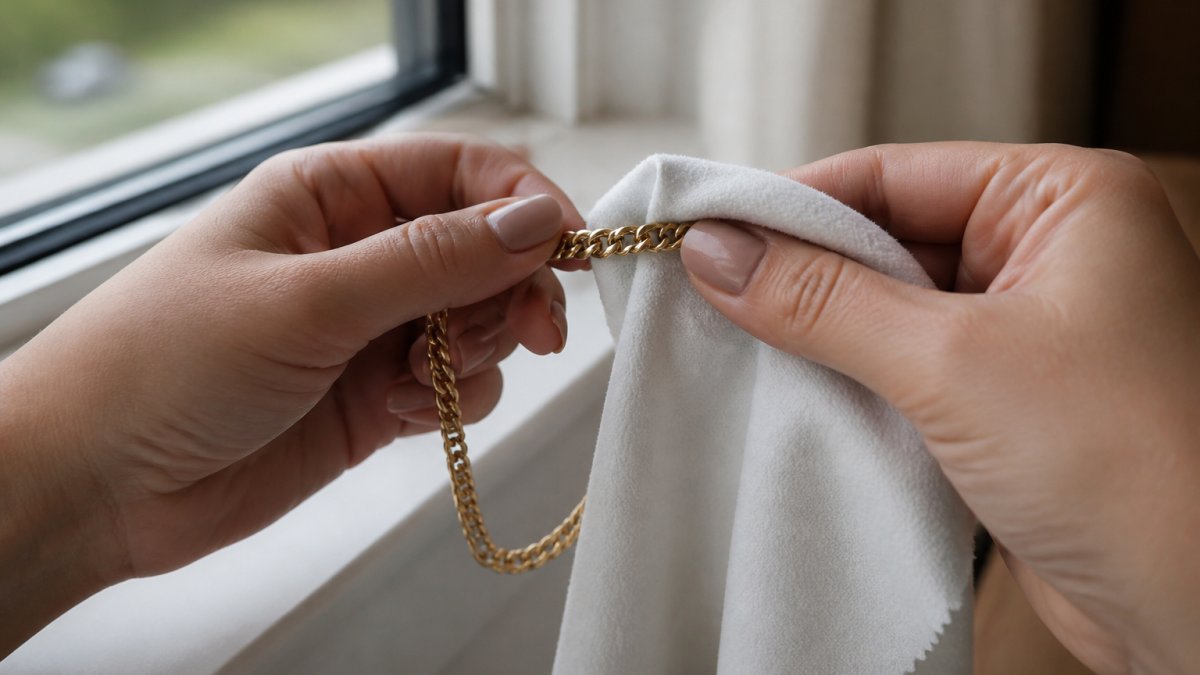
Clean your jewelry regularly with a soft, lint-free cloth. This removes sweat, oils, and dirt that accelerate wear. Do this once or twice a week for pieces you wear daily.
For deeper cleaning, use lukewarm water and a tiny drop of mild dish soap. Soak the piece for a few minutes, then gently scrub with a soft toothbrush. Rinse thoroughly with clean water and dry immediately with a soft cloth.
Never use ultrasonic cleaners or steam cleaners on gold-plated jewelry. These methods push water into crevices and damage the plating.
Here's your basic routine:
- Wipe with a soft cloth after wearing
- Deep clean weekly with soap and water
- Dry completely before storing
- Avoid harsh scrubbing or abrasive cloths
- Never use chemical cleaners or polishes
Storage and Maintenance
Where you store jewelry matters. Keep pieces in a cool, dry place away from humidity. A jewelry box with a soft lining is ideal. Avoid bathroom storage where moisture builds up.
Store different pieces separately so they don't scratch each other. Use individual pouches or compartments. This prevents friction damage that exposes the base metal.
Remove jewelry before bed, exercise, or water exposure. These habits alone extend lifespan by months or years. The less your jewelry is exposed to harsh conditions, the longer it lasts.
Check your pieces monthly for loose clasps or damaged areas. Early repairs prevent bigger problems. If you notice the plating wearing through, consider replating before the base metal shows.
When to Replate, Repair, or Replace
Eventually, even well-cared-for gold-plated jewelry will show wear. You have three options: replate, repair, or replace.
Replating is the most affordable option for pieces you love. A jeweler removes the old plating and applies a fresh gold layer. The cost is typically much less than buying new jewelry. If a piece has sentimental value or fits your style perfectly, replating makes sense.
Repair addresses specific damage. A loose clasp, bent prongs, or cracked solder can be fixed without replating. These repairs are usually inexpensive and worth doing if the piece is otherwise in good condition.
Replace when the base metal is damaged or the piece no longer suits your style. If the base metal is corroded or pitted, replating won't help. A new piece is your best option.
For gold-filled jewelry, replating is rarely necessary. The gold layer lasts so long that most people keep the piece as-is for years. When replating does become needed, it's worth the investment because the underlying structure is solid.
At Carlotta, we design pieces meant to last. Our gold-plated jewelry is built with quality base metals and proper construction. If you care for your pieces, they'll stay beautiful for years.
The longevity of your jewelry comes down to two things: the material you choose and how you care for it. Gold-plated jewelry lasts 6-24 months with daily wear. Gold-filled lasts 10-30 years. Solid gold lasts a lifetime. Pick the material that matches your budget and lifestyle, then protect it with basic care. Remove jewelry before water exposure, dry it immediately after wear, and store it properly. These habits transform how long your pieces last. At Carlotta, we help you find jewelry that fits your life. Our collection includes gold-plated pieces designed for daily wear. Explore our selection and enjoy up to 30% off during our seasonal offers. Shop All and find pieces that last.
| Material | Typical Lifespan (Daily Wear) | Water Resistant | Tarnish-Free | Best For |
|---|---|---|---|---|
| Gold-plated | 6-24 months | No | With care | Budget-conscious daily wear |
| Gold-filled | 10-30 years | Moderate | Yes | Long-term everyday pieces |
| Solid gold | Lifetime | Yes | Yes | Investment pieces |
| Stainless steel | Lifetime | Yes | Yes | Active daily wear |
Frequently Asked Questions
Does tarnish-free jewelry really never tarnish?
No. 'Tarnish-free' is marketing language that means the jewelry resists tarnishing under normal wear, not that it never tarnishes. Gold-plated and gold-filled pieces can still discolor or fade if exposed to water, sweat, chemicals, or harsh handling. Solid stainless steel and certain other materials are more resistant, but even they can show wear over time. The key is understanding your material's actual lifespan and caring for it accordingly.
How long does gold plating last with daily wear?
Gold plating typically lasts 6 months to 2 years with daily wear, depending on plating thickness and how well you care for it. Thicker plating (2-3 microns) lasts longer than thin plating (0.5 microns). Daily contact with water, sweat, perfume, and harsh chemicals accelerates wear. If you wear your gold-plated jewelry only occasionally, it can last 3-5 years. Proper storage, regular cleaning with a soft cloth, and avoiding moisture exposure extend its lifespan significantly.
What materials are best for tarnish-resistant jewelry?
Stainless steel, solid gold (18k or higher), platinum, and titanium are the most tarnish-resistant materials. Stainless steel resists discoloration and is hypoallergenic, making it ideal for sensitive skin. Solid gold naturally resists tarnishing and lasts a lifetime with proper care. Gold-filled jewelry (gold bonded to a base metal) offers a middle ground, lasting 10-30 years depending on thickness and wear. Avoid cheap base metals and thin plating if tarnish resistance is your priority.
How can I make my jewelry last longer without tarnishing?
Store jewelry in a cool, dry place away from moisture and sunlight. Remove pieces before showering, swimming, or exercising. Wipe your jewelry with a soft cloth after wearing to remove sweat and oils. Avoid contact with perfume, lotions, and cleaning chemicals. Clean gently with mild soap and water only when needed. These practices significantly extend the lifespan of any tarnish-free or tarnish-resistant piece.