

How to Tell If Jewelry Is High Quality
Table of Contents
- What High Quality Jewelry Actually Looks Like
- Jewelry Hallmark Identification Guide
- How to Test Gold at Home
- Signs of High Quality Gemstone Settings
- Costume Jewelry vs. Fine Jewelry: Key Differences
- Ethical Sourcing, Longevity, and Getting Real Value
- When to Get a Professional Appraisal
- Conclusion
Last Updated: August 15, 2026
What High Quality Jewelry Actually Looks Like
Knowing how to tell if jewelry is high quality is one of the most practical skills a buyer can develop. High quality jewelry maintains its structural integrity, finish, and appearance through regular wear without significant degradation. The difference between jewelry that lasts and jewelry that doesn't usually comes down to a handful of physical signals most people walk right past.
Weight, Density, and Finish
Pick up a piece and hold it. Genuine precious metals carry noticeable density. A gold or sterling silver piece should feel substantial in your hand, not hollow or plasticky. Costume jewelry made from base metals like zinc alloy tends to feel lighter than its size suggests.
Run your fingernail across the surface. High-quality metalwork has a smooth, even finish with no visible tool marks, bubbles, or rough patches. Plating on quality gold-plated pieces is applied evenly, with consistent color across the entire surface. Uneven tone, especially near clasps or links, signals thin or rushed plating.
Clasp and Construction Quality
The clasp is where most cheap jewelry reveals itself. A quality lobster clasp should snap shut with a clean, definitive click and resist opening under light pressure. Box clasps on bracelets should lock with a firm, audible close.
Examine how components connect. On a chain, look at how the links are soldered. Poorly soldered links show visible seams or gaps and fail first. On pendants, the bail should be thick enough that it won't deform under the weight of the piece. A beautiful necklace with a weak clasp is an expensive loss waiting to happen.
Jewelry Hallmark Identification Guide
A jewelry hallmark is a stamped mark on a piece of metal that certifies its purity and composition. Hallmarks are the most reliable single indicator of a piece's metal content.
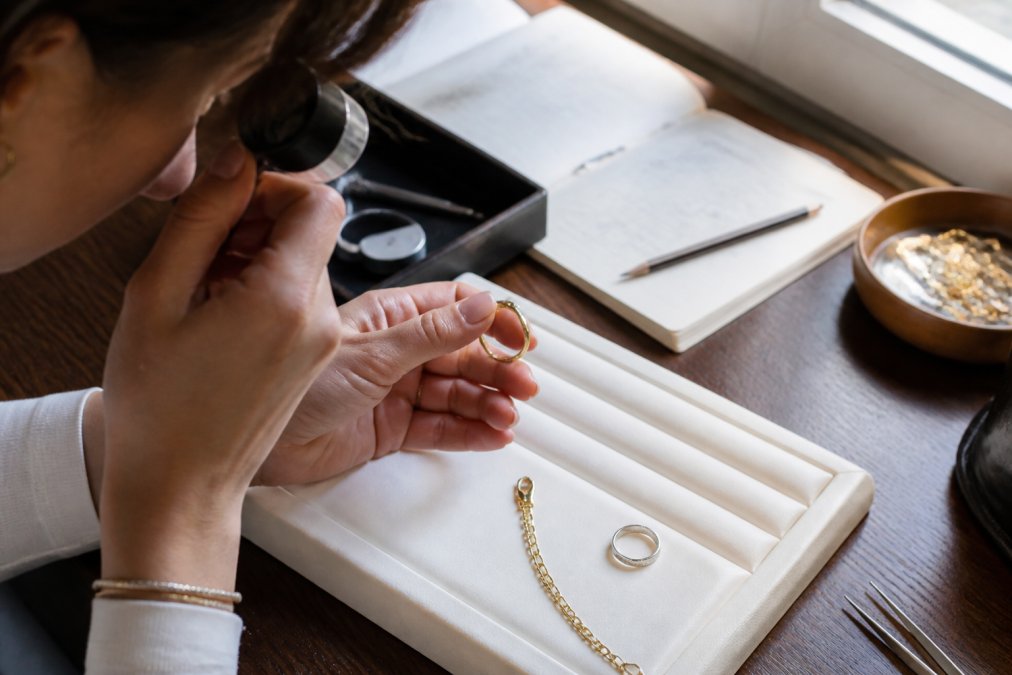
Most hallmarks are stamped inside rings, on the back of pendants, or near the clasp on necklaces and bracelets. They're small, so a jeweler's loupe or strong phone camera macro can help you read them clearly. The Federal Trade Commission's jewelry guides outline disclosure standards that require sellers to accurately represent metal content, giving legitimate hallmarks legal weight in the United States.
Reading Karat and Purity Stamps
Gold purity is expressed in karats. The karat system divides pure gold into 24 parts. Common stamps you'll encounter:
- 24K, Pure gold, rarely used in jewelry because it's too soft
- 18K, 75% gold content, excellent durability with rich color
- 14K, 58.3% gold content, the most common standard in the US for everyday jewelry
- 10K, 41.7% gold content, the minimum legal karatage to be sold as gold in the US
If a piece claims to be gold but carries no karat stamp, treat that as a red flag. Legitimate gold jewelry sold in the United States is required to be stamped with its karatage.
Understanding 925, 14K, 18K, and Vermeil Marks
The 925 stamp indicates sterling silver, meaning the piece contains 92.5% pure silver and 7.5% alloy, typically copper. Genuine sterling should always carry this mark.
Vermeil (pronounced ver-MAY) is gold-plated sterling silver where the gold plating must be at least 10 karats and at least 2.5 microns thick, according to FTC standards. This is a legitimate and durable jewelry category, not a shortcut.
Watch for stamps like GP (gold-plated), GF (gold-filled), or RGP (rolled gold plate). These indicate plated pieces, which are fine products, but they're not solid gold and shouldn't be priced as such. Gold-filled pieces have a much thicker layer of gold than standard gold-plated jewelry and wear better over time.
| Stamp | Meaning | Precious Metal? |
|---|---|---|
| 24K / 999 | Pure gold | Yes |
| 18K / 750 | 75% gold | Yes |
| 14K / 585 | 58.3% gold | Yes |
| 10K / 417 | 41.7% gold | Yes |
| 925 | Sterling silver (92.5%) | Yes |
| GP | Gold-plated base metal | No |
| GF | Gold-filled | Partial |
| Vermeil | Gold over sterling silver | Partial |
How to Test Gold at Home
Several practical tests can help you evaluate a piece before committing to a purchase or when assessing something you already own.
The Magnet Test
Gold, silver, and platinum are not magnetic. Hold a strong neodymium magnet near the piece. If the jewelry pulls toward the magnet, the base metal contains iron or steel, ruling out precious metal content. Passing the magnet test doesn't confirm a piece is genuine, many base metals used in costume jewelry are also non-magnetic, but it eliminates obvious fakes.
The Float Test and Tarnish Check
Gold doesn't tarnish. If a piece sold as gold develops dark spots, green discoloration, or a dull film, the gold content is either absent or the plating is thin enough that the base metal underneath is oxidizing. Green skin discoloration is almost always caused by copper in the base metal reacting with sweat and skin chemistry.
Drop the piece into a glass of water. Real gold, being dense, sinks quickly. Lighter base metals or hollow pieces may float or sink slowly. This test is imperfect because hollow gold pieces won't sink convincingly, but it's useful for solid pieces.
Tarnish behavior indicates plating thickness. A quality gold-plated piece should resist tarnish through regular wear. Rapid tarnishing within days of first wear indicates thin plating over a reactive base metal.
Signs of High Quality Gemstone Settings
Gemstone settings are where craftsmanship separates fine jewelry from costume jewelry most visibly. A poorly set stone is a stone waiting to fall out.
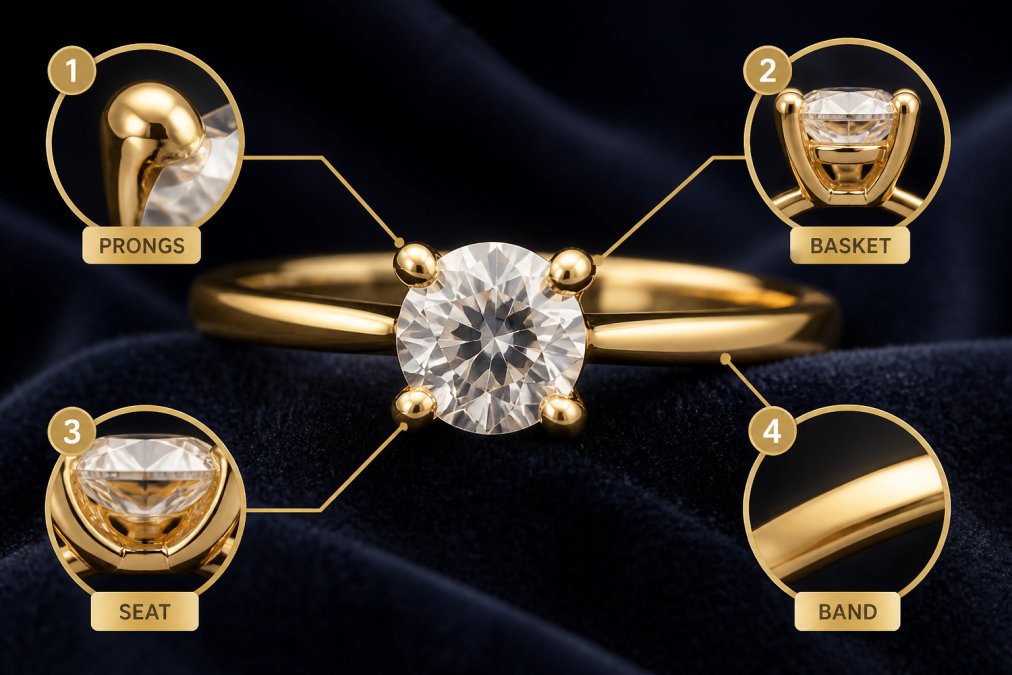
Prong Integrity and Bezel Work
Prongs are the small metal claws that grip a gemstone. On quality jewelry, prongs are even in height, smooth at the tips, and positioned symmetrically around the stone. Run your fingernail across the prong tips. They should be smooth and rounded, not sharp or jagged. Sharp prongs snag fabric and signal rushed finishing work.
Bezel settings, where a metal rim wraps around the stone, should show a clean, even edge with no gaps between the metal and the stone's girdle. A gap means the stone can shift and eventually fall out.
Check that the stone sits level and doesn't wobble. Gently press the stone with a fingertip. Any movement indicates a setting problem that will worsen with wear.
Gemstone Inclusions, Refraction, and Clarity
A gemstone inclusion is an internal characteristic formed during the stone's growth. Inclusions are natural in genuine stones and actually mark authenticity in many cases.
Hold a gemstone under light and look for refraction: the way light bends and scatters through the stone. Genuine diamonds, sapphires, and rubies have distinctive refraction patterns. Glass imitations look flat and don't scatter light the same way. According to the Gemological Institute of America's gem education resources, each gemstone species has a measurable refractive index that gemologists use to confirm identity.
Costume jewelry typically uses glass, acrylic, or cubic zirconia in place of precious gemstones. These aren't inherently bad for fashion pieces, but they should be priced and described accordingly.
Costume Jewelry vs. Fine Jewelry: Key Differences
Costume jewelry and fine jewelry serve different purposes, and neither is inherently inferior for its intended use. The problem is buying one while expecting the other.
Fine jewelry is made from precious metals (gold, platinum, sterling silver) and typically features genuine gemstones or high-quality lab-created stones. It's designed for long-term wear, holds intrinsic material value, and can often be repaired and resized by a jeweler.
Costume jewelry uses base metals, plating, and glass or synthetic stones. It's designed for fashion impact at lower cost, not for durability over years of daily wear.
Key differences to look for:
- Weight: Fine jewelry is heavier due to precious metal density
- Stamping: Fine jewelry carries hallmarks; costume jewelry often doesn't
- Finish longevity: Fine jewelry maintains its finish; costume jewelry tarnishes, chips, or flakes
- Skin reaction: Base metals cause skin reactions in many people; precious metals rarely do
- Price point: Fine jewelry costs more to produce, reflecting material cost
Many quality gold-plated pieces occupy a middle ground: sterling silver or brass bases with substantial gold plating. These can wear well for years with proper care. The honest descriptor matters. A piece labeled as gold-plated vermeil over sterling silver is legitimate. A piece labeled as "gold" with no karat stamp is not.
Ethical Sourcing, Longevity, and Getting Real Value
How to tell if jewelry is high quality isn't only about the metal and stones. It's about whether the piece was made responsibly and whether it will hold up long enough to justify what you paid.
What Ethical Sourcing Labels Actually Mean
The jewelry industry has documented supply chain issues, from conflict diamonds to mining practices that harm ecosystems and workers. The Responsible Jewellery Council's certification standards set benchmarks for ethical sourcing across the supply chain, covering labor practices, environmental impact, and chain-of-custody documentation for metals and gemstones.
For diamonds, the Kimberley Process Certification Scheme is the international standard designed to prevent conflict diamonds from entering the market. For gold, look for references to Fairtrade Gold or recycled gold sourcing. Recycled gold requires no new mining and is chemically identical to newly mined gold.
Maintenance Habits That Protect Your Investment
Jewelry longevity depends partly on quality and partly on care. Practical rules that make a real difference:
- Remove jewelry before swimming, showering, or exercising. Water, chlorine, and sweat accelerate tarnish and weaken plating.
- Apply perfume and lotions before putting on jewelry, not after. Chemicals attack metal finishes.
- Store pieces individually in soft pouches or compartmentalized boxes. Metal-on-metal contact causes scratches.
- Clean sterling silver regularly with a soft cloth to prevent oxidation buildup. For gold-plated pieces, use a dry cloth only.
- Inspect prongs and clasps every few months. Catching a bent prong early prevents losing a stone.
When to Get a Professional Appraisal
Professional appraisal is the definitive answer to how to tell if jewelry is high quality. A certified gemologist can test metal content, verify gemstone identity, assess craftsmanship, and assign a replacement value. This matters for insurance purposes, estate planning, and significant purchases.
The American Society of Jewelry Appraisers' appraiser directory maintains a directory of certified appraisers with verifiable credentials. For significant purchases, especially diamonds or colored gemstones above a certain size, an independent appraisal before buying is money well spent.
When should you seek an appraisal?
- Before purchasing any piece described as containing genuine precious gemstones
- When buying estate or vintage jewelry where provenance is unclear
- After inheriting jewelry, to understand what you have
- Before insuring jewelry, to establish accurate replacement value
- When selling jewelry, to avoid undervaluing pieces
A reputable appraiser charges a flat fee or hourly rate, never a percentage of the appraised value. Percentage-based fees create an incentive to inflate the appraisal and are considered a conflict of interest by professional standards bodies.
Most everyday fashion jewelry doesn't require appraisal. But if a piece is described as containing genuine stones and the price reflects that, verification is worth the cost.
Telling genuine quality from convincing imitation takes practice, but the signals are consistent once you know what to look for: hallmarks, weight, construction integrity, setting quality, and honest material descriptions. At Carlotta, every piece in our collection is clearly described with its metal content and finish, so you know exactly what you're buying. Our curated chains, bracelets, and cross-themed accessories are available with up to 30% off on select styles during seasonal offers. Shop All and find pieces that last.
Frequently Asked Questions
How do you tell the difference between gold-plated and solid gold jewelry?
Solid gold carries a karat stamp (10K, 14K, 18K) throughout the entire piece, while gold-plated jewelry has a thin layer of gold over a base metal like brass or copper. Look for stamps like 'GP' (gold-plated) or 'GF' (gold-filled) near the clasp. Gold-plated pieces also tend to show wear at edges and contact points over time, revealing the base metal beneath. A professional acid test or XRF scan gives a definitive answer.
Is 14K or 18K gold better for everyday wear?
14K gold is generally better for everyday wear. It contains 58.3% pure gold mixed with stronger alloys, making it more resistant to scratches and dents than 18K, which is 75% pure gold and therefore softer. 18K has a richer, warmer color and is less likely to cause skin reactions for people with metal sensitivities, but it shows wear faster. For daily-wear pieces like chains and bracelets, 14K offers a better balance of durability and appearance.
What are common jewelry hallmarks and what do they mean?
Hallmarks are small stamps that identify metal purity and origin. '925' means sterling silver (92.5% pure silver). '14K' or '585' means 14-karat gold (58.5% pure). '18K' or '750' means 18-karat gold (75% pure). '333' indicates 8-karat gold, common in some European pieces. 'GP' means gold-plated, and 'GF' means gold-filled. A maker's mark, often a symbol or letter code, identifies the manufacturer. These stamps are legally required on precious metal jewelry sold in the United States.
What should you look for in gemstone setting quality?
Start with the prongs: they should be even, smooth, and grip the stone firmly without sharp edges that could snag fabric. The stone itself should not wobble when you apply light pressure. Look for clean metalwork around the setting with no visible gaps or solder blobs. High quality gemstone settings also show consistent refraction, a real stone refracts light in a way that shifts as you tilt it. Dull, flat-looking stones with no depth are often glass or low-grade synthetic material.
How can I test jewelry at home to see if it's real gold?
The magnet test is the easiest starting point: hold a strong magnet near the piece. Real gold is not magnetic, so attraction to the magnet suggests a base metal core. The float test works for small pieces, genuine gold sinks quickly in water due to its high density. You can also look for discoloration or green marks on your skin, which indicate a base metal reacting with sweat. For a definitive result, a jeweler's acid test or an electronic gold tester gives accurate karatage readings.
What does 333 mean on jewelry?
'333' is a hallmark indicating 8-karat gold, meaning the piece contains 33.3% pure gold. It is more common in European jewelry than in pieces made or sold in the United States, where 10K (41.7% gold) is the minimum legal standard for marketing a piece as gold. A '333' stamp means the piece has a significant alloy content, which makes it harder and more affordable, but also more prone to tarnish and skin reactions compared to higher-karat gold.
This article was written using GrandRanker