

Quality Gold Chains for Daily Wear: 2026 Guide
Table of Contents
- Quality Gold Chains for Daily Wear: What Actually Lasts
- Quick Comparison: Carlotta Chains for Everyday Wear
- 14k vs 18k Gold for Daily Wear: Which Karat Holds Up?
- Durable Gold Chain Styles Built for Daily Wear
- Gold Chain Maintenance Tips to Prevent Tarnish and Wear
- How to Choose the Right Length and Weight for Daily Wear
- Skin Sensitivity, Repairs, and Authenticity: What Most Guides Skip
- Conclusion: Building a Daily Wear Rotation That Lasts
- Frequently Asked Questions
Last Updated: October 2, 2026
Quality Gold Chains for Daily Wear: What Actually Lasts
Most gold chains sold online are built for a photo shoot, not for a Tuesday morning commute. Quality gold chains for daily wear have to survive sweat, lotion, shower steam, and the friction of a seatbelt against your collarbone. This guide from Carlotta breaks down what actually holds up over years, not weeks, so you can buy once instead of replacing a chain every few months.
The difference comes down to three things: karatage, chain construction, and clasp quality. A well-built 14k chain with a solid link style will outlast a flimsy 18k chain every time.
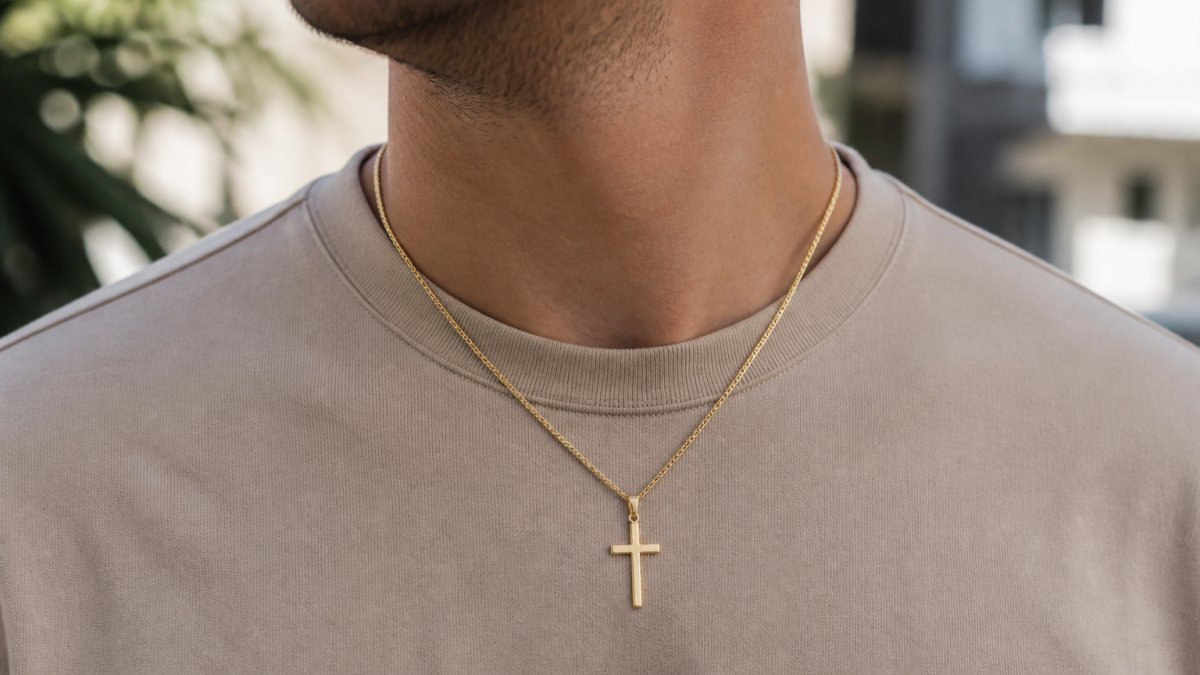
Quick Comparison: Carlotta Chains for Everyday Wear
For readers who want the short version, here is how Carlotta's cross chains compare across price and daily-wear suitability.
| Piece | Price | Style | Best For |
|---|---|---|---|
| 20" Cross Chain | $78.00 | 20-inch cross pendant chain | Layering over collared shirts |
| CROSS CHAIN (18") | $73.00 | 18-inch gold cross chain | Everyday neckline wear |
| CROSS CHAIN | $78.00 | Classic cross chain | Daily wear and gifting |
| CHRIST CHAIN | $78.00 | Statement cross chain | Street-style outfits |
| Zirconia Cross Necklace | $64.00 | Zirconia-accented cross | Subtle sparkle for daily outfits |
| CELESTIA CROSS | $64.00 | Minimalist cross necklace | First-time buyers |
| ANCORIS CROSS | $64.00 | Gold zirconia cross | Layered looks |
| CROWN CROSS | $55.00 | Crown-motif cross | Budget-conscious shoppers |
| CHARM CROSS | $31.00 | Small charm cross | Gifting and stacking |
| FAITHLET CROSS | $64.00 | Faith-inspired cross | Meaningful everyday wear |
Carlotta runs seasonal offers with up to 30% off on favorites, so the entry point for a daily-wear piece can drop meaningfully during a promotion.


14k vs 18k Gold for Daily Wear: Which Karat Holds Up?
For daily wear, 14k gold is the better choice in most cases.
Pure gold is soft. On the Mohs hardness scale, fine gold sits around 2.5 to 3, roughly in the range of a fingernail.
Here is the trade-off in plain terms:
- 24k (99.9% gold): Essentially pure. Too soft for a chain you wear daily; it deforms under normal handling.
- 22k (91.7% gold): Rich color, still soft. Common in cultural jewelry, but it dents and stretches with daily friction.
- 18k (75% gold): Noticeably harder than 22k, with a deep, warm yellow. Still soft enough that thin links and clasps bend over months of constant wear.
- 14k (58.3% gold): The durability sweet spot. The remaining 41.7% is alloy, typically copper for color, silver for brightness, and zinc or nickel for strength, which is what makes it the standard for rings, bracelets, and chains worn every day.
- 10k (41.7% gold): The hardest common karat, but the higher alloy content gives it a paler, slightly greenish cast that many buyers dislike.
A common mistake is assuming "more gold" always means "better." For a display piece, that is true.
If you want the deeper color of 18k, treat it as a dress piece and store it when you are not wearing it.
A quick way to sanity-check any karat claim: real gold is stamped with its purity. Look for "14K" or "585" (58.5% gold) and "18K" or "750" (75% gold) inside the clasp or on a small tag. A chain sold as 14k with no stamp is a warning sign worth investigating before you buy.
Durable Gold Chain Styles Built for Daily Wear
Link style decides how a chain wears over time. Some constructions distribute tension well; others concentrate stress on a single point and fail early.
The most durable options for everyday use:
- Cable chain: Simple oval links, easy to repair, resists kinking
- Curb chain: Flattened links that sit flat against the skin, less likely to snag
- Rope chain: Twisted links that hide wear well and hold shape
- Box chain: Square links with a sleek look, though thinner versions dent more easily
- Figaro chain: Alternating link sizes, a good middle ground between style and strength
Chain construction matters as much as the link pattern. A solid link chain is stronger than a hollow one at the same millimeter width, but it weighs more.
For clasp mechanisms, a lobster claw is the most secure option for daily wear.
Gold Chain Maintenance Tips to Prevent Tarnish and Wear
Gold chain maintenance comes down to three habits: keep it dry, keep it clean, and keep it separate.
Gold itself does not tarnish, but the alloy metals in it can react with sweat, perfume, chlorine, and lotions. That reaction shows up as dulling or darkening, especially in the crevices between links.
The routine:
- Take chains off before swimming, showering, or working out
- Wipe with a soft dry cloth after wearing to remove oils and residue
- Clean monthly with warm water and a drop of mild dish soap, using a soft brush
- Dry completely before storing
- Store each chain in its own pouch or compartment to prevent scratching
The failure modes most guides skip:
- Chlorine and saltwater. Chlorine is the single most damaging everyday exposure for gold alloys. It attacks the alloy metals at the grain boundaries between links, which is why a chain that looks fine can develop a brittle, pitted feel after a season of pool swimming. Rinse with fresh water immediately if it happens, and do not wear gold in a pool or hot tub.
- Abrasive polishes on plated or vermeil pieces. Any polish with grit will wear through the thin gold layer at friction points, the clasp, the pendant bail, the spot where the chain rubs your collarbone. On plated and vermeil chains, stick to a soft cloth and mild soap only.
- Ultrasonic cleaners on hollow links. An ultrasonic cleaner is excellent for solid chains, but the vibration can crack or deform hollow links and loosen stones in pavé settings. If you are not sure whether your chain is solid or hollow, do not put it in an ultrasonic tank.
- Perfume and hair products. These leave a residue that traps dirt between links and accelerates the dulling that looks like tarnish. Spray first, wait a minute, then put the chain on.
Repairability: the maintenance question nobody asks. How you maintain a chain determines whether it can be repaired when it eventually fails.
How to Choose the Right Length and Weight for Daily Wear
Chain length and millimeter width should match how you plan to wear the piece.
For length, the standard options are:
- 16 inches: Sits at the base of the throat, best for a delicate look
- 18 inches: The most versatile length, rests at the collarbone
- 20 inches: Sits just below the collarbone, good for layering
- 22 inches and up: Statement length, better for occasional wear
For width, 1mm to 2mm suits most women's daily-wear chains. Men's chains commonly run 2mm to 4mm. Anything above 4mm starts to feel heavy for all-day wear and puts more strain on the clasp.
A practical rule: if the chain leaves a visible mark on your neck after a few hours, it is too heavy.
Skin Sensitivity, Repairs, and Authenticity: What Most Guides Skip
Skin sensitivity, repairability, and authenticity verification are the three topics retail pages avoid because they complicate the sale. They matter more than most buyers expect.
Repairability. Solid link chains can be soldered, re-linked, or have a clasp replaced.
Authenticity verification. Real gold carries a hallmark stamp, usually inside the clasp or on a small tag near it.
For buyers comparing solid gold against gold-plated or vermeil, the honest answer is that plated chains cost less upfront but wear through at friction points over time.
Conclusion: Building a Daily Wear Rotation That Lasts
Building a chain rotation that survives daily life takes more thought than picking a color you like. Karat, link style, clasp type, and weight all decide whether a piece lasts two months or two decades.
Carlotta's cross chain collection is built for exactly this kind of wear, with pieces ranging from the $31 CHARM CROSS for a first daily piece to the $78 CHRIST CHAIN for a bolder statement. Seasonal offers drop prices by up to 30% on favorites, and the specialized cross-themed collection gives you meaningful pieces that work as everyday wear or gifts.
Get started with Carlotta and build a daily wear rotation that holds up to real life.
Frequently Asked Questions
What type of gold chain is best for wearing every day?
Cable, curb, and rope chains hold up best for daily wear because their link construction resists pulling and kinking. Look for solid links rather than hollow ones, a secure lobster claw or spring ring clasp, and a width of at least 1.5mm. A 14k or 18k gold chain in one of these styles handles constant wear with minimal maintenance.
Should I choose 14k or 18k gold for a daily wear necklace?
14k gold is the more practical pick for daily wear. Its higher alloy content makes it harder and more scratch-resistant than 18k, which is softer and shows wear faster with constant use. Choose 18k only if you prefer its richer yellow color and plan to wear the piece gently or rotate it with other chains.
How much does a good quality gold chain cost?
At Carlotta, cross chains range from $31 for the CHARM CROSS to $78 for the 20" Cross Chain, CHRIST CHAIN, and CROSS CHAIN. Mid-range options like the CELESTIA CROSS and FAITHLET CROSS sit at $64. Prices reflect chain length, design detail, and materials, so you can find a durable daily piece without overspending.
How do I clean and maintain my gold chain for longevity?
Remove your chain before showering, swimming, or applying lotions and perfume. Wipe it with a soft dry cloth after each wear to remove oils. Once a month, wash it in warm water with a drop of mild dish soap, scrub gently with a soft brush, rinse, and pat dry. Store it in a dry pouch or box to prevent scratches and tarnish.
How can you tell if a gold chain is high quality?
Check for a hallmark stamp indicating the karat, such as 14K or 18K. Inspect the clasp for a smooth, secure mechanism like a lobster claw. Feel the weight: a solid chain feels heavier than a hollow one of the same size. Look at the links for even spacing and no rough edges. A quality chain also resists tarnish with normal care.