

How to Clean Gold Plated Chains at Home Safely
Table of Contents
- What You'll Need to Clean Gold Plated Chains at Home
- Step-by-Step: How to Clean Gold Plated Chains at Home
- The Best Jewelry Cleaning Solution for Gold Plated Chains
- What to Avoid: Cleaning Agents That Damage Gold Plating
- How Often Should You Clean Gold Plated Jewelry?
- How to Prevent Gold Plated Jewelry From Turning Skin Green
- Tarnish vs. Damage: When to Clean and When to Restore
- Drying, Storage, and Preventative Care for Gold Plated Chains
- Frequently Asked Questions
Last Updated: September 23, 2026
What You'll Need to Clean Gold Plated Chains at Home
You can clean gold plated chains at home with five basic items. The key is choosing tools that lift dirt without rubbing away the thin gold layer.
Gold plated jewelry is a base metal core coated with a thin layer of gold, usually through electroplating. That coating is measured in microns, not millimeters, so anything abrasive can strip it. This guide from Carlotta walks through the full process, from soak to storage.
Here's your supply list:
- Mild dish soap (no acids, no bleach)
- Warm water, not hot
- Soft-bristled toothbrush
- Two clean bowls
- Lint-free microfiber cloth
Skip toothpaste, baking soda, and jewelry dips for now. We'll cover why in a later section.
Step-by-Step: How to Clean Gold Plated Chains at Home
The full process takes about ten minutes and needs no special equipment. Work over a towel so a dropped chain doesn't slide down the drain.
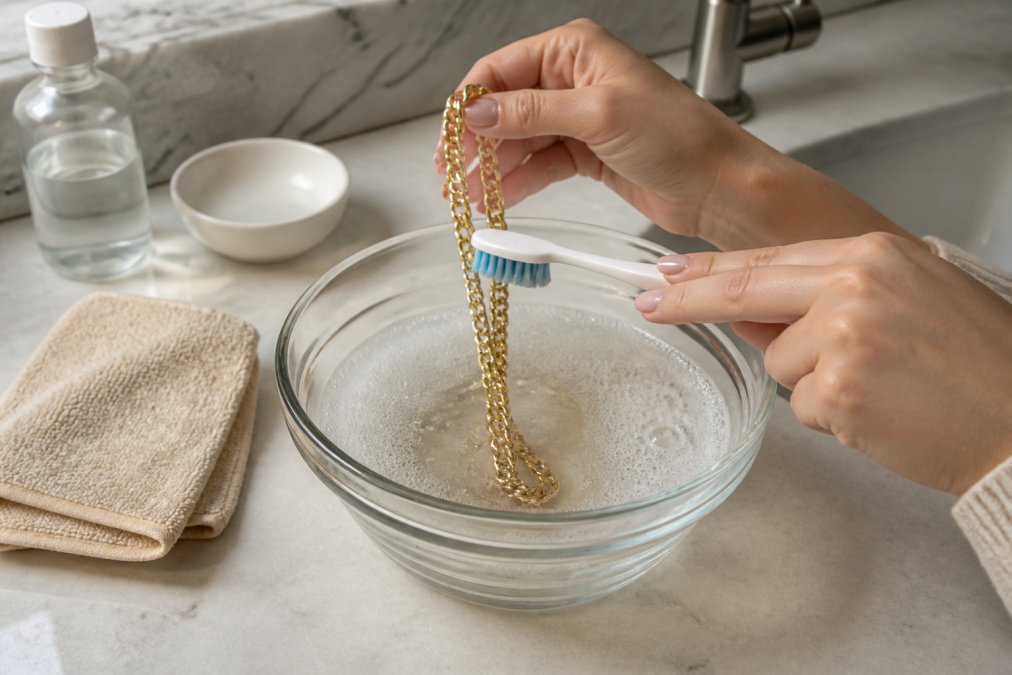
Step 1: Soak in Mild Dish Soap and Warm Water
Fill a bowl with warm water and add two or three drops of mild dish soap. Submerge the chain and let it sit for five to ten minutes.
The soak loosens body oils, lotion residue, and dead skin that collect in the links. Don't leave it overnight. Long soaks can push water under the plating at weak points.
Step 2: Gently Scrub with a Soft-Bristled Toothbrush
Lift the chain out and lay it flat on a towel. Dip the toothbrush in the soapy water and scrub each link with light strokes.
A common mistake is pressing hard to speed things up. Pressure is what wears plating down, not the brush itself. Use short, soft passes and let the bristles do the work. Pay extra attention to the clasp, where grime builds fastest.
Step 3: Rinse, Pat Dry, and Air Dry
Move the chain to a second bowl of clean warm water. Swish it for a few seconds to rinse off soap residue.
Then lay it on a microfiber cloth and pat it dry. Don't rub. Rubbing drags abrasive dust across the surface and dulls the luster. Let the chain air dry for another ten minutes before wearing or storing it.
The Best Jewelry Cleaning Solution for Gold Plated Chains
The best jewelry cleaning solution for gold plated chains is mild dish soap mixed with warm water. It costs almost nothing and won't harm plating when used correctly.
You'll see ultrasonic cleaners and ammonia-based dips sold as shortcuts. Both carry real risk. Ultrasonic cleaners vibrate at high frequency, and that vibration can lift plating at the edges. Ammonia is too harsh for a thin gold layer, even when diluted.
A polishing cloth works for light touch-ups between washes. It removes fingerprints and surface oils without water. Keep one in your jewelry drawer.
If you want a middle ground, look for solutions labeled safe for plated jewelry. Test any new product on the clasp first, since that's the least visible spot. Wait a day and check for dullness or color change before using it on the whole chain.
| Method | Safe for Plating | Best For |
|---|---|---|
| Mild dish soap + warm water | Yes | Routine cleaning |
| Polishing cloth | Yes | Quick touch-ups |
| Ultrasonic cleaner | Risky | Solid gold only |
| Ammonia-based dip | No | Solid gold only |
What to Avoid: Cleaning Agents That Damage Gold Plating
Certain cleaners strip plating on contact, and others cause slow chemical damage you won't notice for weeks. Knowing the difference saves you a ruined chain.
Here's what to keep away from gold plated jewelry, and why each one is a problem:
- Bleach and chlorine. These corrode the base metal under the plating. Chlorine attacks copper and brass alloys directly, and once it reaches the core through a pinhole or scratch, the corrosion spreads sideways under the gold layer. That's why a chain can look fine one week and show a dark patch the next.
- Ammonia and window cleaner. Ammonia is a strong base that attacks the thin gold layer itself, not just the base metal. Even diluted, repeated exposure dulls the finish because the gold layer is measured in microns.
- Baking soda and toothpaste. Both are abrasive. Baking soda has a Mohs hardness around 2.5, and toothpaste contains silica or calcium carbonate particles that are harder than the gold plating. Scrubbing with either grinds the soft gold layer down like sandpaper on paint.
- Vinegar and lemon juice. Acids break down plating over repeated use. Citric and acetic acid dissolve trace amounts of the gold layer with every soak, and the damage compounds. One soak won't ruin a chain, but a monthly vinegar routine will.
- Perfume, hairspray, and sunscreen. These leave residue that traps dirt. They also contain alcohol and solvents that can soften or lift the plating at the edges over time.
The chemical reaction matters here.
How Often Should You Clean Gold Plated Jewelry?
Clean gold plated jewelry every two to four weeks if you wear it daily. That schedule keeps buildup from hardening in the links.
Adjust based on how you wear it:
- Daily wear, close to skin: every two weeks
- Occasional wear: every one to two months
- After sweating or swimming: clean it that same day
- Stored pieces: a quick wipe before and after wearing
How to Prevent Gold Plated Jewelry From Turning Skin Green
The green mark comes from the base metal, not the gold. When plating wears thin or moisture reaches the core, copper or brass reacts with your sweat and leaves a green tint on skin.
Prevention comes down to four habits:
- Keep the chain dry. Remove it before showers, dishes, and swimming.
- Apply lotion, perfume, and sunscreen first, then put jewelry on.
- Wipe the chain with a dry cloth after every wear.
- Store pieces in a dry pouch or box, not loose in a drawer.
Nickel Institute guidance on metal allergies and skin contact
Tarnish vs. Damage: When to Clean and When to Restore
Tarnish is a surface film and often reversible. Damage means the plating has worn through, and no cleaning method brings it back. This is the single most important distinction for anyone caring for gold plated chains, and it's where most advice online falls short.
Here's how to tell them apart:
- Tarnish: a dull, slightly dark film that wipes off with a cloth. It sits on top of the gold layer and doesn't change the color underneath.
- Damage: visible base metal, flaking, or a color change that won't scrub away. The gold layer is gone in that spot, and you're seeing the copper, brass, or steel core.
- Patina: an intentional darkening on some finishes, not a defect. Antique-style pieces are often designed to look this way.
FTC guidance on jewelry advertising and plated claims
Drying, Storage, and Preventative Care for Gold Plated Chains
Storage decides how long your plating lasts. Air, moisture, and friction are the three enemies, and a good routine blocks all of them.
Follow these habits:
- Dry completely before storing, every time.
- Keep each chain in its own pouch or compartment.
- Store away from sunlight and humid rooms like bathrooms.
- Lay flat or hang on a padded hook to avoid kinks.
- Use tarnish-resistant pouches or anti-tarnish strips.
Smithsonian Institution conservation guidance on caring for metal objects
Frequently Asked Questions
How to make gold-plated jewelry look gold again?
Mix a few drops of mild dish soap with warm water and soak the chain for 10-15 minutes. Gently scrub with a soft-bristled toothbrush, rinse, and pat dry with a lint-free microfiber cloth. This removes residue and oxidation that dull the luster. If the base metal shows through, the plating has worn off and cleaning alone won't restore the gold color.
What is the best cleaner for gold-plated jewelry?
Mild dish soap and warm water is the safest option for gold plated chains at home. It removes oils and residue without stripping the thin gold layer. Avoid ammonia-based or ultrasonic cleaners, which can accelerate corrosion on base metal. For light tarnish, a polishing cloth designed for plated jewelry works well between deeper cleanings.
Does vinegar damage gold plating?
Yes. Vinegar is acidic and can eat through the thin gold layer on plated chains, exposing the base metal underneath. Even diluted, repeated exposure speeds up corrosion and dullness. Stick to pH-neutral mild dish soap and warm water instead. Save vinegar for solid gold, not gold plated pieces.
Can you use baking soda to clean gold plated chains?
Baking soda is abrasive and can scratch the gold plating, leaving dullness and micro-scratches that trap tarnish. It may also react with the base metal through tiny pores in the plating. For gold plated chains, use mild dish soap, warm water, and a soft-bristled toothbrush. Keep baking soda for solid gold or sterling silver.
Gold plated chains reward a gentle routine, not aggressive cleaning. The right habits, mild soap, soft tools, and dry storage, keep the plating intact far longer than any shortcut product will. Carlotta's gold plated pieces are built for daily wear, and our cross-themed collection pairs that durability with designs meant to last. With up to 30% off on favorites during seasonal offers, it's a good time to add a piece you won't have to baby. Shop All and find a chain that fits your everyday style.