

Is Luxury Costume Jewelry Worth the Price?
Table of Contents
- What Defines Luxury Costume Jewelry vs. Mass-Market Pieces
- How to Identify High-Quality Costume Jewelry
- Luxury Costume Jewelry Resale Value and Market Demand
- Best Alternatives to Expensive Jewelry Brands
- Durability and Maintenance: What You'll Actually Spend
- Is the Price Tag Justified? A Practical Verdict
- Frequently Asked Questions
Last Updated: September 3, 2026
What Defines Luxury Costume Jewelry vs. Mass-Market Pieces
A $64 designer cross necklace from Carlotta and a $12 piece from a fast-fashion retailer exist in entirely different universes when it comes to materials, construction, and longevity. Both sit outside the fine jewelry category, yet luxury costume jewelry is built on intentional material choices that mass-market alternatives skip entirely.
Where budget pieces use cheap base metals that oxidize quickly, designer costume jewelry employs premium base metals like 316L stainless steel, the same material used in surgical instruments. A luxury piece might feature solid 14k gold plating over that stainless steel core, finished with an anti-tarnish coating that extends its lifespan to years rather than months. Budget alternatives often skip the protective layer entirely, which is why your neck turns green after a few weeks of wear.
The construction philosophy differs too. Luxury costume jewelry designers invest in proper welding techniques, reinforced clasps, and finished edges that won't catch on clothing or skin. Mass-market pieces cut corners everywhere: soldered joints that fail, clasps that bend on first use, rough edges left unpolished. These aren't minor aesthetic differences; they determine whether a piece survives a season of daily wear.
Materials That Separate Designer Fashion Jewelry from Budget Alternatives
Premium base metals like 316L stainless steel resist corrosion far better than the nickel-heavy alloys found in cheaper pieces and won't irritate sensitive skin. Gold plating thickness separates tiers dramatically. A luxury piece typically features solid 14k gold plating, meaning the gold is genuinely 14-karat. Thicker plating resists wear and maintains appearance through regular handling; budget plating often measures in microns so thin that normal wear exposes the base metal within weeks.
Anti-tarnish coatings represent another critical material distinction. Carlotta's pieces finish their gold-plated jewelry with a protective coating that prevents oxidation and maintains shine without constant polishing. Budget pieces lack this entirely, requiring active maintenance or tarnishing quickly.
The stone setting also reveals material quality. Luxury costume jewelry uses cubic zirconia or quality rhinestones set in proper metal bezels that won't lose stones during normal wear. Budget pieces often glue stones directly to the metal, which fails within months. Carlotta's Zirconia Cross Necklace at $64 features stones securely set in metal settings designed to last.

Hallmarks, Designer Marks, and Authentication
Hallmarks are stamped impressions on the metal that indicate material composition and often the manufacturer. A piece marked "S925" indicates 925 sterling silver; "316L" or "316" indicates stainless steel (the FTC). Designer marks carry significant weight in the secondary market because brand reputation backs the quality standard. Unmarked pieces or pieces with unclear markings often signal budget manufacturing.
Authentic luxury costume jewelry from major designers includes consistent, legible stamping. The marks should be clean, not fuzzy or poorly struck. Carlotta's pieces, including their S925 Cross Bracelet at $37, carry clear material designation that indicates genuine stainless steel construction. Counterfeit or budget pieces often have sloppy hallmarking or none at all.
How to Identify High-Quality Costume Jewelry
Identifying high-quality costume jewelry requires a systematic approach focused on materials, construction, and finishing details. The evaluation process takes minutes but determines whether you're investing in a piece that lasts or one destined for the trash.
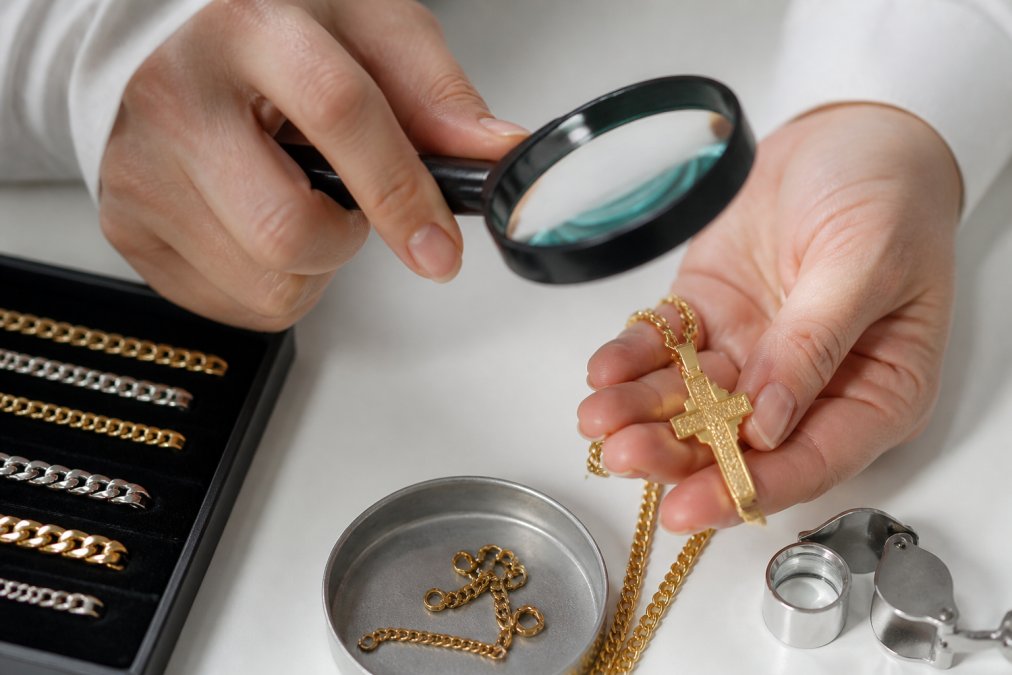
Key Indicators of Quality: Base Metal Composition and Coating
Run a magnet over the piece; stainless steel and quality base metals are generally non-magnetic or only weakly magnetic (nist.gov). If the piece sticks strongly to a magnet, it's likely cheap iron-based metal that will rust.
Examine the surface under good lighting. Quality pieces show consistent color and finish across all surfaces. Budget pieces often have patchy coating, visible base metal showing through, or uneven plating. The coating should feel smooth, not rough or flaking.
Check the weight. Luxury costume jewelry uses substantial base metals; it should feel solid in your hand, not light and hollow. Look for anti-tarnish coating information. Carlotta's pieces explicitly state their anti-tarnish coating; budget pieces never mention this because they skip it.
Spotting Craftsmanship: Welds, Clasps, and Finishing
Examine every joint and connection point. Quality pieces use proper welding or soldering that creates smooth, clean connections. Run your fingernail along welds; smooth welds mean quality, rough or raised welds indicate poor craftsmanship.
Clasps reveal quality immediately. Press a quality clasp repeatedly; it should operate smoothly and hold firmly without requiring excessive pressure. Budget clasps bend easily, stick, or fail to catch properly.
Examine the finishing on all edges. Quality pieces have polished, smooth edges that won't catch on skin or fabric. Check stone settings if the piece includes stones. Stones should sit securely in metal bezels with no movement when you gently push them. Loose stones mean the piece will shed stones during wear.
Tools for Identification: What You Actually Need
A magnifying glass (5-10x magnification) costs under $10 and reveals construction details invisible to the naked eye. A small magnet completes your toolkit; any magnet works. Good lighting matters more than any tool. Natural daylight or a bright LED lamp reveals surface flaws, coating inconsistencies, and construction issues that dim lighting hides.
Beyond these basics, you don't need anything else. Avoid sellers who require expensive authentication services for costume jewelry; that's a scam.
Luxury Costume Jewelry Resale Value and Market Demand
The secondary market for luxury costume jewelry has grown substantially as consumers recognize the distinction between quality designer pieces and disposable fast fashion.
Which Pieces Hold Value: Vintage vs. Modern Designer Pieces
Vintage luxury costume jewelry from established designers commands premium resale prices. Modern designer costume jewelry typically retains value. The key factor is designer recognition; pieces from established houses maintain demand, while pieces from unknown manufacturers drop in value almost immediately.
Unsigned pieces, regardless of quality, struggle in the secondary market. Without a designer mark to verify quality standards, buyers assume budget construction. Market demand favors timeless designs over trendy pieces. A classic cross necklace or simple chain bracelet maintains demand across years. Carlotta's focus on timeless cross-themed jewelry and classic chains makes sense; these designs maintain collectibility.
Condition, Patina, and Wear: How They Affect Collectibility
Condition dramatically impacts resale value. A piece with original shine, intact coating, and no visible wear commands premium prices. Light wear that doesn't expose base metal reduces value. Heavy wear that shows base metal or missing coating reduces value.
For vintage pieces, light patina often increases value among collectors who view it as evidence of authenticity and age. For modern pieces, patina is generally undesirable; collectors expect modern pieces to maintain original appearance.
Missing or damaged components severely impact value. A necklace with a broken clasp loses value even if the chain itself is pristine. A piece with missing stones drops in value. This is why proper care and maintenance protect your investment.
Best Alternatives to Expensive Jewelry Brands
Not every piece of luxury costume jewelry needs to cost $200+. Understanding where value actually exists helps you allocate your jewelry budget effectively.
Why Gold-Plated and Sterling Silver Pieces Offer Real Value
Gold-plated jewelry on stainless steel bases represents the sweet spot for value in costume jewelry. You get the aesthetic of gold without the precious metal price tag, paired with durable stainless steel that resists corrosion. A gold-plated piece at $37-$64 delivers appearance comparable to pieces costing 3-4 times as much.
Sterling silver (marked S925) offers another legitimate value option. Sterling silver is an actual precious metal, 925 parts per thousand pure silver, but costs significantly less than gold (the FTC). A sterling silver piece maintains real material value; you can sell it for scrap value if you no longer want it.
The key advantage of these materials is longevity. A gold-plated piece with proper anti-tarnish coating lasts for years with normal wear. Sterling silver lasts indefinitely. Carlotta's S925 Cross Bracelet at $37 uses genuine stainless steel and sterling silver construction, materials that justify the price through durability alone. Compare that to $12 pieces from fast-fashion retailers that require replacement every few months, and the math becomes clear: spending $37 once beats spending $12 four times.

Investment Potential of Designer Fashion Jewelry
Luxury costume jewelry from recognized designers functions as a quasi-investment. While it won't appreciate like precious metal jewelry, quality pieces hold value and sometimes appreciate modestly if the designer gains prominence.
Buy pieces from designers with established reputations and timeless designs. Avoid trend-driven pieces or unknown designers. A classic cross necklace from an established house maintains demand across decades. Designer fashion jewelry functions best as a "wearable investment"; you enjoy wearing it while maintaining its value. A $64 luxury cross necklace that you wear regularly and eventually sell for a portion of what you paid represents a reasonable investment because you had years of enjoyment while maintaining most of your capital.
Durability and Maintenance: What You'll Actually Spend
Calculating the true cost of jewelry ownership requires accounting for maintenance and potential repairs. A cheap piece that fails after three months costs more per month of wear than an expensive piece that lasts three years.
Anti-Tarnish Coatings and Long-Term Care Costs
Anti-tarnish coatings eliminate the primary maintenance burden of costume jewelry. Without this coating, gold-plated pieces may require regular polishing. Carlotta's anti-tarnish coating means you avoid these recurring costs.
Proper storage extends durability. Costume jewelry should be stored in a dry environment, away from humidity and direct sunlight. A simple jewelry box with compartments prevents tangling, scratching, and exposure to moisture.
Daily care is minimal. Wipe pieces with a soft cloth after wearing to remove skin oils and moisture. This 10-second action prevents tarnish and keeps pieces looking new.
Restoration Costs vs. Replacement: When to Repair
A broken clasp can be replaced professionally. A loose stone can be reset. A tarnished piece can be professionally cleaned and re-coated. These costs make sense only if the piece has sentimental value or you paid significantly for it.
For a $37 piece with a broken clasp, professional repair costs a significant portion of the original price, often not worth it. For a $64 piece with sentimental value, the repair makes sense. The durability advantage of luxury costume jewelry becomes clear here. A well-made piece rarely needs repair. A budget piece fails repeatedly, requiring constant repairs or replacement.
Is the Price Tag Justified? A Practical Verdict
The question of whether luxury costume jewelry justifies its price has a straightforward answer: it depends entirely on your usage pattern and expectations.
When Luxury Costume Jewelry Makes Sense
Luxury costume jewelry makes sense if you wear pieces regularly and expect them to last. A cross necklace you wear daily needs quality construction; a budget piece will fail within months. The $64 investment in Carlotta's CZ Stone Cross pays for itself through durability if you wear it regularly for two years. The piece arrives with anti-tarnish coating, solid 14k gold plating, and 316L stainless steel construction, materials that justify the price through longevity.

Luxury costume jewelry also makes sense if you value the secondary market. A signed piece from a recognized designer maintains resale value. You can wear it for two years and sell it for a portion of what you paid, effectively reducing your cost of ownership for years of daily wear.
The investment case strengthens if you have sensitive skin. Quality materials like stainless steel and proper gold plating won't cause irritation. Budget base metals often contain nickel and other allergens. Finally, luxury costume jewelry makes sense if you value meaningful pieces. A cross necklace that arrives in quality packaging, with genuine materials and craftsmanship, carries different weight than a $12 knockoff.
Red Flags That Signal Overpriced Pieces
Unmarked or unclear material designation is a major red flag. If a seller can't or won't specify the base metal composition, plating thickness, or material standards, the piece is overpriced.
Missing anti-tarnish coating information is another warning sign. Vague construction descriptions signal problems. Phrases like "high-quality materials" or "premium construction" without specifics are red flags. Legitimate pieces specify "316L stainless steel," "14k gold plating," and "welded construction."
Unrealistic durability claims are overpriced nonsense. If a seller claims a piece will last "forever" or "a lifetime," they're overselling. Costume jewelry is inherently temporary; quality pieces last for years with regular wear. Finally, prices that seem high compared to materials used signal overpricing. A stainless steel and gold-plated piece shouldn't cost $200. Carlotta's pricing, $37-$73 for quality cross pieces, aligns with material value.
The answer to whether luxury costume jewelry is worth the price comes down to this: quality pieces from established brands with proper materials and construction deliver genuine value through durability, aesthetic appeal, and secondary market potential. Budget pieces fail quickly and require constant replacement, making their apparent savings illusory.
At Carlotta, we've built our collection around this principle. Our cross necklaces and bracelets use genuine materials, 316L stainless steel, 14k gold plating, and anti-tarnish coating, that deliver the durability and appearance luxury costume jewelry should provide. When you choose a piece like our CZ Stone Cross or S925 Cross Bracelet, you're investing in something that lasts, maintains its appearance, and retains value. That's worth the price. Shop our collection and experience the difference quality materials make.
Frequently Asked Questions
How can I tell if luxury costume jewelry is actually worth the price?
Luxury costume jewelry justifies its cost when it combines quality materials (like 316L stainless steel with 14k gold plating), signed designer marks, solid construction, and anti-tarnish coatings. Compare the base metal composition and craftsmanship details against mass-market alternatives. Pieces from established fashion houses typically retain more resale value and last longer with proper care. Check for hallmarks, examine the clasp and welds, and verify the coating thickness, these factors determine whether you're paying for durability or just the brand name.
Does luxury costume jewelry hold its resale value?
Designer fashion jewelry holds resale value better than unsigned costume pieces, especially if it's in good condition with minimal wear and patina. Vintage designer pieces often appreciate if they're collectible or from limited collections. Modern luxury costume jewelry typically resells at a portion of its original price, depending on condition and market demand. Unsigned pieces often sell for less. To maximize resale potential, keep original packaging, maintain the piece carefully, and document any designer marks or authentication details.
What materials distinguish luxury costume jewelry from mass-market pieces?
Luxury costume jewelry uses premium base metals like 316L stainless steel or brass instead of cheap alloys, paired with thicker gold plating (typically 14k gold over the base). Mass-market pieces often use thin plating over low-grade metals that tarnish quickly. Luxury pieces include anti-tarnish coatings and better stone settings for rhinestones or cubic zirconia. Sterling silver (S925) components indicate higher quality. Check for hallmarks and designer signatures, these authenticate the materials used and signal genuine craftsmanship over generic fashion jewelry.
How do I know if costume jewelry will turn my skin green or cause sensitivity?
Green discoloration happens when cheap base metals oxidize against your skin. Quality luxury costume jewelry uses 316L stainless steel or gold-plated pieces with anti-tarnish coatings to prevent this. Look for pieces that specify their base metal composition and coating type. If you have sensitive skin, choose pieces with higher-quality base metals and thicker gold plating. Carlotta's cross necklaces and bracelets, like the CZ Stone Cross ($64) and S925 Cross Bracelets ($37), use premium stainless steel cores with solid 14k gold plating and anti-tarnish protection to minimize skin reactions and maintain shine over time.
What makes a costume jewelry piece worth collecting or investing in?
Collectible costume jewelry has designer signatures, limited production runs, distinctive craftsmanship, and documented provenance. Pieces from established fashion houses, vintage designer items, and those with unique stone settings or materials appreciate over time. Condition matters significantly, unworn or gently worn pieces command higher prices. Signed pieces are worth more than unsigned alternatives. Modern luxury costume jewelry becomes collectible when it combines quality materials (gold-plated over stainless steel), distinctive design, and brand recognition. Investment potential increases if the piece is timeless rather than trend-dependent.
This article was written using GrandRanker