

How to Style Layered Gold Bracelets: 2026 Rules
Table of Contents
- Gold Bracelet Stacking Rules: Start With the 2:1:1 Method
- How to Layer Gold Bracelets Without Tangling
- Styling Bracelets With a Watch for Day or Night
- Skin Tone and Metal Compatibility: Choose Your Finish
- Durable Gold Jewelry Maintenance for Daily Wear
- Common Bracelet Stacking Mistakes to Avoid
- Conclusion: Build Your Signature Wrist Stack
- Frequently Asked Questions
Last Updated: September 8, 2026
Gold Bracelet Stacking Rules: Start With the 2:1:1 Method
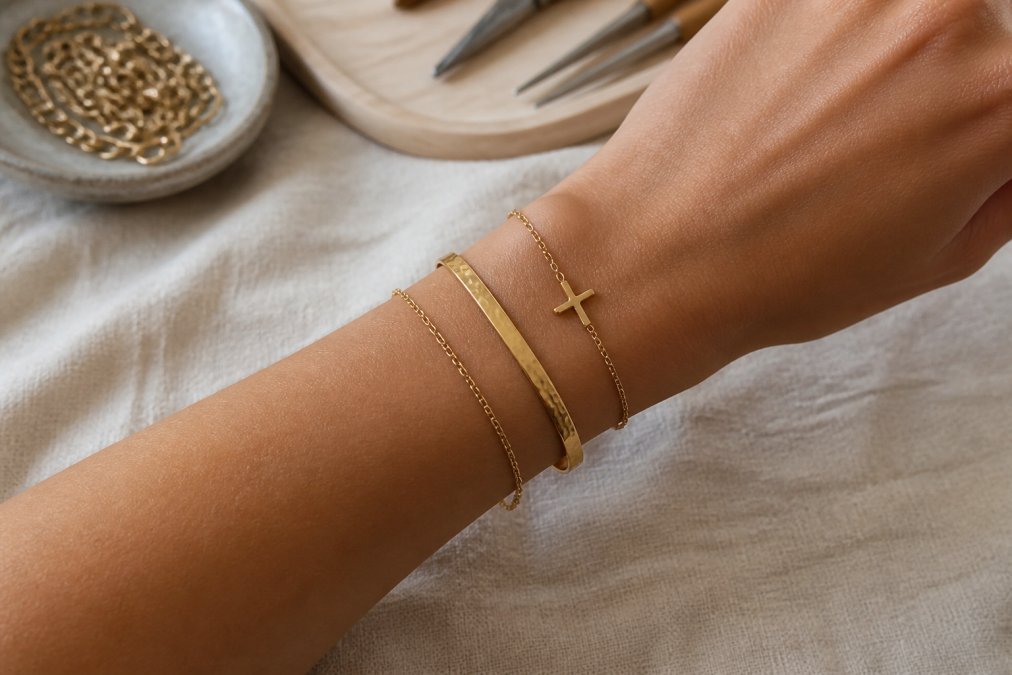
Styling layered gold bracelets starts with structure, not guesswork, and the best layered gold bracelets follow a clear plan. The 2:1:1 method is the simplest rule for a wrist stack that looks intentional: two thin chain bracelets, one textured or beaded piece, and one structured bangle or cuff. This ratio creates depth without clutter, giving your eye a clear path across the stack.
When every piece is the same thickness and finish, the result reads as a single blob of metal. The 2:1:1 method forces variety in texture, weight, and silhouette, which is what makes a stack look styled rather than accidental.
Before you buy anything, lay your pieces flat and check the proportions. A good stack mixes at least two different link styles, like a curb chain with a delicate cable chain, so the eye registers each piece individually.
Mixing Metals and Textures Without Clashing
Gold bracelet stacking rules used to demand a single metal. That thinking is outdated. Yellow gold, rose gold, and white gold now mix freely, and the trick is texture contrast rather than color matching.
Pair a polished bangle with a hammered or matte-finish chain. The light catches each surface differently, which creates visual interest even in photos. If you are layering gold bracelets with silver or platinum pieces, keep the gold as the dominant tone and let the others act as accents.
Balancing Visual Weight on Your Wrist
A balanced stack distributes bulk evenly around the wrist. If you wear a heavy cuff on the inner wrist, offset it with lighter chains on the outer wrist so the stack does not twist or slide.
The goal is fluidity: your bracelets should move together as one unit, not slap against each other. Proportion matters more than piece count. Three well-chosen bracelets often outperform six mismatched ones.
How to Layer Gold Bracelets Without Tangling
Tangling is the most common reason people abandon a layered look. It happens when you stack chains of identical length, weight, and clasp type. To layer gold bracelets without tangling, you need to control three variables: length differential, anchor points, and clasp mechanics.
The 0.5-Inch Length Differential Rule
Chains tangle when they hang at the same curve and swing in sync. The fix is a length differential of at least 0.5 inches between adjacent chains (ganoksin.com). A 6.5-inch chain, a 7-inch chain, and a 7.5-inch chain will hang at different points on your wrist, which prevents them from intertwining. Measure your wrist circumference and add 0.5 to 1 inch for a comfortable fit, then build your stack with staggered lengths.
Use a Rigid Anchor to Break Chain Contact
A bangle or cuff is not just a style choice; it is a mechanical separator. When you wear three or more chains, the rigid piece physically blocks the chains from crossing and cinching tight. Place the bangle in the middle of your stack, not at the end, so it interrupts the longest stretch of continuous chain. This is the same principle jewelry makers use when designing multi-strand pieces: a fixed bar or ring keeps strands parallel.
Clasp Mechanics: What Actually Prevents Knots
Clasp design determines how often you untangle. Here is how the common types behave in a stack:
- Lobster clasps: The worst choice for stacking. The trigger mechanism and oval shape catch on neighboring chain links. Reserve lobster clasps for single-bracelet looks.
- Spring-ring clasps: Slightly better but still prone to catching on fine cable chains.
- Box clasps: Good for bangles and cuffs; they lie flat and have no protruding parts.
- Magnetic clasps: Excellent for daily wear. They close cleanly and do not snag, but verify the magnet strength is sufficient for the weight of your stack (most quality magnets hold 2-3 pounds).
- Slide-on bangles: The safest option. No clasp at all means nothing to catch.
If you already own pieces with lobster clasps, you can reduce tangling by wearing them on the wrist opposite your watch or by clipping them together with a small jewelry connector ring.
The Order of Operations for Putting On a Stack
How you put on your bracelets matters as much as what you wear. Follow this sequence to minimize tangling from the start:
- Put on the rigid anchor piece (bangle or cuff) first.
- Add the heaviest chain second, so it settles closest to the anchor.
- Add lighter chains in order of descending weight.
- Fasten each clasp before adding the next piece, rather than trying to connect everything at once.
The Friction Test
Before you leave the house, do a 30-second friction test. Move your wrist through a full range of motion, rotate it, flex it, and shake it gently. If you hear metal-on-metal scraping or feel resistance, the stack will tangle or scratch within hours. Adjust the order or remove one piece until the stack moves as a single fluid unit.
Styling Bracelets With a Watch for Day or Night
Most guides treat day and night styling as two separate looks. The more useful approach is a capsule stack: a core set of pieces that works for the office and transforms for evening with one or two swaps. This saves you time and reduces wear on your jewelry.
Build a Three-Piece Day Core
Start with a base stack that is office-appropriate and comfortable for 10-hour wear:
- One structured piece: A slim bangle or a minimalist watch with a metal bracelet. This anchors the stack and prevents tangling.
- One medium chain: A 1.5mm to 2mm curb or cable chain in yellow gold. It reads as polished, not flashy.
- One personal accent: A thin pendant chain or a textured piece with a subtle finish.
This core works under a blazer, with a silk blouse, or against a casual knit. The key is that no single piece dominates; the stack reads as intentional but quiet.
The 60-Second Evening Transition
To shift the same stack into evening mode, you do not need to change everything. Swap one element:
- Replace the medium chain with a bolder textured chain or a piece with a slightly larger link size (2.5mm to 3mm). The visual weight increase reads as dressier without requiring a full restyle.
- Add one statement piece on top of the core, such as a cuff or a chain with a contrasting finish (e.g., rose gold against yellow gold). One addition is enough; two pushes the stack into costume territory.
- Move the watch to the inner wrist. This is a styling trick that changes the silhouette. With the watch face on the inner wrist, the bracelet stack on the outer wrist becomes the focal point. The same pieces suddenly look evening-appropriate because the eye reads the arrangement differently.
The Watch-and-Stack Balance Rule
The most common mistake is letting the watch and the bracelets compete. Use this decision tree:
- If the watch is chunky (40mm+ case or a thick metal bracelet): Keep bracelets slim (under 3mm) and limit the stack to two pieces on the same wrist.
- If the watch is minimalist (thin case, leather or mesh strap): You can wear a fuller stack of three to four bracelets on the same wrist.
- If the watch is a smartwatch: Treat it as a neutral anchor. Wear it on one wrist and put the entire bracelet stack on the other. Smartwatch bands scratch easily, so keep metal away from them.
Day-to-Night Wear and Tear
A capsule approach also protects your jewelry. Constantly removing and reattaching clasps stresses the metal. By keeping a core stack in place and swapping only one piece, you reduce the wear on your most-used bracelets. Reserve your delicate pieces for evening-only wear so they do not bear the friction of a full workday.
For office settings, keep the total stack to three pieces. For evening, four is acceptable if the added piece is visually lighter, such as a fine chain rather than a second heavy cuff.
Skin Tone and Metal Compatibility: Choose Your Finish
Gold is not one color, and your finish choice affects how the metal reads against your skin. Yellow gold suits warm undertones, while white gold and silver flatter cooler undertones. Rose gold sits in the middle and complements most skin tones.
This is not a strict rule. Many people wear every finish and look fantastic. But if you are starting fresh or building a stack meant for daily wear, choosing one dominant finish that flatters your skin makes the whole stack look more cohesive.
For sensitive skin, finish quality matters as much as color. Hypoallergenic, tarnish-resistant pieces prevent the irritation and discoloration that cheap jewelry causes (the American Academy of Dermatology). Hypoallergenic, tarnish-resistant pieces prevent the irritation and discoloration that cheap jewelry causes.
Durable Gold Jewelry Maintenance for Daily Wear
Durable gold jewelry maintenance is the part most styling guides skip, yet it determines whether your stack lasts a season or a decade. The main enemies are moisture, perfume, and friction.
Apply lotion and fragrance before putting on your bracelets, not after. Remove your stack before swimming, showering, or working out, since chlorine and sweat accelerate tarnishing. When you take the pieces off, wipe them with a soft cloth and store them separately to prevent scratches.
A common mistake is cleaning gold-plated pieces with abrasive polish. Use mild soap and warm water instead, then dry thoroughly. For everyday stacks, rotate your pieces so no single bracelet bears the brunt of daily friction.
Common Bracelet Stacking Mistakes to Avoid
Most stacking mistakes come down to ignoring proportion. Wearing a delicate chain next to a heavy cuff makes the chain look cheap by comparison. Match visual weight across the stack so every piece holds its own.
Another frequent error is overloading one wrist. If your forearm looks more like armor than arm candy, you have crossed the line. Step back and remove pieces until the stack feels light and moves naturally with you.
Finally, do not force a stack that fights your outfit. A structured stack of bangles suits tailored office wear, while loose, fluid chains work better with casual fabrics. When in doubt, fewer pieces with better spacing always look more intentional.
| Mistake | The Fix | Why It Matters |
|---|---|---|
| All pieces same length | Vary chain lengths | Prevents tangling and adds depth |
| One heavy, one delicate piece | Match visual weight | Keeps the stack balanced |
| Stacking before lotion dries | Apply products first | Protects the finish from buildup |
| Wearing bracelets while swimming | Remove before water | Prevents tarnish and damage |
Gemological Institute of America jewelry care guidance confirms that removing jewelry before exposure to chemicals and moisture is the single most effective way to preserve gold finishes. This aligns with the maintenance approach above: protect the metal and it will protect your investment.
Conclusion: Build Your Signature Wrist Stack
Layering gold bracelets is a skill you refine with practice, not a formula you memorize. Start with the 2:1:1 method, mix textures deliberately, and let your stack evolve with your outfits.
Carlotta's collection of chains, bangles, and cross bracelets offers timeless elegance. Explore our cross bracelet collection to find anchor pieces that elevate your stack, and enjoy up to 30% off favorites during seasonal offers.

Frequently Asked Questions
How many bracelets should you wear in a stack?
Start with three bracelets using the 2:1:1 rule: two thin chain styles, one textured piece like a bangle or beaded accent, and one statement item such as a cross bracelet. This proportion keeps the stack balanced without overwhelming your wrist. For smaller wrists, stop at three. If you prefer a bolder look, five pieces work when you alternate textures and keep at least one bracelet snug against the wrist.
How do you layer gold bracelets without them tangling?
Mix bracelet types with different structures. Pair a rigid bangle or cuff with flexible chains, since the solid piece separates the chains and prevents them from knotting. Keep chain lengths similar or use a slider clasp to adjust tightness. Remove the stack before sleeping or showering, and store each bracelet in its own pouch to avoid knots forming during rest.
Can you mix different shades of gold in a bracelet stack?
Yes, mixing yellow gold, rose gold, and white gold creates depth, but keep one dominant tone. For example, choose two yellow gold pieces and one rose gold accent. The contrast looks intentional when the metals share a similar finish, such as all polished or all matte. If your stack includes a watch, let its case color guide which gold shade takes the lead.
What is the best way to style bracelets with a watch?
Wear the watch on your dominant wrist and stack bracelets on the opposite side, or place two bracelets above the watch face and one below for balance. Match the watch metal to your primary bracelet tone. Keep the bracelet closest to the watch thin and flat so it sits comfortably against the case without scratching it.
Building a signature wrist stack takes trial and error, but the right foundation makes it effortless. Start with quality pieces that resist tarnish and suit your skin tone, then layer with confidence. Get started with Carlotta and find bracelets that move with you from morning meetings to evening plans. Shop All.