

Best Jewelry for Layering Gold Chains: 2026 Guide
Table of Contents
- Why Layering Gold Chains Is the Look of 2026
- Gold Chain Length Guide for Layering: The 3-Length Formula
- Best Pendant Necklaces for Layering: Crosses, Charms, and Icons
- How to Prevent Necklaces from Tangling: Hardware and Habits
- Mixing Textures and Weights: Box, Cuban, and Rope Chains
- Our Top Picks for Building a Layered Gold Chain Stack
- How to Choose Quality Gold Chains for Daily Wear
- Common Layering Mistakes to Avoid
- Frequently Asked Questions
Last Updated: September 4, 2026
Why Layering Gold Chains Is the Look of 2026
Styling jewelry is the fastest way to upgrade an outfit, and layering gold chains has moved from runway trend to everyday uniform. The best jewelry for layering gold chains combines deliberate length differences, texture contrast, and meaningful pendants so each piece reads clearly instead of melting into a tangled mess. At Carlotta, we design our cross chains and pendants specifically to sit well together.
The 2026 version of this look is less about piling on everything you own and more about assembly. A thoughtful stack of two or three chains in complementary lengths creates dimensional interest against any neckline. The goal is a curated stack that looks intentional, never accidental.
Below, we break down the exact lengths, textures, and hardware choices that keep a layered look clean. Layering gold chains is a styling skill you can master in minutes once you know the formula.
Gold Chain Length Guide for Layering: The 3-Length Formula
The foundation of every good stack is the gold chain length guide for layering. The rule is simple: choose three chains that differ by roughly 2 to 3 inches each. A standard combination is a 16-inch choker base, an 18-inch chain resting at the collarbone, and a 20-inch or longer chain draping toward the chest.
Graduated lengths are what keep each piece visible. When two chains are the same length, they sit on top of each other, which invites tangling and hides the details of both. Staggering the drape gives each necklace its own space and lets a pendant or charm hang free without crowding the clasp of the piece above it.
An adjustable length is your best friend here. Many of our chains, including the CROSS CHAIN at $78.00, include an extender that adds flexibility, so you can fine-tune the drop to suit a high neckline or a deep V. That adjustability means one necklace can play the role of base layer or accent piece depending on the outfit.

Best Pendant Necklaces for Layering: Crosses, Charms, and Icons
Pendants give a layered stack its personality, and the best pendant necklaces for layering are the ones that hold their own without shouting. A cross pendant is the most enduring choice because its vertical shape mirrors the line of the chains, elongating the neck rather than breaking it.
For a meaningful, everyday look, the 20" Cross Chain at $78.00 gives you both length and a statement cross in one piece. If you want to build the look yourself, pair a shorter cross like the 18" CROSS CHAIN at $73.00 with a longer, plain chain so the pendant becomes the focal point at the deepest layer.


Charm crosses and smaller icons work best on the shortest chain of your stack. The CHARM CROSS at $31.00 is sized to sit at the collarbone without competing with a larger pendant below it. Keep one pendant per stack as the hero piece; multiple large charms on different levels compete for attention and make the look feel busy.
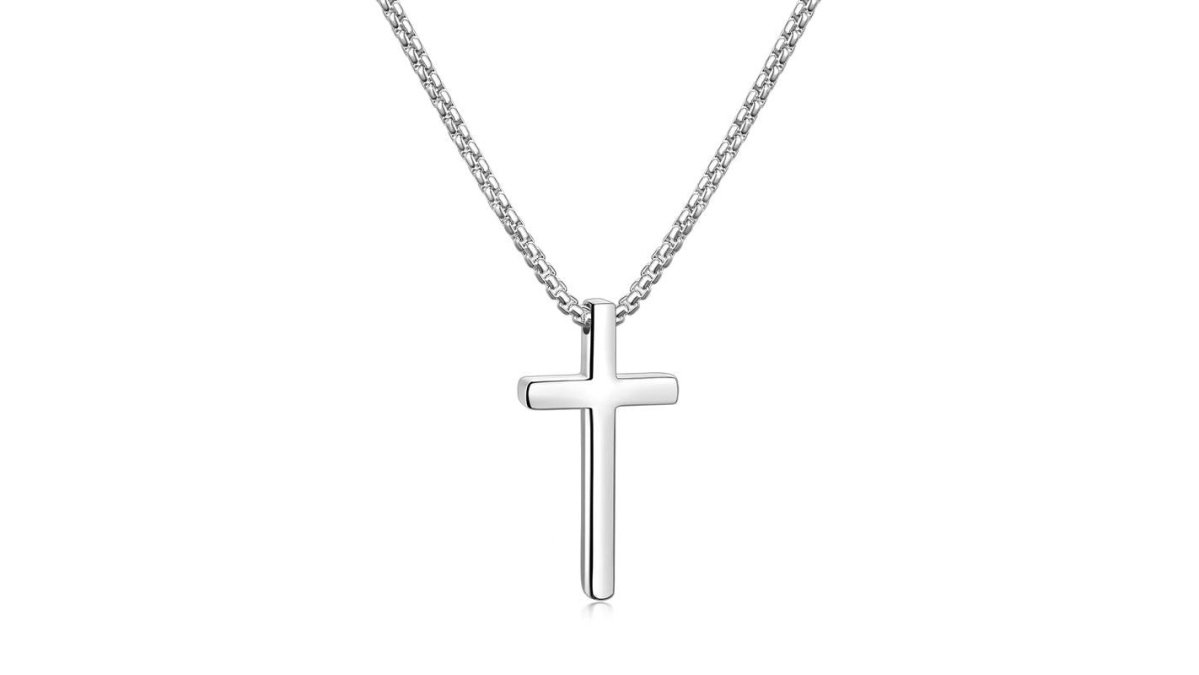
How to Prevent Necklaces from Tangling: Hardware and Habits
Tangling is the number one reason people abandon layered necklaces, but how to prevent necklaces from tangling comes down to two things: hardware and how you put them on. The right clasp and a little care make a layered stack wearable all day.
Start with the clasp. A lobster clasp is the most secure option, and it should be sturdy enough to hold the weight of the chain without bending. Before you buy, check that the clasp closes cleanly and the jump rings are soldered, not just pinched shut. A broken clasp is the most common failure point on inexpensive chains, and it is the reason many of our pieces are built with reinforced connections for daily wear.
The Technical Fix: Necklace Detanglers and Clasp Placement
Most styling guides stop at "store them separately," but the real utility lies in hardware solutions designed for layered wear. A necklace detangler, a small, weighted bar with multiple hooks, lets you hang each chain individually while keeping the whole stack in one place. Look for one with at least three hooks spaced 1.5 to 2 inches apart so the chains do not touch. This single purchase eliminates the overnight knotting problem entirely.
For daily wear, the most effective tangle prevention is clasp placement. When you build a stack, position the clasps at different points around your neck, not all at the back. If every clasp sits at the nape, the combined weight pulls the chains together and creates a knot point. Instead, clasp one chain at the back, another with the clasp moved to the front (wearing it as a pendant-style closure), and a third with the clasp at the side. This distributes the hardware and keeps chains from converging at a single pressure point.
A swivel clasp is another overlooked solution. Swivels allow the chain to rotate freely as you move, which prevents the twisting that leads to tangles. If you are buying a new chain specifically for layering, prioritize one with a swivel clasp over a standard lobster clasp. For existing chains, a jeweler can add a small swivel attachment for a modest fee.
Habits That Prevent Tangling
Habits matter just as much as hardware. Always clasp each necklace individually before putting the stack on, never clasp them together. When you take them off, lay them out flat or hang them on a dedicated jewelry stand rather than dropping them in a drawer. For storage, a necklace detangler or a simple pill organizer with separate compartments keeps each chain from knotting overnight.
A Quick Maintenance Routine for Tangled Chains
Even with the best hardware, tangles happen. The fastest untangling method is to lay the chain flat on a smooth surface, sprinkle a small amount of baby powder over the knot, and use two sewing needles to gently tease the links apart. The powder reduces friction without leaving residue. Never pull from both ends, that tightens the knot. Work from the outside in, loosening one link at a time.
For a stack that tangles repeatedly despite these measures, the issue is likely the length combination itself. Chains that differ by less than 2 inches will always fight each other. Revisit the length formula and adjust the drop of at least one chain using an extender. The fix is often as simple as adding 2 inches to the longest layer.
Mixing Textures and Weights: Box, Cuban, and Rope Chains
A stack of three identical chains looks flat. Mixing textures and weights is what gives a layered look depth, and the contrast between a delicate box chain, a chunky Cuban link, and a twisted rope chain creates the dimensional interest that reads as high-end.
The box chain is your minimalist base. Its square, uniform links lie flat and catch light evenly, making it the ideal bottom layer that disappears under a pendant. The Cuban chain brings the weight. Its rounded links sit heavier on the collarbone and work best as a mid-length statement. The rope chain adds the texture. Its twisted design reflects light from multiple angles, giving the top layer of your stack a subtle shimmer.
A common mistake is pairing two chains of the same visual weight. If you wear a chunky Cuban at 18 inches, do not add another chunky Cuban at 20 inches. Instead, contrast the heavy Cuban with a delicate box chain at 16 inches and a textured rope at 22 inches. The alternating weight keeps each piece distinct.
| Chain Texture | Visual Weight | Best Position in Stack | Best For |
|---|---|---|---|
| Box chain | Light, flat | Base layer (shortest) | Minimalist everyday wear |
| Cuban chain | Heavy, rounded | Mid layer | Street-style statement looks |
| Rope chain | Textured, shimmering | Top layer (longest) | Adding depth and light |
Our Top Picks for Building a Layered Gold Chain Stack
The Everyday Minimalist Stack
This is the stack you put on and forget about. It pairs two delicate chains with a small cross for a look that moves from desk to dinner without adjustment. Start with the CELESTIA CROSS at $64.00 on an 18-inch drop, then add a longer, plain chain beneath it. The result is clean, lightweight, and secure enough for everyday wear.
The Statement Cross Stack
When the outfit calls for a focal point, lead with a larger cross on your longest chain. The CHRIST CHAIN at $78.00 carries a substantial pendant that anchors the whole stack. Add a shorter, delicate chain above it to frame the cross without competing. This combination works especially well over crewnecks and button-downs where the pendant has room to drape.
For those who want a touch of brilliance, the Zirconia Cross Necklace at $64.00 adds a subtle sparkle that catches light at the collarbone, while the CROWN CROSS at $55.00 offers a bolder silhouette for a street-style edge. Each of these pieces is priced to let you build a full stack without blowing your jewelry budget.
How to Choose Quality Gold Chains for Daily Wear
Quality determines whether a layered stack looks expensive or falls apart after a month. The first thing to check is the base metal and the plating. Solid gold is the most durable option, but it carries a significant price tag. Gold-plated pieces are the budget-friendly alternative, and their lifespan depends entirely on the thickness of the plating and the quality of the base metal underneath.
For sensitive skin, look for pieces labeled hypoallergenic or made with a nickel-free base. The most common cause of green skin or irritation is a nickel or copper base reacting with sweat and skin oils (the American Academy of Dermatology). A quality gold-plated chain with a proper sealant layer will not turn your neck green, but cheap alternatives often skip that barrier. At Carlotta, we build our pieces to hold up to everyday use, which is why they are designed for repeated wear rather than special occasions only.
Common Layering Mistakes to Avoid
Most layering failures trace back to a few predictable errors, and knowing them saves you time and money. The most common mistake is ignoring the length formula and stacking chains that are too close in size. Without at least a 2-inch difference, chains tangle and the individual pieces lose their definition.
A second mistake is mixing metal finishes carelessly. While mixed metals can work, a monochromatic look in all yellow gold reads more polished and is easier to pull off. If you do mix, keep the undertones consistent, such as pairing yellow gold with rose gold, and avoid throwing silver into a warm gold stack.
Overloading is the third error. A stack of five or more chains rarely looks curated; it looks like a jewelry box spill. Stick to two or three pieces until you have mastered the balance.
The Maintenance Mistake: Cleaning Your Stack as One Unit
A fourth mistake is neglecting the specific maintenance needs of a layered stack. Cleaning multiple chains at once is different from cleaning a single piece. If you submerge the entire stack in jewelry cleaner, the chains can intertwine and the clasps can scratch against each other. The correct method is to clean each chain individually, but you can do it efficiently in one session.
Lay a soft microfiber cloth flat on your workspace. Place each chain on the cloth with at least 2 inches of space between them. Dip a soft-bristled brush (a clean baby toothbrush works well) into a solution of warm water and a drop of mild dish soap. Gently brush each chain from clasp to clasp, working the soap into the links. Rinse each chain separately under lukewarm running water, then lay them flat on a dry cloth to air dry. Never use a towel to dry gold chains, the fibers snag on links and clasps.
For plated pieces, skip the soap entirely. Plated gold is more delicate, and soap can strip the protective sealant over time. Instead, wipe each chain with a dry polishing cloth after every third wear. This removes the skin oils and sweat that accelerate tarnishing without exposing the plating to moisture.
The Budget Mistake: Mixing Solid Gold and Plated Pieces Carelessly
Another common error is assuming you cannot mix a solid gold investment piece with a more affordable plated chain. You can, but the rule is to keep the plated piece on the shortest layer, closest to your skin where movement is minimal, and the solid gold piece on the longest layer where it gets the most friction against clothing. This protects the plating from the wear that causes flaking.
A related mistake is buying all plated pieces for a stack and expecting them to age uniformly. Plated chains tarnish at different rates depending on how often they touch your skin and how much you sweat. If you are building a stack on a budget, invest your money in the middle layer, the one that gets the most visual attention, and buy plated pieces for the top and bottom layers where they are less noticeable.
Ready to build your first layered stack? Explore the Carlotta cross chain collection and take advantage of seasonal offers with up to 30% off on select pieces. Whether you are starting with a single 20" Cross Chain or assembling a full three-piece stack, our pieces are designed to layer beautifully for everyday wear. Shop All and find your signature combination.
Frequently Asked Questions
How many gold chains should you wear at once for a balanced stack?
Three chains is often considered a good number for a balanced layered look, creating enough visual interest without feeling cluttered. You might start with one short chain around 16-18 inches, add a mid-length piece at 20 inches, and finish with a longer 24-inch option. If you prefer a minimalist aesthetic, two chains with contrasting textures work well. For a bolder statement, four chains can work, but keeping one piece delicate can help avoid overwhelming your neckline.
How do you layer gold chains without them tangling?
Choose chains with different lengths, ideally spaced 2-3 inches apart, so they don't catch on each other. Heavier chains should sit lower, with lighter pieces on top. Clasps matter: lobster clasps are generally secure. You can also use a necklace detangler or magnetic clasp extender to help keep chains separated. Storing each chain individually or using a jewelry organizer can help prevent knots before you put them on.
Can you mix different gold chain textures for a layered look?
Yes, mixing textures is what makes a layered stack look intentional rather than accidental. Pairing a smooth box chain with a chunky Cuban link and a textured rope chain can create maximum dimension. The contrast between flat and rounded links catches light differently and adds depth. Keeping the metal finish consistent, such as all yellow gold or all gold-plated, can help maintain a cohesive look. Avoid pairing two identical textures at the same length, as they may blend together.
What is the best length combination for layering gold necklaces?
The classic formula often suggested is 16 inches, 18 inches, and 20 inches for a close-fitting stack. For a more dramatic drape, you might try 18, 22, and 26 inches. The key is to keep at least 2 inches between each chain so they fall at distinct points on your chest. If you're wearing a pendant, positioning it on the shortest chain so it sits at your collarbone can allow longer chains to frame it without competing for attention.
Are gold-plated chains durable enough for everyday layering?
Yes, when properly cared for. Quality gold-plated chains, like the ones from Carlotta, are designed for daily wear. Look for pieces with a thick plating layer and a protective coating to resist tarnishing. Removing your chains before swimming, showering, or working out, and wiping them with a soft cloth after wearing to remove oils and sweat, can help maintain their finish. With this routine, a gold-plated stack can maintain its finish for years.
This article was written using GrandRanker