

How to Choose Durable Everyday Chains 2026
Table of Contents
- Understanding Chain Styles and Link Designs
- Strongest Necklace Chain Styles for Everyday Wear
- Best Chain Material for Daily Wear
- Everyday Necklace Length and Width for Comfort and Fit
- How to Choose a Chain for a Pendant
- How to Care for Gold Chains and Extend Their Lifespan
- Choosing Durable Chains for Different Wear Scenarios
- Frequently Asked Questions
Last Updated: October 12, 2026
Understanding Chain Styles and Link Designs
The style of chain you choose determines how it looks, feels, and holds up over months and years. Different link designs offer different levels of durability and visual appeal. We focus on durable everyday chains built to last through daily wear without compromising on style.
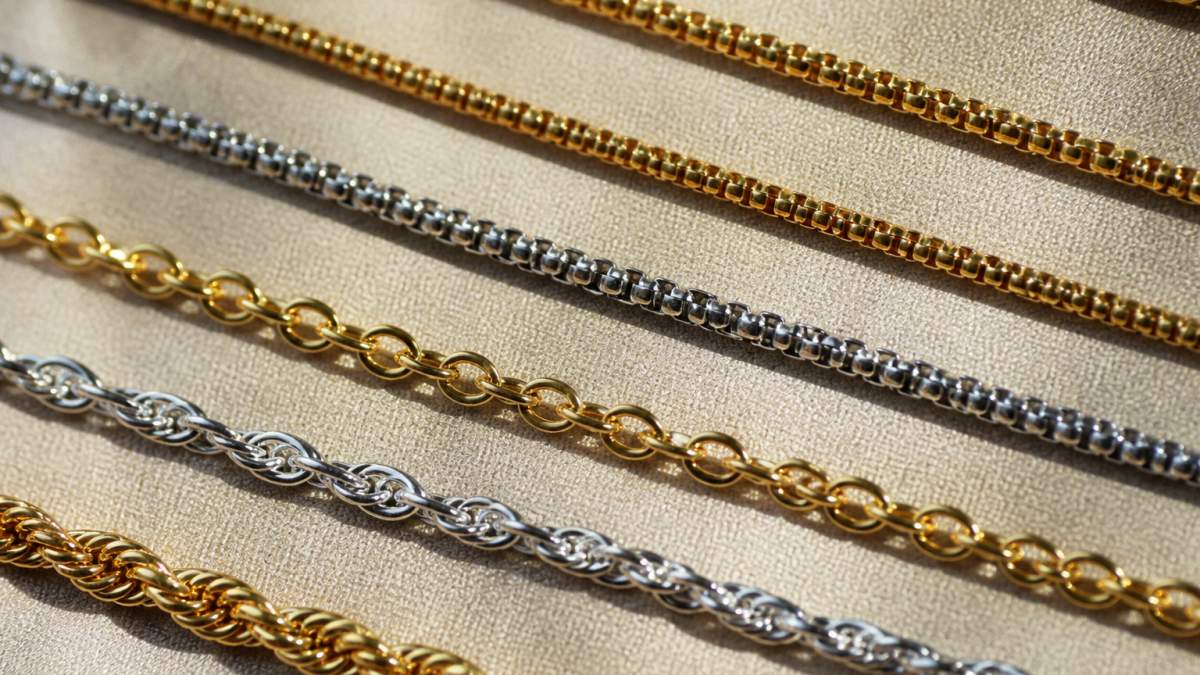
Box Chain vs. Cable Chain vs. Franco Chain
A box chain features small square links connected in a tight, uniform pattern. This design looks clean and sits flat against the skin, making it ideal for layering or wearing alone.
A cable chain uses oval links that resemble a traditional chain. It's versatile, affordable, and works with most pendant styles.
A Franco chain has tightly woven, interlocking links that create a rope-like appearance. Franco chains are heavier and stronger than cable chains, making them excellent for supporting pendant weight.
Rope Chain and Other Options
A rope chain twists links together in a spiral pattern, creating a textured, rope-like look. Rope chains are durable and eye-catching, but the twisted design can make them prone to kinking if bent sharply. They work well for everyday wear when treated gently.
Other styles include figaro chains (which alternate short and long links) and snake chains (which use flat, interlocking segments). Figaro chains offer visual interest and decent durability. Snake chains are smooth and sleek but less flexible, so they require careful storage to avoid creasing.
Strongest Necklace Chain Styles for Everyday Wear
Not all chain styles perform equally under daily stress. Some resist breaking, kinking, and tangling far better than others. When you wear a chain every single day, construction quality matters more than aesthetics alone.
Why Solid Links Outperform Hollow Construction
Solid chains use metal throughout each link, making them heavier and significantly stronger. Solid construction resists bending, denting, and breaking because the metal has nowhere to compress or collapse.
Hollow chains use thin metal walls surrounding empty space inside each link. Hollow construction saves cost and reduces weight, but it sacrifices durability. Hollow links can dent, bend permanently, and eventually break when stressed.
For everyday wear, solid construction is a strong choice if durability matters. Hollow chains work for occasional wear or special occasions.
Durability Scorecard: Which Styles Resist Breaking and Kinking
| Chain Style | Break Resistance | Kinking Risk | Tangling Risk | Best For |
|---|---|---|---|---|
| Box Chain | High | Low | Very Low | Everyday layering |
| Cable Chain | Medium | Medium | Medium | Versatile daily wear |
| Franco Chain | Very High | Low | Low | Heavy pendants |
| Rope Chain | High | Medium | Medium | Statement wear |
| Figaro Chain | High | Low | Medium | Mixed use |
| Snake Chain | Medium | High | Low | Special occasions |
Franco and box chains rank highest among durable everyday chains for durability. Franco excels at supporting weight without stress. Box chains resist tangling and kinking while maintaining strength. Cable chains offer a middle ground: decent durability at lower cost. Rope chains work well for everyday wear but require gentle handling. Snake and hollow chains should be reserved for occasional wear.
Best Chain Material for Daily Wear
The metal you choose affects both durability and skin sensitivity. Gold, silver, stainless steel, and plated options each have trade-offs.
Gold Options: 14K vs. 10K vs. Gold-Plated
14K gold contains 58% pure gold mixed with stronger alloys (Buying Platinum, Gold, and Silver Jewelry). It resists scratching better than pure gold and holds its value. 14K gold is ideal for everyday wear because it balances durability with authentic gold content.
10K gold contains 42% pure gold and more alloy metal, making it harder and more scratch-resistant than 14K.
Gold-plated chains have a thin layer of gold bonded to a base metal underneath. Gold-plated options cost less upfront but require regular replating to maintain appearance.
Silver, Stainless Steel, and Allergy Considerations
Sterling silver (92.5% pure silver) is durable and beautiful but tarnishes over time. Sterling requires regular polishing to maintain shine.
Stainless steel resists tarnishing and requires minimal care, making it practical for active lifestyles. Stainless steel is stronger than silver and doesn't require polishing. It's ideal for people with sensitive skin.
Nickel and cheap alloys cause green skin and allergic reactions in many people. If you've experienced skin discoloration from cheap chains, nickel is likely the culprit.
Everyday Necklace Length and Width for Comfort and Fit
How your chain fits affects both comfort and durability. A chain that's too tight restricts movement and stresses the clasp. A chain that's too loose shifts around and catches on clothing.
Finding Your Ideal Chain Length
Most people wear chains between 16 and 20 inches. Here's how to find your ideal length:
- 16-18 inches sits close to the collarbone and works for delicate, shorter frames
- 18-20 inches rests at the base of the neck and suits most body types
- 20-24 inches drops to the chest and works for layering or longer torsos
- 24+ inches creates a longer, more dramatic look and pairs well with pendants
Measure a chain you already wear and like. If you don't have one, wrap a soft measuring tape around your neck where you want the chain to sit, then add 0.5 inches for comfort. [Carlotta's 20" Cross Chain](https://carlottatch.com/products/20-cross-chain) at $78 suits most neck sizes for everyday wear.

Chain Width and Thickness: Balancing Strength and Comfort
Wider chains (3-5mm) look bolder and feel more substantial. They're stronger because more metal is present in each link. Wider chains also hide skin imperfections and work well with larger pendants.
Thinner chains (1-2mm) feel delicate and elegant. They're lighter and more comfortable for all-day wear. Thinner chains work best without pendants or with very light pendants (under 2 grams).
Medium-width chains (2-3mm) offer the best balance. They're strong enough for everyday wear with light pendants, comfortable for extended use, and versatile with most outfit styles.
Weight Considerations for All-Day Wear
A chain that's too heavy causes neck fatigue and shoulder tension. Most people tolerate 20-40 grams comfortably for all-day wear. Heavier chains (60+ grams) work for occasional wear but become uncomfortable after a few hours.
Solid gold chains weigh more than hollow ones, even at the same dimensions. If weight concerns you, stainless steel or hollow gold-plated options feel lighter. However, the durability trade-off isn't worth it for everyday wear. A slightly heavier solid chain lasts years longer than a light hollow one.
How to Choose a Chain for a Pendant
If you're wearing a pendant, the chain must support its weight and style without looking out of proportion.
Matching Chain Strength to Pendant Weight
Light pendants (under 2 grams) work with thin, delicate chains. These combinations look balanced and elegant. Thin chains can't support heavy pendants without risk of breaking.
Medium pendants (2-5 grams) pair well with medium-width chains (2-3mm). This pairing provides adequate support while maintaining visual harmony. Most everyday pendants fall into this weight range.
Heavy pendants (5+ grams) require Franco chains or other heavyweight styles. A thin chain will eventually break under constant stress from a heavy pendant.
Clasp and Link Inspection Checklist
Before buying a chain, inspect the clasp and links carefully:
- Clasp strength: The clasp should feel solid and click firmly into place. Weak clasps fail quickly.
- Link alignment: All links should be straight and properly connected. Misaligned links indicate poor craftsmanship.
- Solder joints: Where links connect, solder should be smooth and complete. Gaps or rough spots mean weak connections.
- Clasp mechanism: Spring ring clasps are common but less secure than lobster clasps. Lobster clasps hold pendants more reliably.
- Smooth finish: Run your finger along the chain. It should feel smooth without rough edges or burrs.
Carlotta's chains are inspected for these quality markers before shipping.
How to Care for Gold Chains and Extend Their Lifespan
Proper care prevents tarnishing, breakage, and damage. Daily maintenance takes just minutes but extends chain life significantly.
Daily Maintenance and Storage
Remove your chain before swimming, showering, or exercising. Water, chlorine, and sweat accelerate tarnishing and can weaken solder joints over time.
Avoid sleeping in your chain when possible. Movement during sleep can twist or kink the links. If you wear your chain while sleeping, check it weekly for damage.
Keep your chain away from lotions, perfumes, and harsh chemicals. These substances can discolor plating and damage solder joints. Put your chain on after applying skincare products, not before.
Cleaning, Polishing, and When to Seek Professional Repair
Clean your gold chain monthly with warm water and mild dish soap. Soak the chain for 5 minutes, then gently scrub with a soft brush.
For tarnished silver chains, use a silver cloth or mild silver polish. Avoid abrasive scrubbing, which removes the protective patina. Polish gently in the direction of the links.
If your chain breaks, kinks, or shows visible damage, seek professional repair immediately. A jeweler can replace damaged links, reinforce weak solder joints, and restore clasps.
Choosing Durable Chains for Different Wear Scenarios
Your lifestyle determines which chain style and material makes sense. A chain for daily office wear has different requirements than one for active sports or formal events.
Casual Daily Wear vs. Active Lifestyle
For casual daily wear in low-impact environments, delicate box chains or cable chains work well. These styles look refined and feel comfortable for extended wear.
If your lifestyle includes sports, outdoor activities, or physical work, choose Franco chains or heavier box chains in solid gold or stainless steel. These styles resist breakage under movement and stress.
For mixed use (some active days, some calm days), medium-width solid chains in 14K gold or stainless steel offer the best compromise.
Formal Wear and Layering Options
For formal events, delicate chains in white gold or sterling silver convey elegance. Carlotta's CROSS CHAIN at $78 works perfectly for formal occasions where you want understated sophistication.

Layering requires multiple chains of different lengths. Start with a shorter chain (16-18 inches) as your base, then add a longer chain (20-24 inches) on top.
When layering, ensure each chain is strong enough to support its own weight plus contact with other chains. Friction between chains can cause tangling and accelerated wear.
Choosing a durable everyday chain comes down to understanding construction, materials, and your actual lifestyle. Shop [our CROSS CHAIN selection](/products/18-cross-chain-gold) and enjoy up to 30% off on your favorite pieces during seasonal offers.

Frequently Asked Questions
What type of necklace chain breaks the least?
Solid box chains and cable chains with thicker links resist breaking better than hollow or thin designs. Box chains offer superior durability because their interlocking square links distribute stress evenly, reducing kinking and bending. Solid construction (not hollow) is critical, hollow chains are prone to crushing and breaking under everyday wear. For maximum durability, choose chains at least 2mm in width with reinforced clasps that can handle pendant weight.
What is the best necklace length for wearing every day?
An 18-inch chain is the standard everyday length, sitting just below the collarbone for comfort and versatility. Lengths between 16-20 inches work well for daily wear, depending on your neck size and personal preference. Shorter chains (16 inches) sit higher on the chest for a contemporary look, while 20-inch chains drape lower and work better with pendants. Measure your preferred fit before purchasing to ensure comfort during all-day wear.
How do you care for a chain you wear every day?
Remove your chain before showering, swimming, or exercising to prevent water damage and corrosion. Store it in a dry place away from humidity, ideally in a soft pouch to prevent tangling. Clean gently with a soft cloth weekly, and use mild soap and water monthly for deeper cleaning. Check the clasp and links regularly for wear, and have it professionally inspected annually. Proper storage and regular maintenance extend the lifespan significantly and prevent costly repairs.
What chain material is best for sensitive skin and daily wear?
Solid 14K gold, stainless steel, and titanium are hypoallergenic options ideal for sensitive skin. Avoid gold-plated chains if you have nickel allergies, as the base metal underneath can cause reactions. If you prefer affordability, surgical-grade stainless steel resists tarnishing and skin irritation without the cost of solid gold.