

7 Gemstone Colors and What They Mean in Jewelry
Last Updated: November 4, 2026
Quick Summary
Gemstone colors carry traditional associations rather than scientific facts: red signals passion and courage, blue signals calm and clarity, green signals growth and renewal, yellow and orange signal joy, purple signals intuition, pink signals love, and white or clear signals purity and new beginnings. Pick the color that matches the mood you want to carry.
- Ruby rates 9 on the Mohs scale and handles daily wear in a ring, while garnet scratches more easily.
- Blue stones suit denim, navy, gray, and white, making them the easiest to wear every day.
- Green flatters most wardrobes and holds up in both gold and silver settings.
- Diamond rates 10 on the Mohs scale, the hardest gemstone, and suits daily-wear rings.
- Pick one color family per look, repeat it in two places at most, and keep the rest neutral.
Table of Contents
- Gemstone Colors and Their Meanings at a Glance
- Red Gemstones: Passion, Courage, and Vitality
- Blue Gemstones: Calm, Clarity, and Communication
- Green Gemstones: Growth, Balance, and Renewal
- Yellow and Orange Gemstones: Joy, Energy, and Optimism
- Purple Gemstones: Spirituality, Intuition, and Creativity
- Pink Gemstones: Love, Compassion, and Emotional Warmth
- White and Clear Gemstones: Purity, Clarity, and New Beginnings
- Best Practices for Styling Colored Gemstone Jewelry
- Frequently Asked Questions
Gemstone Colors and Their Meanings at a Glance
Gemstone colors work on a simple idea: color is the fastest way a stone communicates a mood. A red stone reads as energy before you know its name; a blue one reads as calm. That instant emotional hit is why gemstone colors carry so much weight in how a piece is chosen, gifted, and worn.
People rarely buy a colored stone by accident, they pick the one that matches a feeling they want to carry. Below, we break down the seven main color families, the stones that represent them, and how to wear each one well.
One honest note before we start: gemstone symbolism is tradition, not science. What follows reflects cultural and historical associations, not medical or psychological claims. The beauty is real. The meaning is what we collectively agree to give it.
| Color Family | Common Stones | Core Meaning | Best Worn When |
|---|---|---|---|
| Red | Ruby, garnet | Passion, courage, vitality | You want energy and confidence |
| Blue | Sapphire, aquamarine | Calm, clarity, communication | You want steadiness and focus |
| Green | Emerald, peridot | Growth, balance, renewal | You want a fresh start |
| Yellow/Orange | Citrine, amber | Joy, energy, optimism | You want warmth and lift |
| Purple | Amethyst, iolite | Spirituality, intuition, creativity | You want reflection and depth |
| Pink | Rose quartz, morganite | Love, compassion, warmth | You want softness and connection |
| White/Clear | Diamond, quartz | Purity, clarity, new beginnings | You want clean, timeless polish |
If you are still narrowing down which hue flatters you personally, our guide on how to choose jewelry for your skin tone is the natural next stop before you commit to a color.
Red Gemstones: Passion, Courage, and Vitality
Red is the loudest color in the room, and red gemstones lean into that. Ruby is the classic example, long tied to passion, courage, and vitality. Garnet carries a similar warmth at a more accessible level. Wear a red stone when you want a piece that feels bold and alive rather than quiet.
The passion-and-courage reading is not universal. In many South Asian and East Asian traditions, red signals luck, celebration, and protection rather than romantic passion, a red stone is often chosen for a wedding or a new venture for exactly that reason. In parts of Europe, red has historically signaled status and power as much as desire. The through-line is intensity; the specific meaning shifts with culture.
Ruby is the benchmark red, and its color is graded on hue, tone, and saturation rather than symbolism. The finest stones are a pure, slightly bluish red with strong saturation and medium-dark tone; stones that lean orange or brown read warmer and usually cost less at the same carat weight.
A common mistake is treating red as evening-only. In practice, a single red accent against a plain white shirt or a neutral knit does more than a full stack of color. Let one stone do the talking. The Gemological Institute of America's gemstone encyclopedia is a solid reference if you want to understand how a stone's color and clarity are graded before you buy.
Watch out: red stones vary widely in durability. Ruby (9 on the Mohs scale) handles daily wear in a ring, but garnet (roughly 6.5-7.5) and red tourmaline (7-7.5) scratch more easily and are better suited to pendants, earrings, or occasional rings.
If a red stone is the mood you are after, our ONYX piece shows how a single deep-toned stone becomes the focal point of an otherwise simple look.

Blue Gemstones: Calm, Clarity, and Communication
Blue stones are the easiest to wear every day, which is exactly why they stay popular. Sapphire and aquamarine both carry associations with calm, clarity, and communication. Aquamarine reads soft and light, so it works in daylight and casual settings where a darker stone might feel heavy.
The appeal here is versatility. A blue stone sits comfortably next to denim, navy, gray, and white, so it earns its place in a daily rotation. Browse the AZUL piece to see how a blue-toned stone works as an everyday anchor.

Green Gemstones: Growth, Balance, and Renewal
Green gemstones carry the language of growth, balance, and renewal, and emerald is the name most people know. Peridot offers a lighter, more playful take on the same family. Green is what we see when things are alive and thriving, so a green stone reads as fresh rather than formal.
Green pairs well with earth tones, cream, and olive, and it holds up in both gold and silver settings. If you are building a first colored-stone collection, green is forgiving, it flatters most wardrobes without demanding you plan an outfit around it. Our CALCITE piece shows a green-toned stone styled simply.

Yellow and Orange Gemstones: Joy, Energy, and Optimism
Yellow and orange stones are the mood-lifters of the gemstone world. Citrine and amber both carry associations with joy, energy, and optimism, bringing warmth that cooler stones cannot. These are the colors to reach for when you want a piece that feels sunny and unpretentious.
The trick with warm tones is balance. A yellow or orange stone pops hardest against white, cream, or denim, and it can overwhelm a busy print. Keep the rest of the outfit calm and let the stone be the bright note.
Purple Gemstones: Spirituality, Intuition, and Creativity
Purple has long been tied to spirituality, intuition, and creativity, and amethyst is its most familiar face. The color sits between the calm of blue and the energy of red: reflective but not sleepy. Iolite offers a cooler, more muted alternative in the same family.
Purple stones suit people who want a piece with depth, something personal rather than trendy. They pair naturally with black, gray, and deep jewel tones, and a purple accent works especially well in a layered stack, adding richness without taking over.
Pink Gemstones: Love, Compassion, and Emotional Warmth
Pink gemstones are associated with love, compassion, and emotional warmth, and rose quartz is the stone most people picture. Morganite offers a softer, peachier version of the same feeling. Pink is the most giftable color family because it reads as affectionate without needing an explanation.
Where pink shines is in everyday pieces. A pink stone softens a gold chain and makes a simple bracelet feel personal. It is also a natural choice for a meaningful gift, since the symbolism does the emotional work for you.
White and Clear Gemstones: Purity, Clarity, and New Beginnings
White and clear stones carry associations with purity, clarity, and new beginnings. Diamond is the obvious example, but clear quartz and white topaz deliver a similar clean look. These stones are the most versatile of all, because they work with everything in a wardrobe.
The practical question for a clear stone differs from every other color family: with no hue to carry the meaning, value and appearance are decided almost entirely by how colorless it is, how clean it is, and how it was treated.
Start with color grade. In diamonds, the scale runs from D (colorless) to Z (noticeably tinted), and the difference between a G and a J stone is subtle in a pendant but visible side by side in a larger stone.
Clarity works the same way across the family. Diamond clarity is graded from Flawless down through the Included range, and most inclusions that lower a grade are invisible without magnification. White sapphire and topaz are typically eye-clean at accessible grades, while quartz can carry visible internal features.
Treatments matter more here than in any other color family, because a clear stone has nowhere to hide. Laser drilling and fracture filling are common in lower-grade diamonds and must be disclosed. Our guide on how to tell if a gemstone is natural or synthetic walks through what to check.
Durability separates the family sharply. Diamond (10 on the Mohs scale) is the hardest gemstone and suits daily-wear rings. White sapphire (9) is close behind and a common diamond alternative. White topaz (8) is durable but can chip at the edges with hard knocks.
Price follows the same logic. A colorless, eye-clean natural diamond commands a premium that white sapphire, topaz, quartz, and moissanite do not.
A clear stone done right is the most timeless piece you will own. The trick is knowing which of those four factors, color, clarity, treatment, durability, you are actually paying for.
Best Practices for Styling Colored Gemstone Jewelry
Styling colored gemstone jewelry comes down to restraint and repetition. Pick one color family per look, repeat it in two places at most, and keep the rest of your jewelry neutral. That single rule solves most styling problems before they start.
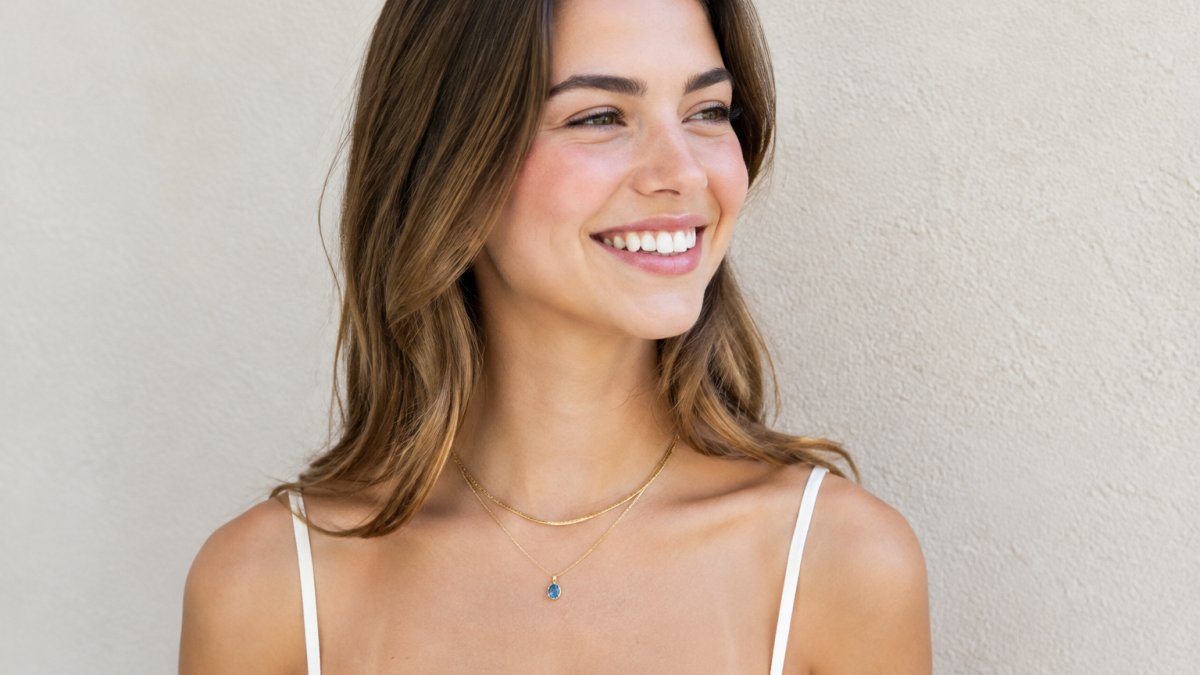
The woman is American.
A few practices that hold up across every color:
- Match metal to mood, not rules. Warm stones like yellow and orange sit naturally with gold; cool stones like blue and purple work in either metal.
- Layer one color at a time. Two colored stones in the same family read as intentional. Three different colors read as clutter.
- Let the stone set the scale. A bold red or green stone needs a simple chain. A small pink or clear stone can handle a layered stack.
- Think about the neckline. A colored pendant disappears against a busy print but sings against a solid crew or V-neck.
Durability matters as much as color. Softer stones scratch more easily and belong in pendants and earrings rather than rings worn daily. Harder stones handle constant wear. If a piece is meant for everyday use, ask how the stone rates on hardness before you fall for the color. The Mohs hardness scale reference from the National Park Service explains how mineral hardness is measured, which is the single most useful fact for judging whether a stone suits daily wear.
For a broader look at how colored stones fit into a real wardrobe, the Smithsonian's gem and mineral collection is a rewarding browse for understanding how color, cut, and setting have been combined across eras.
Frequently Asked Questions
What do different colors of gemstones symbolize?
Red gemstones like ruby often represent passion and courage, while blue stones such as sapphire suggest calm and clarity. Green gemstones like emerald are linked to growth and renewal, and yellow stones bring joy and optimism. Purple amethyst stands for intuition and creativity, pink stones for love and compassion, and white or clear gems for purity and new beginnings. These meanings vary by culture, so treat them as personal touchstones rather than fixed rules.
How do I choose a gemstone color that matches my personality?
Start with the qualities you want to project or nurture. If you need confidence for a presentation, a red or orange stone can serve as a visual reminder. For everyday calm, blue or green works well. Consider your wardrobe too: a pink or purple gemstone pops against neutral outfits, while clear or white stones blend with everything. Carlotta's Onyx and Azul pieces are available at $28 each.
Do gemstone colors have different meanings in different cultures?
Yes, and those differences matter. In Western traditions, white symbolizes purity at weddings, but in parts of Asia white is associated with mourning. Red is lucky in Chinese culture yet can signal danger in other contexts. Blue carries spiritual significance in many faiths. When buying gemstone jewelry as a gift, ask about the recipient's cultural background so the color sends the message you intend.
What is the rarest gem color?
Pure blue and vivid red tend to be the rarest in fine gemstones. Blue diamonds and certain sapphires command high prices because of their scarcity. For jewelry shoppers on a budget, rarity matters less than personal meaning. Lab-created and treated stones offer similar colors at accessible prices. Carlotta's Calcite and Azul pieces are both $28.
