

Is 14K Gold Better Than 18K for Everyday Wear?
Last Updated: October 31, 2026
Quick Summary
14K gold is generally the better choice for everyday wear because its larger share of alloy metals makes it harder and more resistant to scratches than 18K. 14K contains about 58.3% gold, while 18K contains 75%. For rings and bracelets that get constant friction, 14K usually holds its finish longer.
- 14K contains about 58.3% gold, while 18K contains 75% gold.
- Rings and bracelets take the most daily friction, making 14K the usual pick.
- Hollow or thin construction can matter more than karat for dent resistance.
- White gold depends on rhodium plating, which needs re-plating every 6 to 18 months.
- Earrings and pendants face little friction, so 18K works well for them.
Table of Contents
- What Karat Means and How Gold Purity Is Measured
- 14K vs 18K Gold Durability for Everyday Wear
- 14K vs 18K Gold Color: Which Tone Suits You
- Price, Value and Total Cost of Ownership
- Best Gold Karat for Everyday Wear by Jewelry Type
- Repairs, Resizing and Long-Term Care
- Choosing Your Next Piece at Carlotta
- Frequently Asked Questions
What Karat Means and How Gold Purity Is Measured
Karat measures how much of a 14k gold alloy is pure gold. Pure gold is 24 karat, which is too soft for most jewelry. Jewelers mix gold with metals such as copper, silver and zinc to add strength. A 14K piece contains 14 parts gold out of 24, or about 58.3% gold. An 18K piece contains 18 parts out of 24, or 75% gold.
The extra alloy in 14K is what makes it practical. More non-gold metal means a harder finish that holds up better to daily contact. Most shoppers tend to settle on 14K gold for chains and bracelets they plan to wear every day, and reserve 18K for pieces that get less friction.
14K vs 18K Gold Durability for Everyday Wear
Durability is where the two karats differ most in practice, but the difference is not a single number. It helps to separate four things that shoppers often blend together: hardness (resistance to scratching and abrasion), toughness (resistance to denting and deformation), fatigue resistance (how a piece handles repeated flexing), and finish wear (how quickly the surface dulls or shows micro-scratches). Karat affects all four, but alloy recipe and construction affect them just as much.
Why 14K Usually Wins on Everyday Wear
A 14K alloy is roughly 58.3% gold and 41.7% other metals, while 18K is 75% gold and 25% other metals. The larger non-gold share in 14K generally produces a harder, more abrasion-resistant surface. That matters because most daily damage is not a single impact, it is cumulative friction from keyboards, seatbelts, steering wheels, hand-washing, gym equipment, and clothing. A 14K ring or chain typically holds its polish longer under that kind of load, which is why it is the common recommendation for pieces worn every day.
The Nuance Competitors Skip: Karat Is Not the Whole Story
A 14K piece is not automatically stronger than every 18K piece. White gold adds another variable: it is usually rhodium-plated, and the plating, not the karat, determines how long the piece looks bright before it needs re-plating.
Construction matters too. A hollow 14K chain can dent more easily than a solid 18K chain of similar weight because there is less metal behind the surface. A wide, thin band flexes more than a narrower, thicker one. When you compare two pieces, ask about solid versus hollow construction, band thickness, and whether the setting is prong or bezel, those details often predict real-world durability better than the karat stamp alone.
Scratches, Dents, and Everyday Friction by Piece
- Rings: Hands take the most abuse. A 14K ring worn on a dominant hand that types, lifts, or works with tools will show fewer deep scratches than an 18K ring of the same design. If you want 18K for color, consider a bezel setting or a thicker band to add metal where it counts.
- Bracelets: These rub against watches, desks, and clothing all day. 14K is the lower-maintenance choice; an 18K bracelet is better saved for occasional wear or layered looks where it is not the outermost piece.
- Chains and necklaces: Friction is lower than for rings, so 18K is more viable here, especially for pendants and dressier chains. For a chain you never remove, 14K is still the safer bet.
- Earrings: Studs and small hoops see little friction, so 18K works well and gives a richer tone. Heavy drop earrings benefit from 14K because the metal is stronger at the hinge and post.
Alloy Composition and Nickel Sensitivity
Karat does not determine whether a piece is hypoallergenic. Nickel is a common cause of contact dermatitis, and it can appear in 14K, 18K, white gold, and rose gold alike. Before buying, ask the seller three questions: What metals are in the alloy? Is the piece nickel-free or nickel-safe? Is white gold rhodium-plated, and how often will it need re-plating? If you have a known nickel allergy, ask the seller about the alloy and consider a patch test with a jeweler before committing to a daily-wear piece.
The two karats differ in practice across several durability factors, summarised below.
| Piece | Better karat for daily wear | Key reason |
|---|---|---|
| Rings | 14K | Hands take the most knocks; harder alloy |
| Bracelets | 14K | Rubs against watches and clothing |
| Chains (worn constantly) | 14K | Safer for a piece you never remove |
| Chains (dressier) | 18K | Lower friction makes 18K more viable |
| Earrings and pendants | 18K | Little friction; richer tone |
| Gold content (14K / 18K) | About 58.3% / 75% | More alloy means a harder surface |
14K vs 18K Gold Color: Which Tone Suits You
18K has a deeper, warmer yellow than 14K because it contains more gold. Rose and white gold depend on the alloy mix rather than karat alone, so compare the finished color in person when you can.
Price, Value and Total Cost of Ownership
Most comparisons stop at the sticker price: 18K costs more than 14K for the same design because it contains more gold. Before comparing price, understand the difference between gold-plated and gold-filled jewelry. That is true, but it is only the first line of the ledger. For a piece you wear every day, the smarter question is what the jewelry will cost you over five or ten years, purchase price plus maintenance, repair, and the resale or trade-in value you might recover.
Purchase Price: What the Karat Premium Buys
Gold content drives the base cost. An 18K piece is 75% gold versus about 58.3% for 14K, so at the same design and weight the 18K version carries a higher metal cost. Labor, stone setting, and brand add to both, which is why two pieces of the same karat can differ widely in price. When you compare, ask for the gram weight and the karat so you can see how much of the price is metal versus make. A heavier 14K piece can cost more than a lighter 18K piece, and may wear better because there is more metal to absorb friction.
Maintenance: The Recurring Line Item
Softer 18K tends to show scratches and dulling sooner under daily friction, which can mean more frequent polishing. White gold adds rhodium plating on top of either karat; many jewelers recommend re-plating every 6 to 18 months depending on wear, and that is a recurring cost regardless of karat. Yellow and rose gold do not need plating, but they still benefit from occasional professional polishing. A 14K daily-wear piece often needs less frequent refinishing, which narrows the long-run cost gap with 18K.
Repairs and Resizing
Both karats can be resized and repaired, but the design matters as much as the metal. Plain bands are straightforward to resize; rings with pavé, channel-set stones, or intricate patterns are harder and cost more to adjust. Softer 18K can be more prone to prong wear around stones, so have settings checked annually. A 14K piece is not immune, thin shanks and hollow chains still fail, but it generally tolerates daily knocks with fewer touch-ups.
Resale and Trade-In
Higher gold content can mean a higher scrap or trade-in value per gram, which is one reason some buyers prefer 18K. But resale value for jewelry is rarely close to purchase price; design, brand, and condition drive most of it. If you plan to keep and wear a piece for years, the durability and lower maintenance of 14K often outweigh the higher metal value of 18K. If you view jewelry as a store of value first and a daily accessory second, 18K has the edge on gold content, just do not expect the premium to be fully recoverable.
Carlotta offers seasonal promotions with up to 30% off select pieces. Pricing depends on the design, the offer period, and the item, so check the current price on our site before you decide.
Best Gold Karat for Everyday Wear by Jewelry Type
Choose by how the piece will be worn:
- Rings: 14K, because hands take the most knocks.
- Chains: 14K for daily wear; 18K if you wear the chain mostly with dressier outfits.
- Bracelets: 14K, since they rub against watches and clothing. For styling ideas, see stylish gold bracelets for everyday outfits.
- Earrings and pendants: 18K works well, since they face less friction.
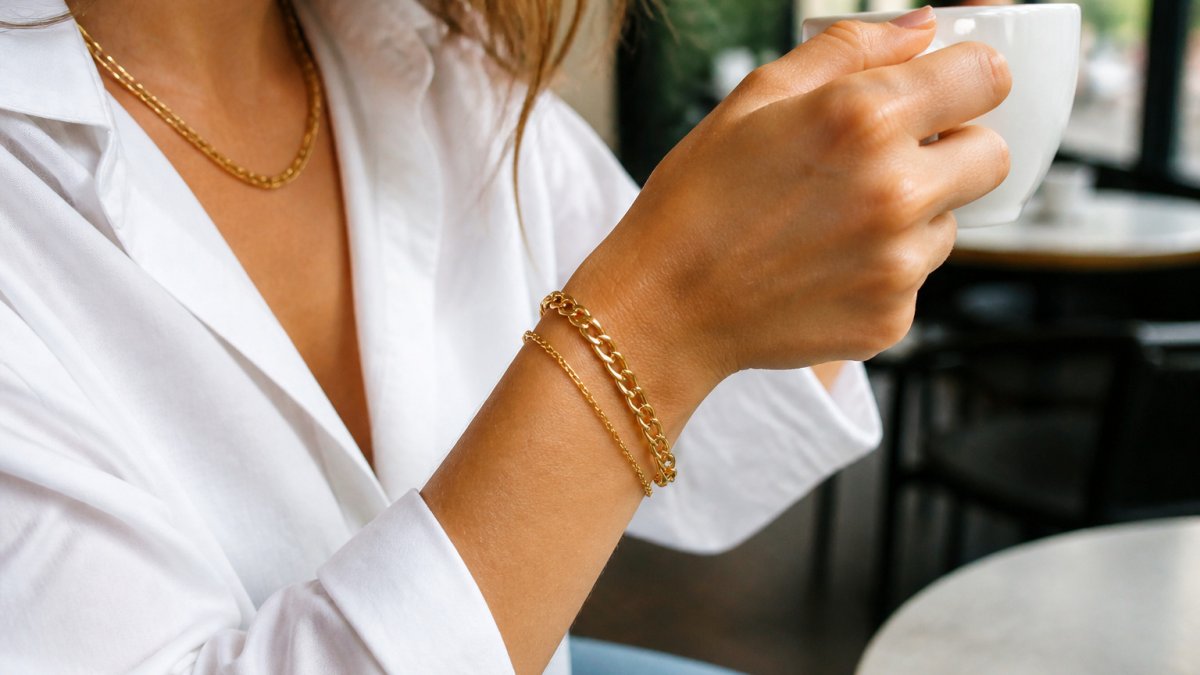
!Close-up of a woman's hand wearing a gold chain and a stacked bracelet while holding a coffee cup in a bright café
Repairs, Resizing and Long-Term Care
Both karats can be resized and repaired, but softer 18K pieces may need more care to keep their finish. Store gold apart from other jewelry to avoid scratches, remove pieces before exercise or cleaning, and wipe them with a soft cloth after wear.
Choosing Your Next Piece at Carlotta
For everyday wear, 14K is the practical choice for most people because it resists scratches and costs less. Pick 18K when you want a richer color and will wear the piece less often. Browse our chains, bracelets and cross-themed pieces and use the metal details on each listing to match the karat to how you plan to wear it.
Frequently Asked Questions
Is 14K gold better than 18K gold for daily wear?
For most everyday pieces, 14K gold is the more practical choice. Its lower gold content means a higher proportion of alloy metals, which makes it harder and more resistant to scratches and dents than 18K. It also costs less for the same design and weight. 18K gold is still a good option for someone who wants a richer yellow color and higher gold content, and who is willing to accept that it will show wear sooner with daily friction, such as on rings worn during hand-washing or exercise.
Does 14K gold last longer than 18K gold?
Generally, yes. 14K gold contains about 58.3 percent pure gold, while 18K contains 75 percent. The extra alloy metals in 14K make it harder, so it holds up better to surface contact over time. Longevity also depends on the design, the thickness of the piece and how it is cared for. Removing jewelry before sports, cleaning, or sleeping helps any karat last longer.
Is 18K gold too soft for everyday wear?
18K gold is not too soft for everyday wear, but it is softer than 14K and more prone to scratching and bending under heavy use. Many people wear 18K pieces daily without problems, especially earrings, pendants and bracelets that see less friction. For rings, a thicker band or a protective setting reduces the risk of visible wear. Choose 18K if the richer color matters more to you than maximum hardness.
Is 14K or 18K gold better for sensitive skin?
14K gold is usually the safer option for sensitive skin because its alloy includes more metals, and the exact mix determines whether a reaction occurs. Nickel is the metal most often linked to skin reactions, so ask about the alloy before buying. Many people with sensitive skin also find that higher-karat gold causes fewer problems, since it contains less of the alloying metals. If you have a known metal allergy, look for nickel-free alloys regardless of karat.
