

Where to Sell Pre-Owned Luxury Costume Jewelry
Table of Contents
- Where to Sell Pre-Owned Luxury Costume Jewelry: The Options
- Online Marketplaces and Their Tradeoffs
- Consignment, Auction, and Buyout Routes
- Where to Sell Vintage Costume Jewelry Online
- How to Price Vintage Costume Jewelry Before You List It
- Designer Costume Jewelry Resale Value: What Actually Holds Up
- How to Authenticate Designer Costume Jewelry
- Photographing and Shipping Your Pieces Without Damage
- Common Mistakes That Cost You Money
- Frequently Asked Questions
Last Updated: October 18, 2026
Where to Sell Pre-Owned Luxury Costume Jewelry: The Options
Pre-owned luxury costume jewelry is signed, well-made fashion jewelry (think designer names and quality gold-tone or plated pieces) that resells for more than fast-fashion pieces. If you're wondering where to sell pre-owned luxury costume jewelry, the answer depends on one thing: how much work you'll trade for a higher payout.
Below, we'll show you exactly how to match each selling route to your piece and your patience level.
Here's the core tension most guides ignore: the route that pays the most takes the longest, and the route that pays fastest takes the biggest cut.
Online Marketplaces and Their Tradeoffs
Online marketplaces give you the widest audience and the most control over price. You list the piece yourself, set your own number, and keep most of the sale. The tradeoff is time: you handle photos, questions, packing, and shipping.
- General resale platforms: huge reach, but your piece competes with millions of listings.
- Fashion-focused platforms: better audience fit for signed pieces, often with built-in authentication.
- Social selling: fast and free to list, but payment protection varies.
A common mistake is listing on one platform and waiting. Serious sellers cross-list the same piece in two or three places to shorten the wait.
Consignment, Auction, and Buyout Routes
Consignment, auction, and buyout routes trade a slice of your payout for someone else doing the work. A consignment shop displays and sells your piece for a fee. An auction house handles bidding and reaches collectors. A buyout means a dealer pays you outright, usually at the lowest number of the three.
Which one fits? Use this quick guide:
| Route | Payout | Speed | Effort | Best For |
|---|---|---|---|---|
| Marketplace | Highest | Slow | High | Signed, rare pieces |
| Consignment | Medium | Medium | Low | Busy sellers |
| Auction | Varies | Slow | Low | Collector-grade pieces |
| Buyout | Lowest | Fast | None | Quick cash, low-value lots |
Where to Sell Vintage Costume Jewelry Online
Selling vintage costume jewelry online works best on platforms built for collectors. These sites let you reach buyers who search by era, maker, and signature. That matters because a piece from a known mid-century maker can draw far more interest than the same design unsigned.
Start with the platforms that reward detail:
- List the maker's mark and era in your title.
- Photograph the signature clearly.
- Note any wear honestly, since vintage buyers expect some.
The Federal Trade Commission's guidance on online sales is worth a read before you list, since it covers accurate descriptions and disclosure. Accurate listings build trust and reduce returns.
How to Price Vintage Costume Jewelry Before You List It
Pricing vintage costume jewelry starts with sold listings, not asking prices. Anyone can ask anything. What matters is what buyers actually paid. Search completed sales for the same maker and style, then set your number inside that range.
Follow this checklist before you list:
- Find three to five recent sold prices for the same maker
- Note condition differences between yours and the comps
- Add a premium for a complete set or original box
- Subtract for missing stones, plate wear, or a broken clasp
- Set a floor price you won't go below
Designer Costume Jewelry Resale Value: What Actually Holds Up
Designer costume jewelry resale value holds up best for signed pieces in excellent condition with original packaging. A recognizable maker's mark, a complete set, and clean plating all protect value. Missing stones, heavy plate wear, and repairs drag it down fast.
What most guides miss is that condition beats brand every time. A flawless unsigned piece can outsell a worn signed one. Buyers pay for how a piece looks and wears, not just the name stamped on the back.
How to Authenticate Designer Costume Jewelry
Authenticating designer costume jewelry means checking the mark, the materials, and the construction together. A real signature is clean and consistent. Fakes often have sloppy lettering, wrong fonts, or a mark that doesn't match the maker's known style.
Check these points:
- The mark: crisp, correctly spelled, and consistent with the maker.
- The metal: weight and finish should feel right for the era.
- The stones: evenly set, with no glue smears.
- The clasp: quality hardware that matches the period.
When in doubt, get a second opinion from a reputable dealer before you sell. It protects your reputation and your buyer's trust.
Photographing and Shipping Your Pieces Without Damage
Good photos and safe shipping are what turn a listing into a sale and a sale into a good review. Shoot on a plain white or neutral cloth in natural window light. Skip the flash, which washes out gold tones and hides plate wear.
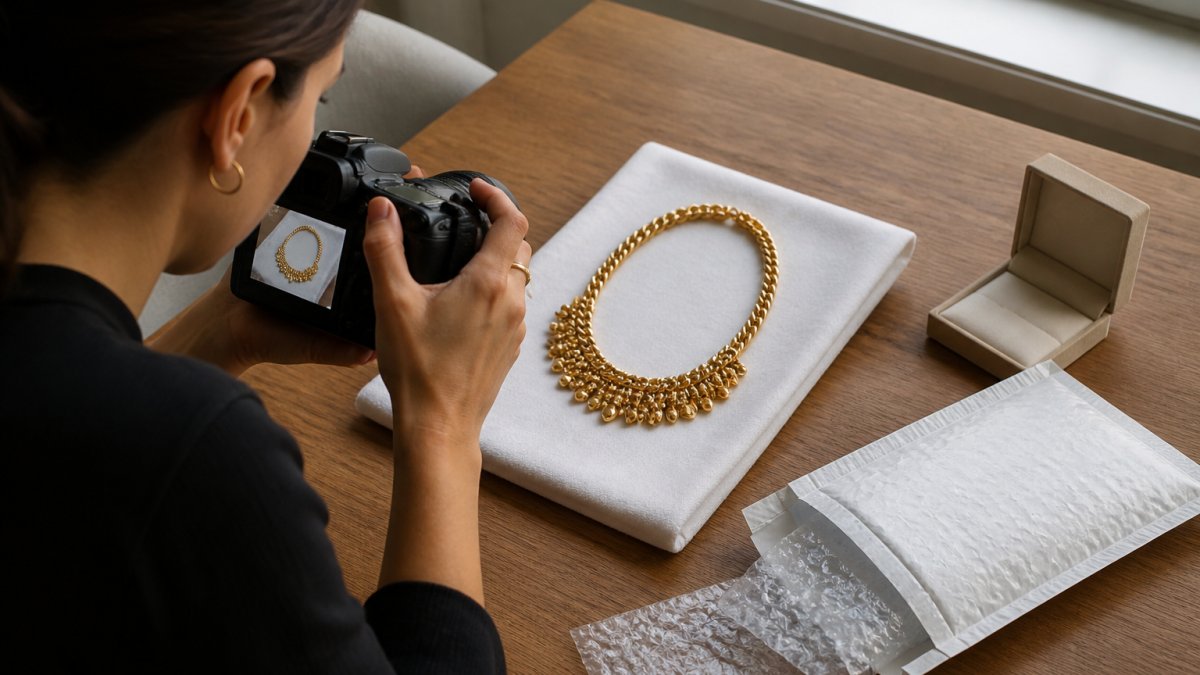
For shipping:
- Wrap each piece in tissue or a soft pouch.
- Pad the box so nothing shifts.
- Ship tracked and insured.
- Photograph the packed box before sealing it.
That last step protects you if a claim ever comes up.
Common Mistakes That Cost You Money
The biggest money-losing mistakes are vague listings, poor photos, and rushed pricing. Each one shrinks your pool of buyers or invites a return. Fix them before you list, not after.
- Skipping the signature photo
- Hiding wear instead of disclosing it
- Pricing from asking prices, not sold prices
- Shipping without tracking or insurance
- Accepting off-platform payment with no protection
Avoid these and your piece sells faster and for more.
Frequently Asked Questions
What is the best platform for selling designer costume jewelry?
There is no single best platform, because the right one depends on how much work you want to do. General marketplaces give you the widest audience but take a commission and leave authentication disputes to you. Specialist jewelry resale sites attract buyers who already know the brands, which often means faster sales at stronger prices, but they screen submissions and may reject pieces. Consignment shops take the largest cut, usually a percentage of the final sale, in exchange for handling photos, listing, and shipping. Start with one marketplace and one specialist site, list the same piece on both, and see which draws serious inquiries.
How do I price pre-owned luxury costume jewelry?
Search sold listings, not active ones, for the same brand and piece type, then average the last several results. Costume jewelry rarely resells near its original retail price unless it is a signed piece in excellent condition with its original box. Expect to land well below retail, and price slightly above your target so you have room to accept an offer. Factor in platform commission and shipping before you set the number. If a piece has not drawn a single serious message in two to three weeks, the price is the problem, not the photos.
How can I tell if my costume jewelry is authentic?
Look for a signature or maker's mark on the back of the piece, the clasp, or the earring back, and compare the lettering to known examples of that brand. Check the construction: signed designer pieces usually have even plating, secure clasps, and stones set straight and level. Original packaging, tags, and paperwork strengthen the case. When a mark is missing or looks stamped unevenly, treat the piece as unsigned and price it accordingly. Photograph the mark clearly in your listing so buyers can judge for themselves.
How much commission do jewelry resale platforms charge?
Commission varies widely by platform and by sale price, and many sites tier their fees so higher-value sales pay a lower percentage. General marketplaces typically charge a flat percentage plus a payment processing fee, while specialist jewelry sites and consignment shops take a larger share because they handle authentication, photography, and customer service. Always read the current fee schedule before listing, since rates change. Build the commission into your asking price rather than absorbing it, and compare the net payout across two or three options before committing a high-value piece.
Selling pre-owned jewelry takes patience, but the right route and honest listings do the heavy lifting. If you'd rather skip the resale hunt and add fresh, timeless pieces to your look, Carlotta makes it easy. Our cross-themed jewelry and gold-plated chains are built for daily wear, and our seasonal offers save you up to 30% on favorites. Get started with Carlotta and find your next everyday piece.