

Layered Bracelets for Style: Benefits & How to Stack
Table of Contents
- Why Layered Bracelets Matter for Your Personal Style
- How to Layer Bracelets: A Step-by-Step Guide
- Bracelet Stacking Ideas for Every Occasion
- How Many Bracelets to Wear: Finding Your Balance
- How to Stack Bracelets with a Watch
- Keeping Your Stacked Bracelets Comfortable and Tangle-Free
- Mixing Metals and Materials Without Clashing
- Frequently Asked Questions
Last Updated: October 15, 2026
Why Layered Bracelets Matter for Your Personal Style
Layered bracelets for style transform a basic outfit into something memorable, creating visual interest and dimension a single piece cannot achieve.
Customers who embrace bracelet stacking often report feeling more confident, building combinations that feel authentically theirs, beaded with chain, gold with silver.
The key to successful bracelet stacking is balance: too many bracelets feel chaotic, too few miss the visual impact.
How to Layer Bracelets: A Step-by-Step Guide
Layering bracelets is easier than it looks. Follow these steps for a stack that works for you.
Start with a Base Bracelet
Your base bracelet sets the tone. Choose a piece you love wearing on its own, a meaningful cross bracelet, a classic chain, or a beaded piece with personal significance.
It should be comfortable enough to wear all day and complement your skin tone, often chosen around the metal you want to emphasize: gold, silver, or mixed.
It doesn't need to be the widest or most eye-catching piece, just something solid you genuinely like, like one of Carlotta's S925 cross bracelets, which anchor a layered stack beautifully.

Add Contrast with Different Widths and Textures
Once you have your base, add a bracelet with a different width or texture: a beaded bracelet or wider cuff next to a delicate chain, or something thin next to a chunky base.
Texture contrast, smooth with textured, shiny with matte, beaded with chain, keeps the eye moving and prevents a flat look.
The second bracelet should complement your base without competing for attention, supporting cast, not co-star.
Balance Colors and Materials
Color and material choice matter more than most people realize.
Group metals by position (gold on one side, silver on the other), alternate them, or use rose gold or mixed-metal pieces to bridge the gap.
Materials affect how a stack feels and moves. Thick chains need lighter pieces to balance them; delicate beaded bracelets pair well with substantial ones.
Bracelet Stacking Ideas for Every Occasion
Different occasions call for different stacks, adjust based on where you're going and how you want to feel.
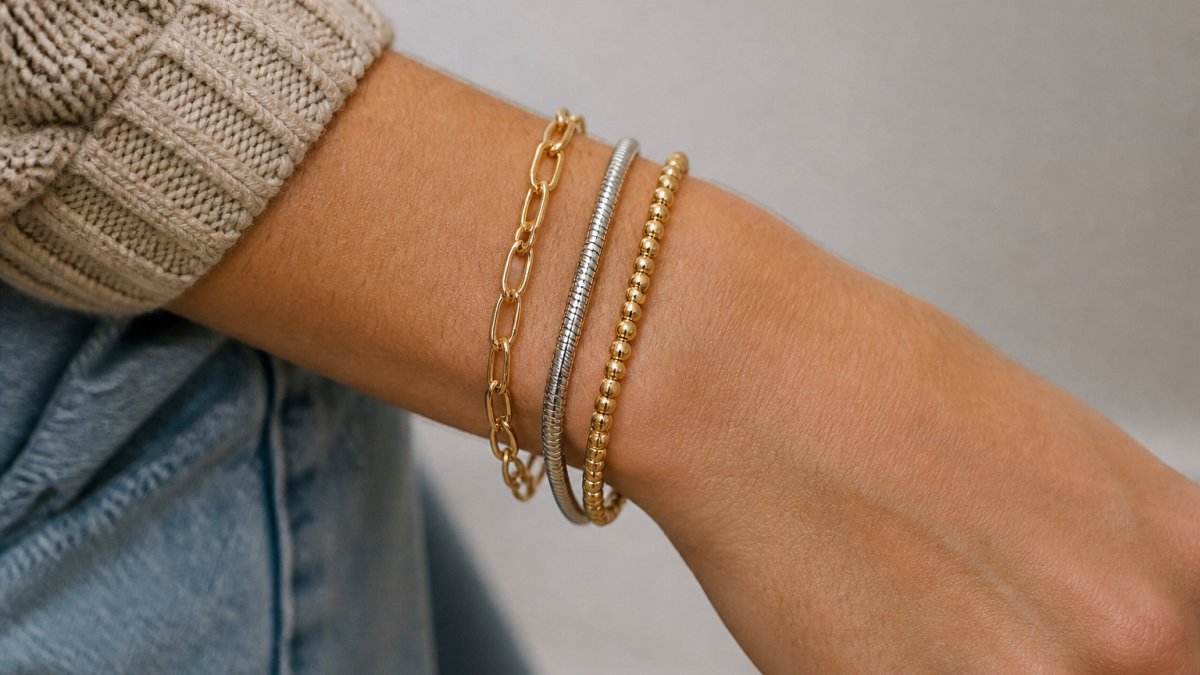
Casual Everyday Stacks
For everyday wear, keep it simple and comfortable. Two or three bracelets is the sweet spot, intentional without feeling heavy.
A great everyday stack might include a delicate chain, a beaded piece, and something with more personality.
Comfort matters: bracelets shouldn't slide excessively or catch on things. Snug but not tight works best, a finger should slide underneath without them feeling loose.
Statement and Occasion Stacks
For special occasions, be bolder. Five or even six bracelets can work if the combination is intentional. Statement stacks are about impact and dramatic self-expression.
Think about your outfit and mood: a formal event calls for coordinated metals and elegant pieces, while a casual celebration lets you mix freely.
This is where Carlotta's cross bracelets shine.

How Many Bracelets to Wear: Finding Your Balance
There's no magic number. Some prefer a single bracelet, others five or six.
Count by thickness: two or three chunky pieces may be your maximum, while delicate bracelets stack higher.
If bracelets slide, rotate, or cause discomfort, you likely have too many or the fit is off. A well-balanced stack feels secure all day.
How to Stack Bracelets with a Watch
A watch changes the math of a bracelet stack: it has a hard case, a crown, and often a metal band. Treat it as the anchor rather than an obstacle.
Decide Which Side of the Watch Your Stack Lives On
Three placements work, each with trade-offs:
- Watch on the wrist bone, stack above it. Most common. The watch stays near the hand and bracelets sit higher on the forearm, keeping the face clear. Trade-off: bracelets can drift down during the day and need nudging back.
- Watch on the wrist bone, stack below it. Bracelets sit between watch and hand. It looks deliberate and keeps the face clear, but interferes with typing, writing, and gripping, and puts movement where tangles and snags start.
- Watch integrated into the middle of the stack. Bracelets on both sides reads as the most styled option and suits a slim dress watch, but is most likely to scratch a polished case, so choose materials carefully.
Simple rule: the wider and heavier the case, the more you want bracelets on one side only. A slim watch under 38 mm can carry bracelets on both sides without looking crowded.
Match Bracelet Materials to Your Watch Band
Material compatibility is where most watch-and-bracelet stacks succeed or fail:
- Metal watch band (stainless steel, gold, titanium): Pair with metal bracelets of similar hardness, or leather and cord. Avoid stacking soft gold-plated bracelets against harder metals like stainless steel, as the harder metal can wear through plating. For mixed metals, buffer with leather or cord.
- Leather or rubber band: Most forgiving. Almost any bracelet material sits next to them without damage, making a leather-strap watch the easiest anchor for a mixed-material stack.
- Fabric or nylon strap: Lightweight and low-risk for scratches, but fabric snags on textured metal, beaded edges, and open-link chains. Smooth bangles and simple chains are safest.
Prevent Scratches and Crown Interference
The two mechanical problems with watch stacking are scratches and crown access.
For scratches, separate the pieces. Even a quarter-inch gap between case and nearest bracelet dramatically reduces contact, choose a bracelet that fits slightly more snugly than the watch band so it stays put.
For crown access, make sure no bracelet sits over the crown (the knob used to set the time). If one covers it, you'll remove the bracelet every time you adjust the watch.
How Many Bracelets to Add Around a Watch
A watch carries significant visual weight, so the bracelet count usually drops by one. A common pattern:
- Slim dress watch: one to two delicate bracelets on one side, or one on each side.
- Everyday casual watch: two to three bracelets total, all on one side.
- Chunky or oversized watch: one bracelet, or none, let the watch be the statement.
If your wrist feels crowded or the watch face keeps getting hidden, remove one bracelet. The watch should always remain readable.
Keeping Your Stacked Bracelets Comfortable and Tangle-Free
Most layering guides stop at how a stack looks. This section covers how to keep it comfortable, damage-free, and skin-friendly over eight or more hours of wear.
Get the Fit Right Before Anything Else
Fit is the biggest factor in whether a stack feels good. A few practical measurements:
- Measure your wrist with a soft tape just below the wrist bone, snug but not tight. Add about half an inch for a close fit, or three-quarters to an inch for a relaxed fit.
- Mix fits within the stack. If every bracelet is equally loose, they slide together and tangle as one mass. Try one close-fitting base, one relaxed mid-layer, and one looser statement piece so they don't lock together.
- Check the finger test. One finger should slide under without pressing into skin; if not, it's too tight. Two fingers sliding under easily means it's loose enough to catch on door handles and sleeves.
Reduce Tangling with Clasp and Link Choices
Tangling is mostly a hardware problem, not a styling problem. These choices reduce it:
- Lobster clasps over spring-ring or hook clasps. They sit flatter and are less likely to catch a neighboring chain.
- Avoid open-link or large-gap chains next to fine chains. The fine chain will find the gap. If you love both, put a beaded or solid bangle between them as a barrier.
- Keep one textured piece maximum per stack. Two heavily textured bracelets side by side, two charm bracelets, or two beaded pieces with raised edges, is the most common tangle setup.
Material-Specific Care for Layered Wear
When bracelets rub against each other all day, wear accelerates. What to watch by material:
- Gold-plated and gold-filled: Plating wears fastest against harder metals. Keep plated pieces away from stainless steel and titanium, and store separately. Gold-filled has a thicker gold layer and holds up longer.
- Sterling silver: Scratches and tarnishes, and tarnish transfers to nearby pieces. Store in an anti-tarnish pouch or sealed bag with a tarnish strip, and polish before it darkens.
- Beaded bracelets: Check the string or elastic regularly. Layering stresses the cord where it meets the beads, the most common failure point. If it stretches or beads gap, restring before it breaks.
Sensitive Skin and Long-Wear Comfort
Wearing several bracelets for long periods concentrates contact and friction in a small area, where irritation usually starts.
- Nickel is the most common metal allergen. If you've reacted before, look for nickel-free, sterling silver, gold-filled, titanium, or surgical stainless steel. "Hypoallergenic" is a marketing term, not a regulated standard, check the actual material.
- Plated pieces can expose base metal as they wear. If a plated bracelet shows a different color underneath, that exposed layer is often where irritation begins. Retire or replate it.
- Give skin a break. If you notice redness, itching, or a rash, remove the stack and let the area rest before reintroducing pieces one at a time to identify the culprit.
A Quick Daily Routine
A thirty-second habit keeps a stack in good shape:
- Put bracelets on from closest-fitting to loosest, so loose pieces sit on the outside.
- Check that no clasp sits on top of the wrist where it will catch on sleeves.
- At day's end, wipe each piece with a soft dry cloth before storing.
- Store pieces separately, a divided tray or individual pouches, so they don't rub overnight.
That routine costs almost nothing and is the difference between a stack that lasts years and one that looks worn within a season.
Mixing Metals and Materials Without Clashing
Mixing metals is one of the most powerful bracelet stacking techniques.
Materials affect how pieces work together: beaded bracelets carry different visual weight than chains, and bangles differ from clasped bracelets.
Texture matters too: shiny next to matte, smooth beads next to textured metal. These choices transform a stack from random to curated.
Stacking bracelets is about creating a look that reflects who you are. Start with pieces you love, like Carlotta's meaningful cross bracelets and versatile chains.
Frequently Asked Questions
What are the main benefits of wearing layered bracelets for style?
Layered bracelets add dimension and visual interest to your wrist, allowing you to express your personality through creative combinations. They let you mix colors, metals, and textures to complement your outfit and create a cohesive look. Stacking bracelets also gives you versatility, you can adjust your stack based on the occasion, mood, or what you're wearing, making it easy to elevate both casual and formal outfits without needing to buy many separate pieces.
How do I prevent layered bracelets from tangling?
Store your bracelets separately when not wearing them, or use a bracelet organizer or small jewelry box with compartments. When wearing multiple bracelets, avoid excessive wrist movement that creates friction. Choose bracelets with secure clasps and avoid pairing too many delicate chain bracelets together. If tangling occurs, gently work the bracelets apart using a soft cloth and take your time, rushing can cause damage. Removing your stack before bed also prevents overnight tangling.
Can I wear layered bracelets if I have sensitive skin?
Yes, but choose materials carefully. Stainless steel and gold-plated bracelets like Carlotta's S925 Cross Bracelet ($37.00) are less likely to cause irritation than cheaper metals that can tarnish or react with skin. Avoid stacking too tightly, as trapped moisture between bracelets can irritate sensitive skin. If you notice any redness or discomfort, remove the stack and let your wrist breathe. Always check product materials before purchasing.
How do I know if my layered bracelets will look good together before buying?
Start by identifying a color palette or metal theme, all gold, all silver, or mixed metals intentionally. Consider the occasion and outfit you'll wear them with. Mix different widths and textures to create visual interest without overwhelming your wrist. If buying from Carlotta, our curated collection is designed to coordinate well together. Take advantage of our seasonal promotions (up to 30% off) to try different combinations affordably, and remember that versatile pieces like cross bracelets work with most styles.