

Is Gold-Plated Jewelry Waterproof for Swimming?
Table of Contents
- Is Gold-Plated Jewelry Waterproof for Swimming?
- Can You Swim with Gold-Plated Jewelry?
- Does Chlorine Damage Gold-Plated Jewelry?
- How Long Does Gold Plating Last?
- Gold-Plated vs. Solid Gold and Gold Vermeil
- How to Clean Gold-Plated Jewelry
- Protecting Your Gold-Plated Pieces
- Frequently Asked Questions
Last Updated: October 20, 2026
Is Gold-Plated Jewelry Waterproof for Swimming?
Gold-plated jewelry waterproof for swimming is not a reality. While the gold layer provides a beautiful shine and protects the base metal temporarily, water exposure, especially in pools, hot tubs, or the ocean, will eventually damage the plating. Understanding how different water environments affect your pieces helps you make smarter choices about when to wear them and how to care for them afterward.
With the right knowledge and care habits, your pieces can last years with minimal wear.
This guide explains what happens when gold-plated jewelry gets wet, which water environments pose the biggest risks, and exactly what to do if your favorite chain or bracelet accidentally takes a dip.
Can You Swim with Gold-Plated Jewelry?
You should avoid swimming with gold-plated jewelry. The combination of water, chlorine, salt, and movement creates the perfect storm for plating breakdown.
Here's why it matters: the gold layer on plated jewelry is extremely thin, typically just 0.5 to 2.5 microns thick. That's thinner than a human hair. Water doesn't just sit on the surface. It seeps into microscopic gaps, reaches the base metal underneath, and triggers corrosion. Once corrosion starts, the plating lifts and flakes away.
Swimming adds another problem: friction. Your body moving in water, combined with chlorine or salt exposure, accelerates the process. What might take months of casual wearing can happen in weeks with regular pool use.
The safest approach is simple: remove your gold-plated pieces before swimming, showering, or using hot tubs. This single habit extends the life of your jewelry dramatically.
Does Chlorine Damage Gold-Plated Jewelry?
Yes, chlorine is one of the most damaging chemicals for gold-plated jewelry. Chlorine is highly reactive and breaks down the protective gold layer while simultaneously corroding the base metal beneath. But not all water is equal. The risk depends on the water type, temperature, and exposure time, so it helps to compare them side by side.
Chlorine and Plating Breakdown
Chlorine attacks gold plating in two ways. First, it oxidizes the base metal, creating corrosion that pushes the gold layer upward from underneath. Second, chlorine molecules bond to the gold surface itself, weakening the adhesion between the plating and the base metal.
The damage happens faster in heated pools. Warm water accelerates chemical reactions, so your jewelry deteriorates more quickly in a hot tub than in a cold outdoor pool. Even brief exposure, say, a 30-minute swim, begins the damage process, though visible wear may not appear for weeks or months.
Water-Type Risk Comparison
Most guides treat "water" as one thing. In practice, the risk varies widely by source. Here is how the common exposures compare for gold-plated jewelry:
- Chlorinated pool (highest risk): Chlorine is an oxidizing agent that attacks both the gold layer and the base metal. Heated pool water and hot tubs are worse because warmth speeds the reaction. A single 30-minute swim can start the process; repeated weekly swims often show visible dulling or flaking within a few months.
- Salt water (high risk): Salt increases water's conductivity, which speeds up galvanic corrosion between the gold plating and the base metal. Ocean swimming and saltwater pools are both risky. Rinse immediately after exposure to remove salt residue.
- Hot tub / spa (highest risk): The combination of heat, chlorine or bromine, and agitation makes hot tubs the most aggressive common environment. Avoid wearing plated pieces in a hot tub entirely.
- Freshwater (moderate risk): Lakes, rivers, and plain tap water are less chemically aggressive, but prolonged exposure still causes gradual breakdown. Repeated wetting and incomplete drying create conditions for tarnish and discoloration.
- Shower and handwashing (low but cumulative risk): Brief exposure is unlikely to cause immediate damage, but soap residue, minerals, and trapped moisture between links add up over time. Dry thoroughly after each exposure.
Salt Water and Freshwater Risks
Salt water is equally destructive, though through a different mechanism. Salt increases water's conductivity, which speeds up galvanic corrosion. This occurs when two different metals (the gold plating and the base metal) are in contact with a conductive solution. Electrons flow between them, and the base metal oxidizes rapidly.
Freshwater is the least damaging of the three, but it still poses risks. Pure freshwater doesn't corrode as aggressively as salt or chlorine water, yet prolonged exposure still causes gradual breakdown. Rainwater and tap water are safer than swimming, but repeated wetting and incomplete drying creates conditions for tarnish and discoloration.
The takeaway: chlorine and salt water demand immediate removal of jewelry. Freshwater exposure is more forgiving, but drying your pieces thoroughly afterward is essential.
How Long Does Gold Plating Last?
Gold plating typically lasts 6 months to 2 years with regular daily wear, depending on plating thickness, base metal quality, and how often the jewelry contacts water.
Thicker plating lasts longer. A piece with 2.5 microns of gold will outlast one with 0.5 microns. The base metal matters too. Stainless steel underneath resists corrosion better than brass or copper, so your plating stays intact longer.
Your habits determine the upper end of that range. Jewelry worn occasionally and kept dry can maintain its appearance for years. Pieces worn daily in humid conditions or exposed to water regularly may show wear in 6-12 months.
Gold vermeil, a thicker form of gold plating with at least 2.5 microns of gold over sterling silver, lasts considerably longer than standard gold plating. Some pieces retain their finish for 3-5 years with proper care. If durability is your priority, vermeil is worth the investment.
Gold-Plated vs. Solid Gold and Gold Vermeil
Understanding the differences helps you choose pieces suited to your lifestyle.
Gold-plated jewelry has a thin layer of gold bonded to a base metal like brass, copper, or stainless steel. The gold layer is typically 0.5 to 2.5 microns thick.
Solid gold jewelry contains at least 10 karats of gold throughout (10K is 41.7% gold; 14K is 58.3%; 18K is 75%). Solid gold is water-resistant, you can shower, swim, and wash your hands without worry. It won't tarnish or corrode.
Gold vermeil sits between the two. It's sterling silver coated with at least 2.5 microns of gold. It costs more than plating but less than solid gold. Vermeil resists water better than standard plating and lasts longer.
For daily wear with water exposure, solid gold is the only truly waterproof option. For occasional wear or dry environments, gold-plated jewelry works fine. Vermeil is a smart middle ground if you want durability without the solid gold price tag.
How to Clean Gold-Plated Jewelry
Proper cleaning removes dirt and oils without damaging the plating. The key is gentle handling and the right materials. This section covers routine cleaning first, then the immediate aftercare protocol to follow if your jewelry has just been in a pool, the ocean, or a hot tub.
Routine Cleaning
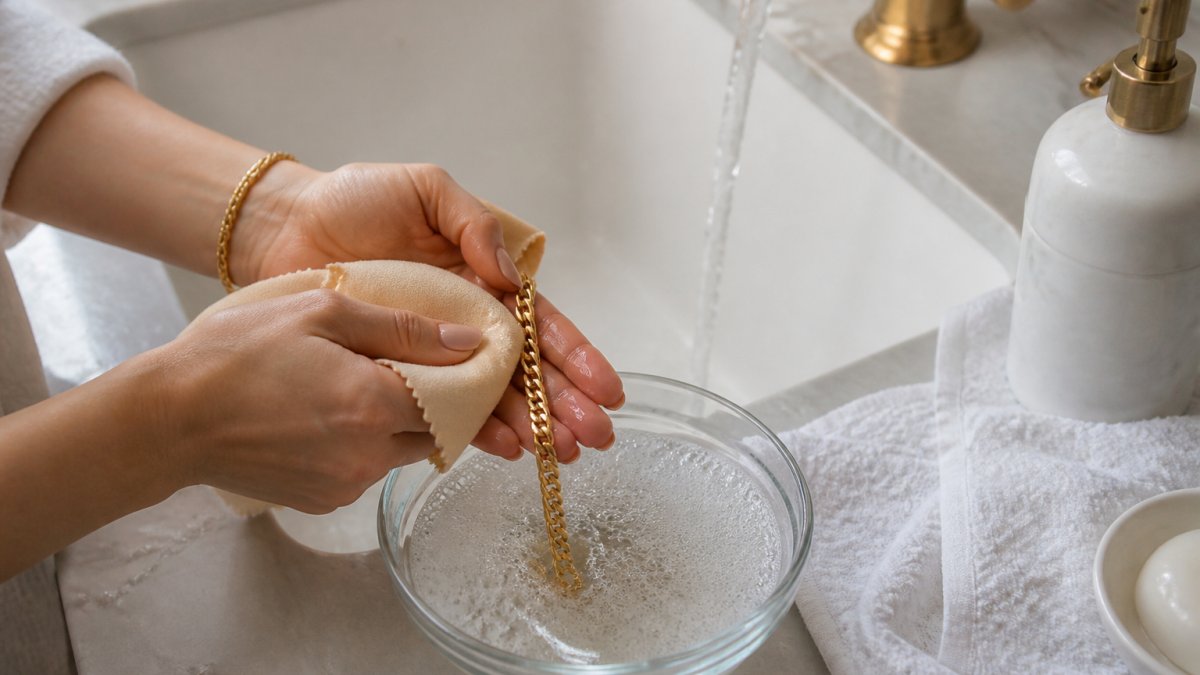
Start with lukewarm water and a drop of mild dish soap. Avoid hot water, extreme temperature changes stress the plating. Dip a soft cloth (microfiber or cotton) into the soapy water and gently wipe the jewelry. For crevices, use a soft-bristled toothbrush and the same soapy solution.
Never use abrasive cloths, harsh chemicals, or ultrasonic cleaners. These remove the plating faster than water ever could. Avoid commercial jewelry cleaners designed for solid gold, they're too strong for plating.
After cleaning, rinse thoroughly with distilled water. Tap water contains minerals that leave residue. Pat dry immediately with a soft cloth, then let the piece air-dry completely before storing it. Moisture trapped in settings or between links causes tarnish and corrosion.
Immediate Aftercare for Water Exposure
If your gold-plated jewelry accidentally gets wet, act quickly. This is the step most guides skip, and it is the one that most affects how much damage sticks.
- Remove the piece immediately. Get it off your body and out of the water before doing anything else.
- Rinse with distilled water. For chlorine or salt water exposure, rinse gently under distilled water to remove chemical residue. This stops chlorine or salt from continuing to corrode the base metal. Skip the rinse only for plain freshwater exposure.
- Pat dry, don't air-dry. Use a soft cloth to blot the surface. Moisture sitting on the surface accelerates corrosion.
- Dry the hidden spots. Wipe between all links, under stones, inside clasps, and around jump rings where water hides. A cotton swab helps in tight settings.
- Inspect for changes. Look for dulling, discoloration, or flaking. Minor tarnish on the base metal can sometimes be cleaned with the gentle soap-and-water method. Flaking plating cannot be repaired at home, but a jeweler can replate the piece for a fraction of the original cost.
- Store dry and sealed. Keep the piece in a cool, dry location, not in a bathroom where humidity lingers. An airtight container with a silica gel packet absorbs any remaining moisture.
Cleaning Pieces with Stones and Mixed Materials
Water affects more than the gold layer. If your piece has gemstones, pearls, or adhesive-set stones, moisture can loosen the adhesive and cause stones to fall out. Treat these pieces with extra care: remove them even before hand-washing, and never soak them. Wipe the metal with a damp cloth and dry immediately, avoiding prolonged contact between water and the stone settings.
Protecting Your Gold-Plated Pieces
Prevention is far easier than repair. A few simple habits extend the life of your jewelry dramatically.
Remove your pieces before any water activity: swimming, showering, washing dishes, exercising, or doing laundry. Even hand-washing exposes jewelry to extended moisture.
Store jewelry properly. Keep pieces in a cool, dry place away from direct sunlight. Sunlight fades gold plating over time.
Avoid exposing jewelry to perfume, lotions, and cleaning products. These substances can degrade the plating adhesive. Apply perfume and skincare products before putting on jewelry, not after.
For pieces with gemstones or adhesive-set stones, water poses an additional risk. Moisture can loosen the adhesive, causing stones to fall out. Treat these pieces with extra care, remove them even before hand-washing.
If you wear a piece frequently, consider rotating it with others. This gives the plating time to "rest" and slows overall wear.
Gold-plated jewelry brings affordable elegance to your everyday style, but water exposure is its biggest enemy.
Our curated collection of gold-plated chains, bracelets, and cross-themed accessories is designed for daily wear in dry conditions.
Frequently Asked Questions
Can you wear gold-plated jewelry in the shower?
Occasional shower wear won't immediately damage gold-plated jewelry, but repeated exposure to hot water and soap accelerates plating wear. The combination of heat, moisture, and cleaning products can cause the gold layer to fade faster. If you shower with your jewelry on regularly, expect visible tarnishing within 6-12 months depending on plating thickness and base metal quality. Remove pieces before showering when possible, and dry thoroughly if they do get wet.
How should you clean gold-plated jewelry after it gets wet?
Pat your jewelry dry immediately with a soft, lint-free cloth, don't let it air-dry, as standing water can seep under the plating and corrode the base metal. For salt water or chlorine exposure, rinse gently under fresh running water first, then dry completely. For stubborn residue, use a soft cloth dampened with lukewarm water and a drop of mild dish soap, then dry again. Store in a dry place and avoid stacking wet pieces together.
Does chlorine damage gold-plated jewelry?
Yes, chlorine is one of the most damaging substances for gold-plated jewelry. Chlorine breaks down the gold layer and corrodes the base metal underneath, causing discoloration, fading, and accelerated wear. Even brief pool exposure compounds damage over time. If accidental chlorine contact occurs, rinse immediately with fresh water and dry thoroughly. For regular swimmers, remove all gold-plated pieces before entering the pool to preserve their lifespan.
How long does gold plating last with regular wear?
Gold plating typically lasts 6 months to 3 years with regular daily wear, depending on plating thickness, base metal quality, and exposure to moisture and chemicals. Thicker plating (2-3 microns) lasts longer than thin plating (0.5 microns). Pieces worn occasionally and kept dry can last 5+ years. Frequent swimming, showering, or exposure to sweat and humidity dramatically shortens lifespan. Higher-quality plating on stainless steel or brass bases resists tarnishing better than plating over copper.