

How to Store Jewelry to Prevent Tarnishing
Table of Contents
- Why Tarnishing Happens and How to Stop It
- Step 1: Choose the Right Storage Container
- Step 2: Store Pieces Separately to Avoid Scratches and Tangling
- Step 3: How to Store Sterling Silver Jewelry
- Step 4: Control Moisture and Humidity
- How to Prevent Silver from Tarnishing During Long-Term Storage
- Common Storage Mistakes to Avoid
- Jewelry Storage Tips for Travel and Daily Wear
- Frequently Asked Questions
Last Updated: October 6, 2026
Why Tarnishing Happens and How to Stop It
Tarnishing is a chemical reaction that darkens metal when jewelry meets moisture, oxygen, and sulfur compounds in the air.
Metals oxidize when exposed to humidity, but you can prevent most tarnishing by keeping jewelry dry, cool, and away from air.
We share proven storage methods to store jewelry prevent tarnishing so your jewelry stays beautiful for years.
Step 1: Choose the Right Storage Container
The right container keeps moisture and air away from your jewelry, this is where prevention starts.
Airtight pouches and containers
Airtight pouches are your best defense, sealing out the moisture and oxygen that cause darkening. Choose soft materials that won't scratch.
Ziplock bags work in a pinch, but dedicated jewelry pouches are better and often come with anti-tarnish lining built in.
Airtight plastic or glass containers with tight-sealing lids also keep humidity out, just make sure the lid closes with no gaps.
Pro tips for pouches:
- Use individual pouches for each piece to prevent tangling
- Choose pouches with soft interiors to avoid scratches
- Check that zippers seal completely before storing
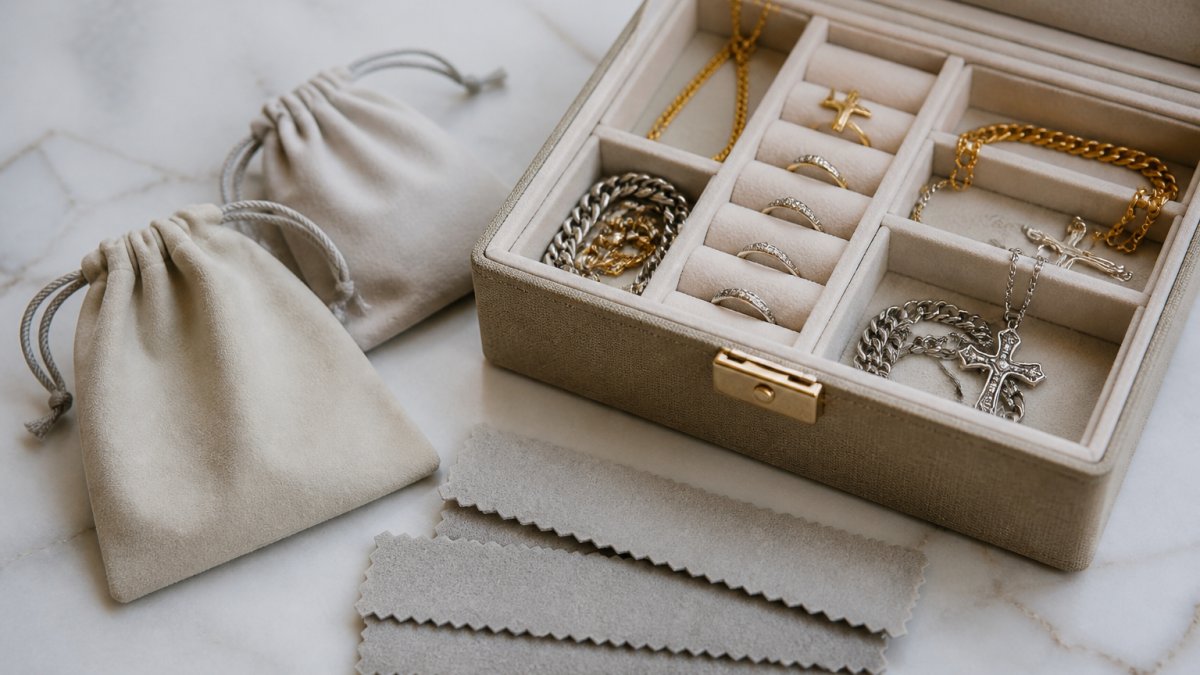
Jewelry boxes with soft lining
A quality jewelry box with soft lining prevents the metal-on-metal contact that causes scratches and tarnishing.
Felt-lined compartments separate pieces and keep necklaces from tangling with bracelets or chains.
Lined boxes work best in a cool, dry place, lining alone won't prevent tarnishing in a humid bathroom or kitchen.
Step 2: Store Pieces Separately to Avoid Scratches and Tangling
Storing jewelry separately prevents scratches from metal rubbing together and stops chains from tangling.
When pieces touch, friction creates tiny scratches that dull the finish over time.
Tangling can break delicate chains, so separate storage eliminates the problem entirely.
How to separate your jewelry:
- Use individual pouches for each necklace
- Store earring pairs together in one small pouch
- Keep rings in separate compartments or pouches
- Place bracelets in their own sections
- Store watches separately from other pieces
It takes a few extra minutes but saves hours of untangling and keeps pieces organized.
Step 3: How to Store Sterling Silver Jewelry
Sterling silver, 92.5% silver alloyed with copper, tarnishes faster than gold or platinum because its copper reacts readily with sulfur compounds in the air. Proper storage is the difference between a piece that stays bright for years and one that needs polishing every few weeks.
Storage rules specific to sterling silver
Store sterling silver in an airtight container or tarnish-resistant pouch, never in open air, and keep it away from humid areas, a bathroom drawer is the worst possible location.
Clean and dry sterling silver before storing it, skin oils and lotion residue hold moisture against the surface. A soft, lint-free cloth is enough; never store a piece that feels cool or damp.
Using anti-tarnish strips and cloths correctly
Anti-tarnish strips are small, disposable products, typically activated carbon, that capture sulfur compounds from the air before they reach your jewelry. They clean the air rather than coating the metal, which matters for placement.
Placement. Put the strip in the same sealed container as the jewelry but not touching it, a corner of a pouch, or one strip per compartment.
Replacement interval. Replace strips every three to six months normally, and every one to three months in humid climates or frequently opened containers.
Anti-tarnish cloths are woven with a tarnish-inhibiting treatment that absorbs sulfur and removes light tarnish when wiping. Wrap pieces in the cloth or use it as a liner, but treat cloths as consumables, most lose their treatment after a few washes.
Precautions for gemstones and delicate finishes
Anti-tarnish strips and cloths are safe for bare metal, but they are not automatically safe for every piece. A few rules:
- Porous and treated gemstones, pearls, opals, turquoise, lapis, and emerald, should not sit directly against an anti-tarnish strip or treated cloth. The chemicals that absorb sulfur can also affect surface treatments and porous stones over time. Wrap the stone in a soft, untreated cloth first, then place the wrapped piece in the container with the strip.
- Plated and vermeil pieces, gold-plated and vermeil jewelry has a thin gold layer over sterling or base metal. Anti-tarnish products are generally fine, but abrasive wiping with a treated cloth can wear the plating. Use the cloth as a liner, not as a polishing cloth, on plated pieces.
- Enamel, resin, and glued settings, keep anti-tarnish strips away from direct contact. Adhesives and some finishes can be affected by prolonged exposure.
- Mixed-metal pieces, a sterling chain with gold accents should be stored the same way as sterling, but check the gold portion periodically. Different metals tarnish at different rates, and the gold may hide tarnish forming underneath.
A working setup for sterling silver
For a single sterling piece: wrap in an anti-tarnish cloth, place in a small airtight pouch, add one anti-tarnish strip in a corner away from the metal, and store in a cool, dry drawer.
For a collection: use a gasketed airtight container with felt-lined compartments, one anti-tarnish strip per compartment, and a silica gel packet in the container. Replace strips every three to six months and silica gel when it feels damp.
Step 4: Control Moisture and Humidity
Moisture is the main driver of tarnishing: humidity accelerates the reaction between metal surfaces and sulfur compounds, so controlling the environment matters more than any single product.
What humidity level should you target?
Aim for relative humidity below 50% where you store jewelry, and below 40% for sterling silver. Above 60%, tarnishing accelerates noticeably; above 70%, no number of anti-tarnish strips will help.
Inexpensive digital hygrometers, the small units sold for cigar humidors, cost roughly $10-$20. Place one in your jewelry drawer for a week; if it reads above 55%, treat that space as unsuitable until you fix it.
Silica gel, dehumidifier, or airtight container?
These three tools solve different problems, and most people need a combination rather than one or the other.
Silica gel packets absorb moisture from the air immediately around your jewelry and work best inside a sealed container; in an open drawer they are overwhelmed by room air.
A small dehumidifier is the right tool when the room itself is the problem, a basement closet or coastal apartment reading above 60% humidity.
An airtight container is the multiplier: it traps whatever dry air and silica gel you put inside so the other tools work far better. Choose a gasketed plastic or glass container with a silicone seal, a standard zipper bag is not airtight over months.
A practical setup that works
- Measure the room with a hygrometer for a week.
- If the room reads below 50%, a lined jewelry box plus silica gel in each compartment is sufficient.
- If the room reads 50-60%, move jewelry into a gasketed airtight container with a silica packet and an anti-tarnish strip.
- If the room reads above 60%, add a small dehumidifier to the room first, then use the airtight container setup.
Placement matters as much as the tool
Keep storage away from exterior walls, windows, and plumbing, exterior walls run cooler in winter and cause condensation inside containers. A bedroom closet on an interior wall is usually the driest practical location.
How to Prevent Silver from Tarnishing During Long-Term Storage
Long-term storage requires extra protection.
Clean and dry pieces completely with a soft, lint-free cloth before long-term storage, any moisture left on the surface will cause problems.
Layer protection: wrap each piece in an anti-tarnish cloth, seal it in an airtight pouch, and add an anti-tarnish strip.
Store the sealed pouch in a cool, dry closet shelf or drawer, avoiding attics or basements where temperature and humidity fluctuate.
Check jewelry every 6-12 months, and clean any piece immediately if you see darkening.
Common Storage Mistakes to Avoid
Many people unknowingly damage their jewelry while storing it.
Mistake 1: Storing jewelry in the bathroom Showers and sinks create constant moisture, making this the worst place to store jewelry. Move pieces to a bedroom or living room.
Mistake 2: Leaving jewelry in open air Air speeds up oxidation, so jewelry on a dresser tarnishes faster. Always use a closed container or pouch.
Mistake 3: Mixing different metals together Some metal combinations accelerate tarnishing, so store gold-plated and silver pieces separately.
Mistake 4: Storing damp jewelry Moisture trapped inside a container creates a tarnishing environment, so dry jewelry completely before storing.
Mistake 5: Using plastic bags without lining Unlined plastic traps moisture against jewelry, so use soft pouches or lined containers instead.
Mistake 6: Ignoring humidity levels High humidity speeds up tarnishing regardless of other precautions, a humid closet is worse than a dry bathroom shelf.
Jewelry Storage Tips for Travel and Daily Wear
Travel requires portable solutions that keep pieces safe during movement and exposure.
Use a small jewelry organizer or travel pouch, compact, portable, and keeps pieces separated during transport.
Pack jewelry in your carry-on, not checked luggage, cargo-hold temperature and pressure changes can damage pieces.
Bring a small anti-tarnish cloth or strip for trips longer than a few days; it takes up minimal space.
Daily wear tips:
- Remove jewelry before showering or swimming
- Wipe pieces with a soft cloth after wearing
- Store daily-wear pieces in an easily accessible location
- Use a small dish or tray near your bedroom for necklaces and rings
- Keep a soft cloth nearby for quick cleaning
When you wear jewelry daily, pieces exposed to sweat, humidity, and air need protection during off-hours.
Store daily-wear jewelry in a cool, dry dresser drawer, kept closed to limit air exposure.
Clean daily-wear jewelry regularly, a quick wipe with a soft cloth removes accumulated sweat and oils and slows tarnishing.
Protecting your jewelry starts with smart storage choices.
Frequently Asked Questions
Does humidity cause jewelry to tarnish?
Yes, humidity is a primary cause of tarnishing. Moisture in the air accelerates oxidation, especially for silver and sterling silver jewelry. Keeping pieces in a cool, dry place and using airtight containers or anti-tarnish products significantly slows the tarnishing process. Bathrooms and damp areas expose jewelry to the highest humidity levels, so avoid storing pieces there.
How do you store sterling silver to prevent tarnishing?
Store sterling silver in airtight pouches or containers with anti-tarnish strips or cloths. Keep pieces in a cool, dry location away from moisture. Wrap each item individually in soft cloth to prevent scratches and metal-to-metal contact. Store necklaces, earrings, and rings separately in felt-lined compartments or individual pouches. Replace anti-tarnish strips every few months for best protection.
Should you store jewelry in airtight bags?
Airtight bags and containers are one of the most effective storage methods. They limit air exposure, which slows oxidation and tarnishing. Combine airtight storage with anti-tarnish strips or cloths for maximum protection. Ensure pieces are clean and completely dry before sealing them away, and check periodically for any moisture buildup inside the container.
What material keeps jewelry from tarnishing?
Anti-tarnish strips and cloths contain activated charcoal or other compounds that absorb sulfur compounds in the air, preventing tarnish formation. Soft fabrics like felt and microfiber also protect jewelry by preventing metal-to-metal friction that can accelerate wear. Airtight containers made of plastic or glass limit oxygen exposure. For plated jewelry and gold-plated pieces, these protective materials help extend longevity and maintain appearance.