

How to Choose a Meaningful Cross Necklace
Table of Contents
- Understand the Symbolism and Meaning of Different Cross Necklace Styles
- Choose the Right Metal Quality for Daily Wear
- Select the Right Chain Length for a Cross Pendant
- Find the Best Affordable Gold Cross Necklaces Online
- Evaluate Customization and Personalization Options
- Maintain and Care for Your Cross Necklace
- Consider Gift-Giving Etiquette and Meaning
- Frequently Asked Questions
Last Updated: October 3, 2026
Understand the Symbolism and Meaning of Different Cross Necklace Styles
A cross necklace is more than jewelry, it's a statement of faith and personal symbol. The style you choose reflects your faith tradition and spiritual practice. Understanding the theological roots of different cross styles helps you pick one that aligns with your beliefs.

Latin Cross vs. Crucifix vs. Celtic Cross: Theology and Tradition
The Latin cross features a longer vertical beam with a shorter horizontal bar positioned about one-third from the top. Standard in Western Christianity since the early Church, it emphasizes redemption and resurrection rather than depicting suffering.
A crucifix includes the figure of Jesus on the cross (called a corpus) and represents Christ's physical suffering and sacrifice.
The Celtic cross features a circle where the vertical and horizontal beams meet, representing eternity or the unity of the four directions.
The Orthodox cross features three horizontal bars and is used throughout Eastern Orthodox Christianity with deep liturgical significance. The Coptic cross features equal-length arms with flared ends, reflecting ancient Egyptian and Ethiopian Christian traditions. The **St.
What Your Cross Choice Says About Your Faith and Identity
Your cross necklace signals your faith tradition: a Latin cross suggests Protestant spirituality, a crucifix signals Catholic or Orthodox devotion, a Celtic cross expresses cultural identity alongside faith. Understanding the theological weight behind each style deepens your choice's meaning, you're wearing a symbol connecting you to centuries of faith practice and often to your family heritage.
Choose the style that feels most authentic to your faith tradition: a simple Latin cross for contemplative faith, a crucifix if Christ's suffering is central to your practice, or a culturally rooted cross if your faith is inseparable from your heritage.
Choose the Right Metal Quality for Daily Wear
Metal quality determines whether your necklace lasts years or tarnishes within months. For daily wear, the metal matters for both durability and skin health.
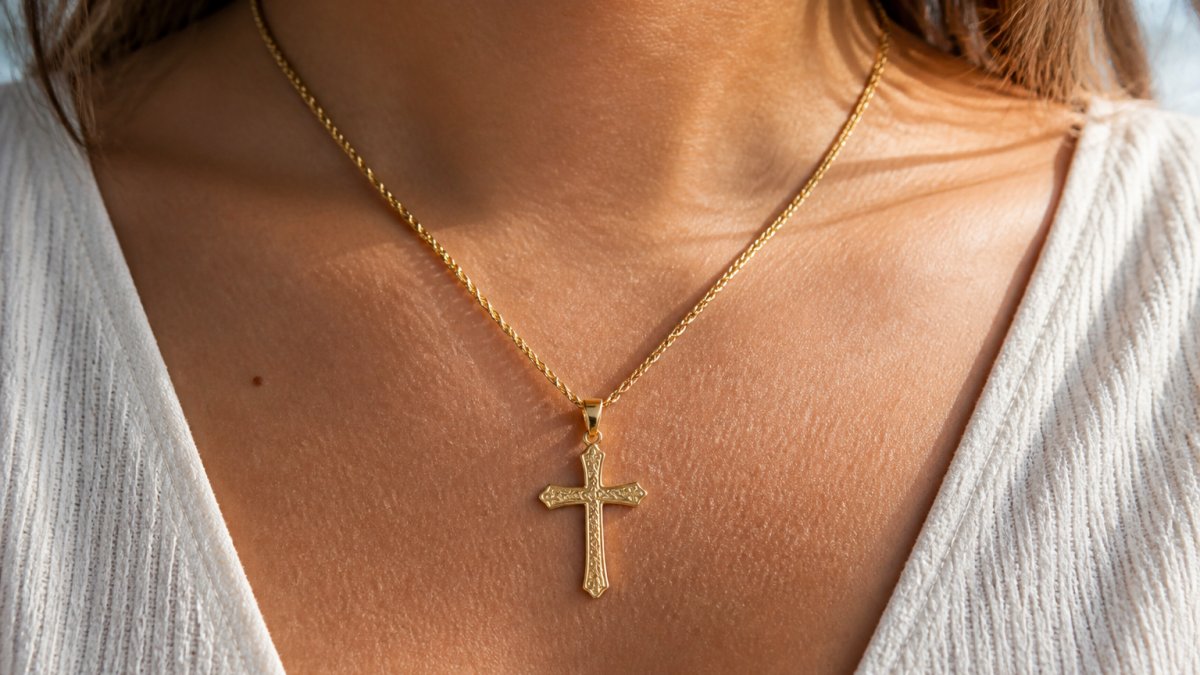
Gold-Plated vs. Solid Gold: Durability and Cost
Gold-plated jewelry costs less but requires more care. Quality pieces use at least 3 microns of gold coating on a strong base metal. Stainless steel (316L grade) resists corrosion and won't discolor skin. Sterling silver adds cost but offers superior durability and hypoallergenic properties.
Solid gold never tarnishes and becomes an heirloom piece. For daily wear in humid climates, premium gold-plated with stainless steel base offers excellent durability at lower cost. For something permanent, invest in solid gold.
Skin Sensitivity and Hypoallergenic Metal Selection
If chains cause itching or discoloration, you likely have a nickel allergy. Approximately 10-15% of the population has a nickel allergy (Checking your browser).
316L stainless steel is hypoallergenic and safe for all-day wear on sensitive skin. It contains less than 0.08% nickel and is biocompatible.
Sterling silver (marked S925) is hypoallergenic, though some alloys include nickel as a hardening agent.
Titanium is another hypoallergenic option, though less common in cross necklaces. It's extremely durable and won't cause reactions, but it's more expensive than stainless steel.
Avoid anything labeled "nickel-free" without verifying composition. Stick with stainless steel (316L), verified nickel-free sterling silver, or titanium.
Understanding Karat Weights and Purity Standards
Karat (K) measures gold purity on a scale of 1-24. 24K gold (99.9% pure) is too soft for daily wear. 18K gold (75% pure) is the standard for heirloom pieces. 14K gold (58.3% pure) balances durability, color, and cost, ideal for daily wear. 10K gold (41.7% pure) is the legal minimum but has a paler color and lower resale value.
For daily wear and heirloom potential, choose 14K or 18K solid gold. For gold-plated, prioritize base metal composition (stainless steel 316L or sterling silver) and gold layer thickness (at least 3 microns).
Select the Right Chain Length for a Cross Pendant
Chain length affects how your cross necklace sits and looks. The right length feels comfortable and invisible.
Standard Lengths and How They Sit
Standard lengths are 16, 18, 20, and 24 inches. A 16-inch chain sits high on your chest, best for smaller frames. An 18-inch chain is most versatile and flatters most body types. A 20-inch chain drops to mid-chest, suiting taller frames. A 24-inch chain sits near your sternum for layering. Carlotta includes a 45cm rope chain with most cross necklaces.
Chain Weight and Durability Considerations
Heavier chains feel more substantial and last longer. A delicate chain might break after months of daily wear. A sturdy chain can last years.
Look for chains described as "rope chain" or "link chain." These styles distribute stress evenly and resist breaking. Thin, delicate chains look prettier but fail faster.
The pendant weight matters too. A heavy cross on a thin chain will eventually snap. Match the chain weight to the pendant. An 8mm x 16mm cross pairs well with a medium-weight rope chain.
Find the Best Affordable Gold Cross Necklaces Online
Shopping online for jewelry feels risky. You can't touch it or see it in person. But you can make smart choices if you know what to look for.
What to Look for in Premium Gold-Plated Pieces
Quality gold-plated necklaces share common features. First, they use a substantial gold coating, at least 3 microns thick. This thickness resists wear.
Second, they sit on a strong base metal. Stainless steel (316L grade) outperforms brass or copper. Sterling silver adds cost but offers superior durability.
Third, they come with anti-tarnish protection. Carlotta applies an anti-tarnish coating to all gold-plated pieces.
Look for product descriptions that specify the metal composition. If a listing just says "gold-plated" without details, skip it. Real makers explain what's underneath.
Check the clasp too. A weak clasp means your necklace falls off and breaks. Look for secure clasps rated for daily wear.
Budgeting for Heirloom Quality
If you want a cross necklace that lasts decades, budget accordingly. Heirloom-quality pieces cost more upfront but cost less over time.
A quality gold-plated cross necklace from Carlotta runs around $64.
If you want solid gold, expect to pay more. But that investment buys you something truly permanent. Solid gold crosses are gifts you pass down.
Don't confuse low price with value. A $15 necklace that tarnishes in three months costs more than a $64 piece that lasts five years.
Evaluate Customization and Personalization Options
A meaningful cross necklace often carries personal significance. Customization deepens that meaning.
Engraving and Custom Finishes
Many jewelers offer engraving on the back of the pendant. A date, initials, or short phrase transforms a beautiful necklace into a keepsake. Engraving works especially well for gifts.
Block font engraving looks modern and clean. Script font feels more elegant and personal. Choose the style that matches your aesthetic.
Custom finishes let you adjust how the cross looks. Some people prefer a high polish for maximum shine. Others like a matte finish for a more subtle appearance. Ask about these options when you order.
Gemstone Settings and Quality Standards
Some cross necklaces include gemstones. Cubic zirconia (CZ) stones look brilliant and cost less than diamonds. They catch light beautifully but may cloud over time with wear.
If you choose a gemstone cross, verify the stone quality. Look for terms like "brilliant-cut" or "VVS" (very very slightly included) for diamonds. These terms indicate quality and light performance.
Carlotta offers cross necklaces with cubic zirconia settings. The CZ Zirconia Cross Necklace features brilliant-cut stones that sparkle like diamonds at a fraction of the cost.
Maintain and Care for Your Cross Necklace
How you care for your necklace determines how long it lasts. Simple maintenance rituals preserve shine and prevent damage.
Cleaning Rituals to Preserve Shine and Longevity
Clean your cross necklace monthly to maintain its shine. Use warm water and a soft cloth. Gently wipe the pendant and chain.
For deeper cleaning, use a mild soap solution. Mix a drop of dish soap with warm water. Dip a soft brush in the solution and gently scrub the cross. Rinse thoroughly with clean water and dry immediately with a soft cloth.
Avoid harsh chemicals. Don't use bleach, vinegar, or abrasive cleaners. These damage the gold coating and can tarnish the base metal.
For gold-plated pieces, never use an ultrasonic cleaner. The vibrations can strip the gold coating. Hand cleaning is always safer.
Storage and Protection for Daily Wear
Store your cross necklace in a clean, dry place. A jewelry box or soft pouch works well. Keep it separate from other jewelry to prevent scratching.
Remove your necklace before swimming, showering, or exercising. Water and sweat accelerate tarnishing. Chlorine and salt water damage gold plating.
Take it off before bed. This simple habit prevents accidental breakage from rolling over on it. It also gives the metal time to breathe and prevents buildup of body oils.
If you wear your cross daily, clean it weekly. This prevents buildup of dirt and oils that dull the finish.
Consider Gift-Giving Etiquette and Meaning
A cross necklace makes a meaningful gift. But the gesture carries weight. Understanding gift-giving context matters.
Giving a cross necklace signals respect for someone's faith. It says you see and honor their spiritual identity.
For close relationships, a cross necklace feels personal and intimate. For casual relationships, it can feel presumptuous. Consider your relationship depth before giving one.
Pair the gift with a card explaining your choice. Share why you picked that particular style. Mention the metal quality and durability.
Include care instructions. Let the recipient know how to maintain their new necklace. This shows thoughtfulness and extends the life of your gift.
Choosing a meaningful cross necklace comes down to three things: understanding what different styles symbolize, selecting metal quality that matches your lifestyle, and finding a maker you trust. Shop our collection and find the cross necklace that speaks to your faith and fits your life. Learn more about jewelry care from the Gemological Institute of America and discover how proper maintenance extends the life of your pieces.
Frequently Asked Questions
What does it mean to wear a cross necklace?
A cross necklace represents faith, protection, and spiritual commitment. For many, it's a visible expression of their Christian beliefs and values. The symbolism varies depending on the cross style, a crucifix includes Jesus's figure and emphasizes sacrifice, while a simple Latin cross represents the basic Christian faith. Wearing one can serve as both a personal reminder of your faith and a symbol to others about what you believe in. Whether worn for spiritual reasons or as a fashion statement, the meaning is deeply personal.
How do I choose the right metal for a cross necklace?
The best metal depends on your lifestyle, skin sensitivity, and budget. Gold-plated jewelry offers an affordable way to achieve the look of solid gold while keeping costs down. For sensitive skin, look for pieces with 316L stainless steel cores or sterling silver (S925) bases, which resist tarnishing and green neck discoloration. Solid 14k or 18k gold is more durable for heirloom pieces but costs significantly more. If you wear jewelry daily, gold-plated pieces with anti-tarnish coatings provide excellent durability without the premium price.
What chain length should I choose for a cross pendant?
Standard chain lengths range from 16 to 24 inches, with 18 inches being the most versatile for most body types. A 16-inch chain sits close to the collarbone and works well under clothing or with crew necks. An 18-inch chain rests just below the collarbone and pairs well with most necklines. A 20-24 inch chain creates a longer drop and works best with lower necklines or layered looks. Consider your neck size, clothing style, and whether you want the cross to be a statement piece or more subtle. Rope chains and heavier links offer better durability for daily wear than delicate chains.
What's the difference between a crucifix and a Latin cross necklace?
A crucifix includes a figure of Jesus Christ on the cross, emphasizing his sacrifice and redemption. A Latin cross is a simple four-pointed cross without a figure, symbolizing the basic Christian faith and resurrection. The crucifix is often chosen by Catholics and those who want to honor Christ's passion, while the Latin cross appeals to those seeking a simpler, more minimalist representation of faith. Both are meaningful choices, your selection depends on your personal faith tradition and aesthetic preference.