

Can You Wear a Cross Necklace If Not Religious?
Table of Contents
- Can You Wear a Cross Necklace If You're Not Religious?
- Understanding Cross Necklace Meaning and Symbolism
- Is It Disrespectful to Wear a Cross Necklace as a Non-Believer?
- Cross vs. Crucifix Necklace: What's the Difference?
- How to Wear a Cross Necklace Respectfully
- Personal Intent and Meaning Behind Wearing a Cross
- Frequently Asked Questions
Last Updated: October 10, 2026
Can You Wear a Cross Necklace If You're Not Religious?
The short answer is yes, can you wear a cross necklace if not religious? Absolutely. What matters most is your intent and how you approach wearing it.

A cross necklace is a personal choice. Many people wear crosses for reasons beyond faith. Some wear them for fashion, family heritage, or personal meaning. Others wear them because they appreciate the symbolism without holding Christian beliefs.
The real question isn't whether you can wear one. It's whether you do so respectfully. Understanding the cross's significance helps you make that choice confidently.
Understanding Cross Necklace Meaning and Symbolism
A cross necklace carries deep meaning for many people. But that meaning varies depending on context and perspective.
Religious significance in Christianity
The cross represents Jesus Christ's crucifixion and resurrection in Christianity. For believers, it's the central symbol of their faith. It signifies salvation, redemption, and hope.
Different Christian traditions view the cross slightly differently. Some emphasize the empty cross, symbolizing resurrection. Others use the crucifix, which includes a figure of Christ. Both hold profound spiritual meaning for those who wear them as expressions of faith.
The cross has been a Christian symbol for nearly 2,000 years. Its religious weight is significant in many communities.
Beyond religion: fashion and personal symbolism
Not everyone who wears a cross necklace does so for religious reasons. Fashion designers have embraced the cross as an aesthetic element. It appears in contemporary jewelry collections worldwide.
People wear crosses for many secular reasons:
- Family heirlooms passed down through generations
- Memorial pieces honoring loved ones who've passed
- Cultural or historical appreciation for the symbol's design
- Personal style and aesthetic preference
- Symbols of strength, protection, or personal resilience
The cross has existed in various forms across cultures long before Christianity. Ancient societies used cross symbols in different contexts. This history gives the cross meaning beyond any single religion.
Is It Disrespectful to Wear a Cross Necklace as a Non-Believer?
The short answer is no. Can you wear a cross necklace if not religious respectfully? Yes, but context, intent, and awareness of how others perceive the symbol matter significantly.
Intent and respect as the foundation
Your motivation for wearing a cross necklace is the primary factor. Wearing one to mock Christianity, deliberately trivialize faith, or shock religious people is disrespectful. Wearing one for aesthetic reasons, as a family heirloom, to honor cultural heritage, or as a personal symbol of resilience is respectful.
The distinction hinges on whether you're engaging with the symbol thoughtfully or dismissively. A sincere reason, whether that's fashion, sentiment, or personal meaning, demonstrates respect for the symbol's significance, even without religious belief.
Varied Christian perspectives across traditions
Christians do not hold a single view on this question. Perspectives vary widely by denomination, community, and individual belief:
Catholic and Orthodox Christians often emphasize the crucifix (a cross with a figure of Christ) as sacred and reserved for believers. However, many Catholics wear plain crosses as cultural or family symbols and recognize that others may do the same respectfully.
Protestant denominations show diverse viewpoints. Some evangelical and fundamentalist communities believe the cross should be worn only by practicing Christians as a statement of faith. Other Protestant communities, particularly mainline denominations, view the cross as a symbol that can be appreciated and worn respectfully by anyone, regardless of belief.
Mainline Protestant churches (such as Methodist, Presbyterian, and Lutheran congregations) tend to be more accepting of non-believers wearing crosses, viewing the symbol as part of broader cultural and historical heritage.
Individual Christians within any tradition may have personal views that differ from their denomination's general stance. Some may ask you about your reasons for wearing a cross; others won't give it a second thought. That conversation, if it happens, is an opportunity to explain your intent honestly.
What bothers Christians most
Research and community discussions reveal that Christians are typically bothered not by non-believers wearing crosses, but by:
- Mockery or irreverence: Wearing a cross while deliberately mocking Christian beliefs or using it as a prop for shock value.
- Sexualization: Wearing a cross in overtly sexual contexts or as part of an outfit designed to provoke or scandalize religious people.
- Ignorance of meaning: Wearing a cross without any awareness of its significance, treating it as purely decorative while dismissing its importance to others.
- Appropriation without respect: Adopting cross imagery as part of a trend or aesthetic while showing no regard for its religious and cultural weight.
Most Christians are not bothered by someone wearing a cross thoughtfully, even if that person is not religious. What matters is demonstrating awareness of the symbol's meaning and approaching it with genuine respect.
A practical framework for evaluating respectfulness
Before wearing a cross necklace as a non-believer, consider these questions:
- Why am I wearing this? Can you articulate a sincere reason, aesthetic, sentimental, cultural, or personal?
- Am I aware of what this symbol means? Do you understand its Christian significance and historical weight?
- Would I be comfortable explaining my reason? If someone asked, could you give an honest, respectful answer?
- Am I wearing it to honor or to mock? Is your intent to appreciate the symbol or to provoke?
- How might this be received in my specific context? Will the people around me understand your intent, or might they misinterpret it?
If you can answer these questions honestly and your answers reflect genuine respect, wearing a cross necklace as a non-believer is appropriate.
Cross vs. Crucifix Necklace: What's the Difference?
Understanding the distinction helps you choose the right piece for your intent.
A cross is a simple geometric shape with four equal arms meeting at a center point. It's clean, minimal, and widely recognized across cultures.
A crucifix includes a figure of Jesus Christ on the cross. It's explicitly religious and carries stronger Christian symbolism. Crucifixes are typically worn by practicing Christians as expressions of faith.
The plain cross has broader appeal. It works as a fashion accessory, cultural symbol, or personal piece. The crucifix is more specifically tied to Christian devotion.
If you're non-religious and want to wear a cross necklace respectfully, a simple cross design is often the better choice.
How to Wear a Cross Necklace Respectfully
Respectful wear goes beyond intent, it includes awareness of context, the ability to explain your choice, and sensitivity to the people and spaces around you.
Context-specific etiquette
Where and when you wear a cross necklace affects how it's perceived and whether it's appropriate.
Workplaces: Most professional environments treat jewelry, including cross necklaces, as personal expression.
Family and social gatherings: In settings where faith is important to your family or social circle, wearing a cross can be a gesture of respect and inclusion.
Educational settings: Schools and universities generally allow students and staff to wear religious symbols, including crosses, as part of personal expression and religious freedom.
Casual and everyday contexts: In everyday life, shopping, dining, socializing, exercising, a cross necklace is simply jewelry. Wear it with confidence.
How to respond when someone asks about your necklace
If someone asks why you're wearing a cross, they may be curious, concerned, or testing your knowledge. A straightforward, honest response is best.
If it's aesthetic: "I like the design and the way it looks" is honest and acceptable.
If it's cultural or historical: "It's part of my family's heritage" or "I appreciate the historical significance of the symbol" explains your reasoning.
If it's personal symbolism: "It represents something meaningful to me, resilience, hope, or connection to my roots" is genuine without claiming religious belief.
If you're uncertain or exploring: "I'm drawn to it for personal reasons, though I'm not religious" is honest and invites understanding.
Avoid defensive responses or over-explaining. Most people ask out of genuine curiosity, not judgment. A calm, brief answer usually satisfies them.
Choosing the right cross style for your intent
The design of your cross necklace communicates meaning to observers.
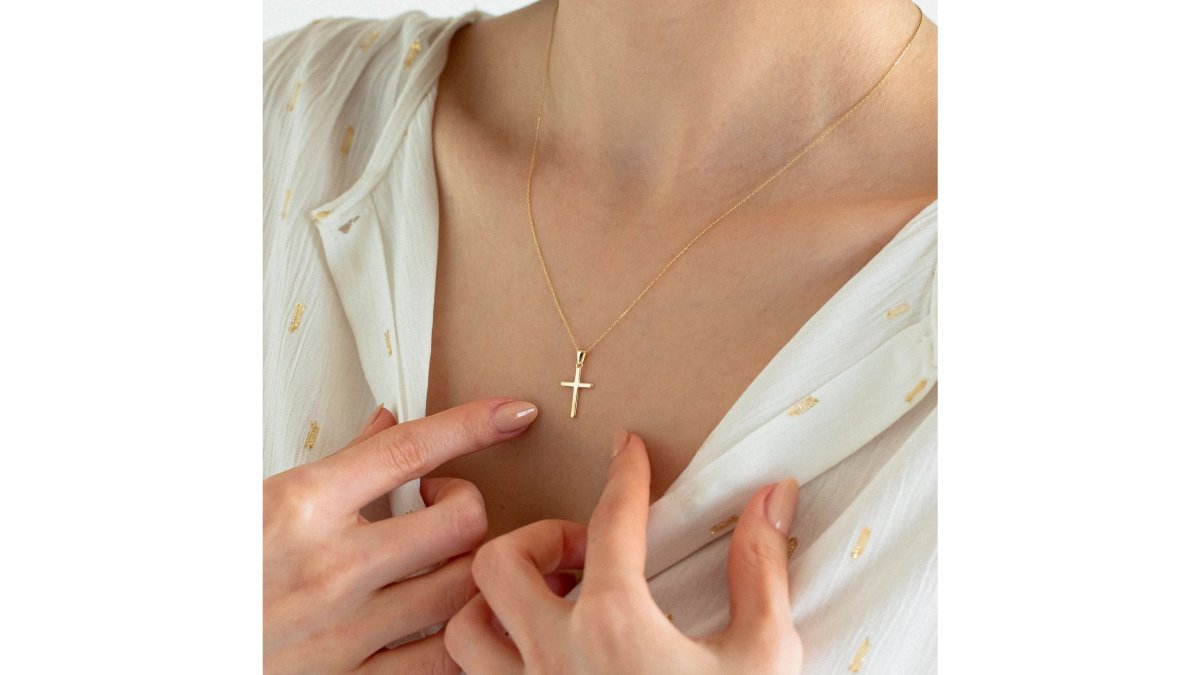
Plain or minimalist crosses (simple geometric designs, often in gold or silver) read as fashion-forward and work well for non-religious wearers. They're aesthetically neutral and less likely to be interpreted as a statement of Christian faith.
Ornate or decorative crosses (with gemstones, intricate metalwork, or artistic embellishment) emphasize the aesthetic and fashion element. These are clearly worn for style and are less likely to be questioned.
Crucifixes (crosses with a figure of Jesus) carry explicit religious meaning and are typically worn by practicing Christians.
Celtic crosses or ankh crosses (which blend cross symbolism with other cultural or historical traditions) can signal cultural heritage or historical appreciation rather than Christian faith, depending on context.
Layering and styling considerations
How you style a cross necklace affects its visual impact and perceived intent.
Wearing it alone makes it a statement piece and draws more attention. This works well if you're intentional about wearing it and comfortable discussing it.
Layering it with other delicate chains softens its prominence and integrates it into a broader aesthetic. This approach emphasizes fashion and personal style over religious symbolism.
Wearing it under clothing (tucked inside a shirt or sweater) keeps it private and personal.
Pairing it with other symbolic jewelry (such as birthstone pendants, initial necklaces, or other meaningful pieces) contextualizes the cross as one element of your personal style rather than a singular religious statement.
Quality and intentionality
Wearing a well-made cross necklace shows respect for the symbol. A cheap, flimsy piece can read as dismissive or trendy in a way that might offend. Choose materials and craftsmanship that feel meaningful to you, whether that's sterling silver, gold, stainless steel, or another material that suits your lifestyle and budget. A quality piece signals that you've thought about your choice and are wearing it with intention.
Personal Intent and Meaning Behind Wearing a Cross
What you feel when wearing a cross matters. Personal meaning is what transforms a piece of jewelry into something significant.
Some people wear crosses as reminders of personal strength. Others wear them to honor family heritage or cultural identity.
Your reason for wearing a cross is valid as long as it's genuine.
Many people discover their own meaning in symbols over time. Wearing a cross might deepen your appreciation for its history. It might connect you to family traditions.
Researchers studying personal symbolism note that objects we wear regularly become part of our identity. A cross necklace can serve that function whether you're religious or not.
The most important thing is wearing it with intention.
Wearing a cross necklace as a non-religious person is acceptable when approached with respect and genuine intent. Our cross necklace collection offers timeless pieces designed for daily wear, with up to 30% off during seasonal promotions. Shop All to find the perfect cross necklace that speaks to your personal style.
Frequently Asked Questions
Can you wear a cross necklace if you're not religious?
Yes, you can wear a cross necklace without being religious. Many people wear crosses as fashion accessories, family heirlooms, or symbols of personal meaning unrelated to faith. What matters most is your intent and respect for the symbol's significance to others. A cross necklace can represent cultural heritage, aesthetic preference, or sentimental value without requiring religious belief.
Is it disrespectful to wear a cross necklace as a non-believer?
Wearing a cross necklace as a non-believer is not inherently disrespectful. Most Christians focus on your intent rather than your faith status. Disrespect comes from mockery or deliberate irreverence, not from wearing the symbol itself. If you wear a cross necklace with genuine respect for its meaning and cultural significance, most people will view it positively. Context and how you discuss it matter more than your personal beliefs.
What does a cross necklace mean for someone who isn't Christian?
For non-religious wearers, a cross necklace can mean many things: a family heirloom passed down through generations, a memorial to a loved one, an appreciation for the symbol's historical and aesthetic qualities, or a personal reminder of values like hope or strength. Some wear it purely as a fashion accessory. The beauty of jewelry is that it can hold different meanings for different people. Your personal interpretation is valid.
What's the difference between a cross and crucifix necklace?
A cross is a simple two-intersecting lines forming a plus sign or Latin cross shape. A crucifix includes a cross with a representation of Jesus Christ's body on it. Crucifixes carry deeper religious significance in Christian tradition, while plain crosses are more versatile and widely worn as fashion accessories or symbols without strong religious connotations. If you want a less explicitly religious piece, a plain cross necklace offers more flexibility in styling and interpretation.